 By Cora Whitfield · Published · 1625 words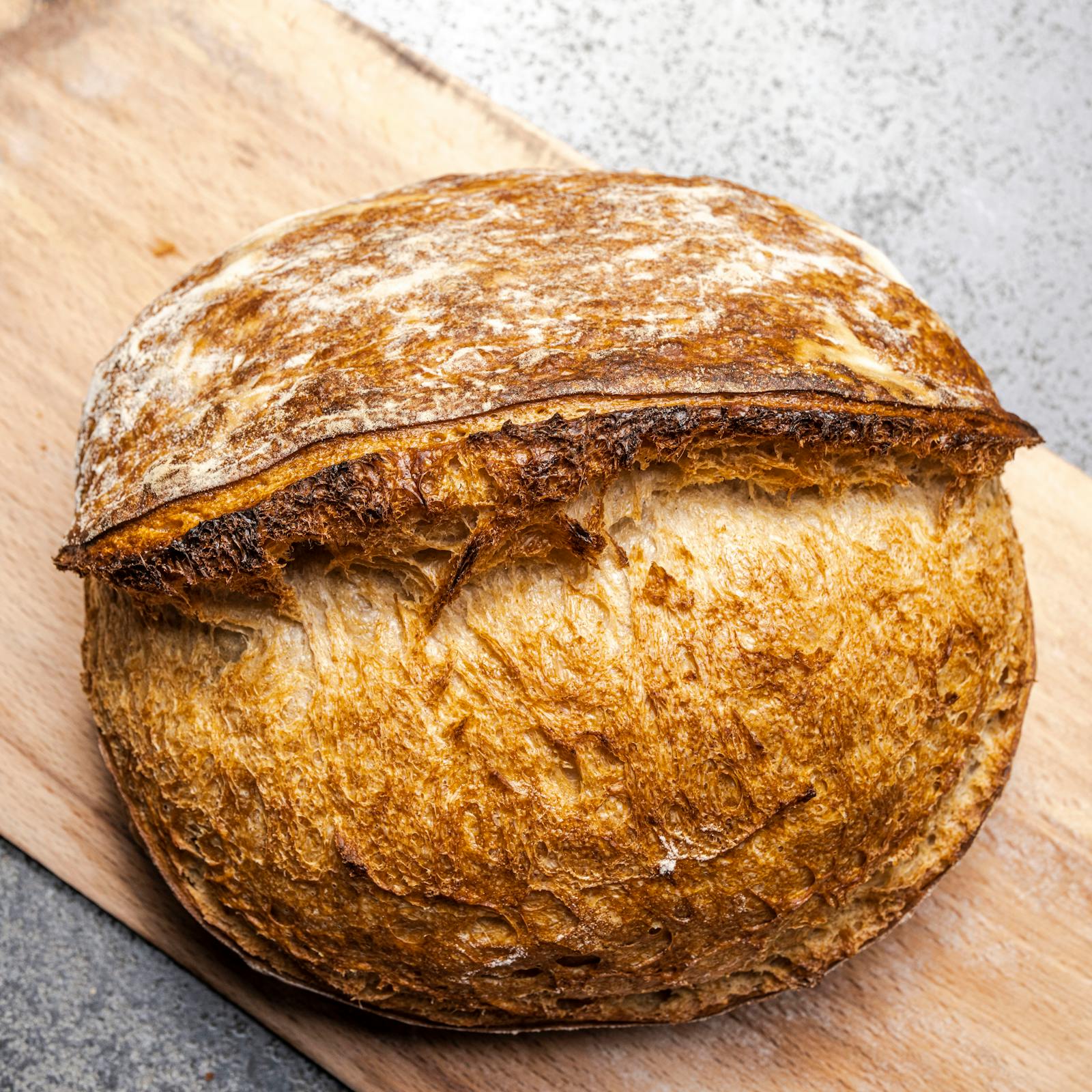
I will tell you upfront: gluten-free sourdough bread is not the same animal as wheat sourdough. The dough behaves differently, the crumb is denser, and you cannot stretch-and-fold your way to a wide-open ear. Mind you, it can still be very, very good. After teaching sourdough classes for the better part of a decade, I have watched more than a few celiac and gluten-sensitive students walk in afraid they would never have real sourdough again. They walk out with loaves they are proud of. Y’all can too. Here is the method I teach.
Quick answer: Gluten-free sourdough bread is made by swapping wheat flour for a gluten-free blend, building a starter from gluten-free grains, and adding psyllium husk to do the job gluten normally does. A reliable blend is 50% brown rice flour, 30% sorghum flour, and 20% tapioca starch, with psyllium at about 4% of the flour weight. The crumb is denser than wheat sourdough, and the loaf must cool fully before slicing. Made with certified ingredients, it is safe for celiacs.
Is sourdough bread gluten free?
Regular sourdough is not gluten-free. The traditional formula uses bread flour or whole-wheat flour, both of which contain gluten. Long fermentation does break down some of the gluten proteins, which is why some people with mild sensitivities tolerate sourdough better than commercial bread. But the Celiac Disease Foundation is clear: wheat sourdough is not safe for anyone with celiac disease.
Gluten-free sourdough is a different recipe entirely. You swap the wheat flour for a gluten-free flour blend, build a starter from gluten-free grains, and add a binder (almost always psyllium husk) to do the work that gluten would normally do. The fermentation chemistry is the same. The structural chemistry is not.
The flour blend that actually works
Most gluten-free sourdough failures trace back to a single bad flour blend. White rice flour alone makes pasty bricks. Almond flour does not ferment well. The blend I use, after years of testing, is a 50/30/20 split:
| Flour | Percent | Role |
|---|---|---|
| Brown rice flour | 50% | Backbone, mild flavor, decent fermentation |
| Sorghum flour | 30% | Adds chew, color, and a subtle wheat-like taste |
| Tapioca starch | 20% | Lightens the crumb, helps the loaf hold its shape |
You can substitute oat flour for some of the brown rice if you can find certified gluten-free oats. Buckwheat flour also works for up to 20% of the total. Teff gives the loaf a darker, more interesting flavor at 10-15% of the blend (our what is teff explainer covers the grain). A good sorghum flour is non-negotiable for me. It is what makes the bread taste like bread instead of taste like rice.
The other essential ingredient: psyllium husk powder, around 4% of the flour weight. Psyllium creates a gel that mimics gluten’s elasticity. Without it your dough is a slurry, your loaf is a puddle, and you will be sad. Our psyllium husk in gluten-free baking guide covers ratios, whole husk vs powder, and substitutes in full.
How to make a gluten-free sourdough starter
Building a gluten-free starter takes about 7 days, the same as a wheat starter. The technique is identical: equal weights of flour and water, fed daily, kept warm.
Day 1: combine 30g brown rice flour + 30g water in a clean jar. Cover loosely. Days 2-7: each morning, discard half, then add another 30g flour + 30g water. Stir well.
By day 5 or 6 you should see active bubbles and a tangy yeast smell. By day 7 the starter should double within 4-6 hours of feeding. If it stalls, move it somewhere warmer (the inside of a turned-off oven with the light on is reliable, around 80°F).
A gluten-free starter is fussier than a wheat one. It eats faster because there is no gluten matrix slowing things down, and it falls faster after peaking. Feed it the morning of the day you bake.
A complete gluten-free sourdough recipe
Total active time is about 30 minutes spread over a day.
- 200 g (about 1 1/4 cups) brown rice flour
- 120 g (scant 1 cup) sorghum flour
- 80 g (2/3 cup) tapioca starch
- 16 g (1 tbsp plus 2 tsp) psyllium husk powder (powder, not whole husks; 4% of the flour weight)
- 9 g (1 1/2 tsp) fine salt
- 100 g (about 1/2 cup) active gluten-free starter
- 380 g (1 1/2 cups plus 4 tsp) warm water
- Mix. Whisk the dry ingredients (flours, psyllium, salt). In a separate bowl, whisk the starter into the water until dispersed. Pour the wet into the dry and stir with a sturdy spatula until no dry pockets remain. The dough will look like thick cake batter at first.
- First rest, 30 minutes. The psyllium will absorb water and the dough will tighten dramatically. After the rest you can shape it.
- Shape. Wet your hands, scoop the dough onto a piece of parchment, and form it into a rough ball. You cannot do a wheat-style stretch-and-fold here. Patting and tucking is enough.
- Bulk ferment. 4-6 hours at 75°F, or overnight in the fridge. The dough will rise about 50% (not double like wheat dough). It should look slightly puffy and smell tangy.
- Bake. Preheat a Dutch oven to 475°F for 45 minutes. Lift the dough into the hot pot using the parchment, score the top with a sharp knife, cover, and bake 30 minutes covered. Uncover and bake another 20-25 minutes until the crust is deeply golden and the internal temperature reads 205°F.
- Cool fully before slicing. I cannot stress this enough. Gluten-free bread continues to set as it cools, and slicing a hot loaf collapses the crumb. Two hours minimum.
Why does gluten-free sourdough turn out gummy or dense?
Underbaking, slicing too soon, or getting the psyllium wrong. These three causes account for almost every gummy loaf I have troubleshot.
- Underbaked. Gluten-free dough holds water more aggressively than wheat dough. Bake until 205°F internal temperature, no compromises. A loaf that looks done at 30 minutes uncovered usually needs another 10.
- Sliced too soon. The starches finish setting during cooling. A warm slice always reads as gummy. Wait the full two hours.
- Not enough psyllium, or the wrong kind. Use psyllium husk powder, not whole husks. Whole husks give a stringy texture. The 4% ratio is critical: less and your loaf spreads, more and it gets rubbery.
A fourth cause some students hit: substituting the brown rice flour for white rice flour. White rice ferments more weakly and bakes drier. Stick with brown.
Is gluten-free sourdough easier on digestion?
For people without celiac or wheat allergies, the answer is sometimes. The lactobacilli in a sourdough starter produce organic acids that can improve digestibility of certain carbohydrates called FODMAPs, which is why some people with IBS find sourdough (gluten-free or not) more comfortable than yeasted bread. For people with celiac disease, only certified gluten-free sourdough is safe regardless of fermentation length.
Gluten-free sourdough also tends to have a lower glycemic load than commercial gluten-free bread, which is often heavily starchy and quick-digesting. Whole-grain flours like sorghum and teff slow that response further.
What to do if you want to go deeper
If this is your first gluten-free loaf, bake the recipe above three or four times before changing anything. Every variable in gluten-free baking is less forgiving than wheat, and changing the flour blend, hydration, and ferment time at once teaches you nothing.
When you are ready to expand: try the same method with our teff flour recipes for an Ethiopian-inflected loaf, go fully traditional with fermented injera, or roast and grind amaranth into a 10% addition for a slightly nutty crumb. The same psyllium-anchored technique works across most gluten-free grain combinations.
One last note from years of teaching: a perfectly average gluten-free sourdough still beats every supermarket gluten-free loaf I have ever met. Lower your wheat-loaf expectations, raise your supermarket-bread comparisons, and you will be very pleased.
Frequently asked questions
Can celiacs eat gluten-free sourdough bread?
Yes, as long as every ingredient is certified gluten-free. Because this loaf is built from gluten-free grains and a gluten-free starter, it contains no gluten to begin with, unlike wheat sourdough, which stays unsafe no matter how long it ferments. Use certified flours and a clean starter, and it is safe for celiac disease, as our is sourdough bread gluten free post explains.
What can you use instead of psyllium husk in gluten-free sourdough?
Psyllium is genuinely hard to replace, because it forms the stretchy gel that stands in for gluten. Ground chia or flax gel is the closest substitute but gives a wetter, more fragile crumb, and xanthan gum adds some structure without the elasticity. If you can, use psyllium husk powder; the alternatives are a step down.
How do you store gluten-free sourdough bread?
Keep it at room temperature, well wrapped, for two to three days; gluten-free loaves stale faster than wheat bread. The best storage is the freezer: slice the fully cooled loaf, freeze in a sealed bag for up to three months, and toast slices straight from frozen, which also revives the crumb.
Stock up on Sorghum
See our hand-picked Sorghum, from flour to whole grain, with the brands worth buying.
Shop Sorghum →