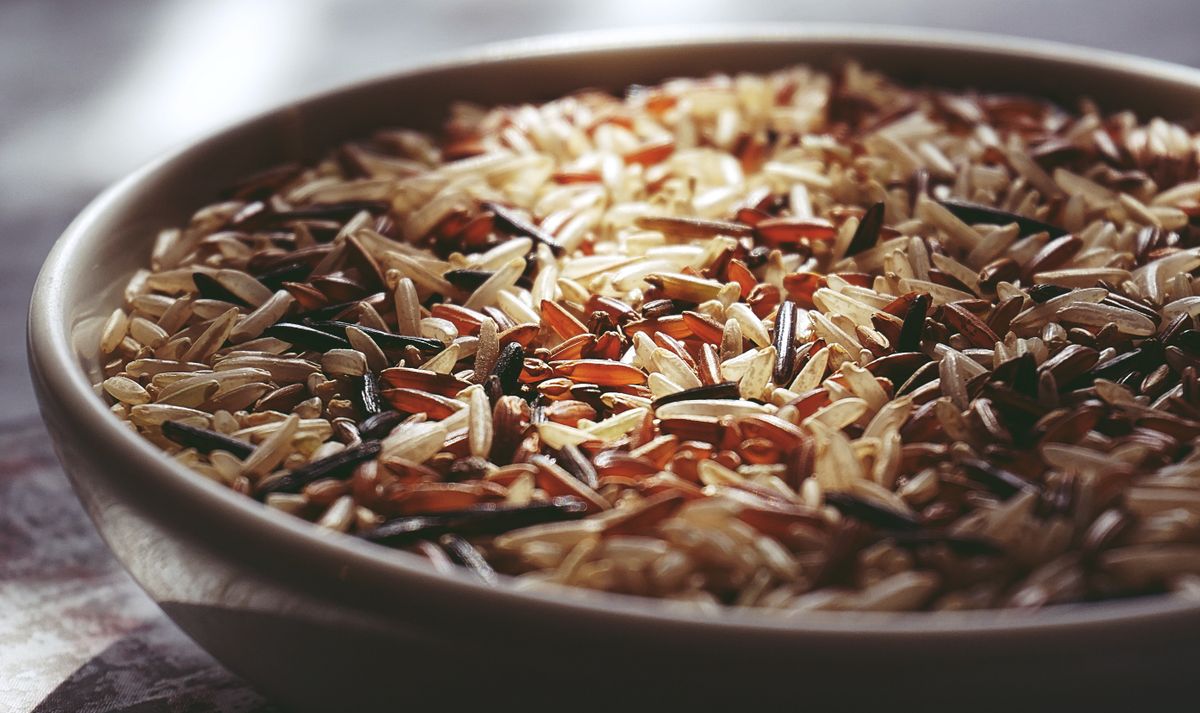
The first thing to know about how to cook wild rice is that you are not cooking rice. Wild rice is the seed of an aquatic grass native to the lakes and rivers of North America, still hand-harvested by canoe in the Great Lakes region where the Ojibwe call it manoomin, “the good berry.” It takes far longer to cook than white rice, it wants more water, and it announces when it is ready in a way rice never does. Get those three things right and it is genuinely hard to mess up. Get them wrong and you end up with either little armored pellets or a gray mush. Here is the reliable way, three ways.
Quick answer: Wild rice is not true rice but the seed of a North American aquatic grass, and it takes 45 to 55 minutes to cook, far longer than white rice. Use 1 part wild rice to 3 parts liquid, simmer covered without stirring, and drain any excess like pasta. It is done when most grains split open and curl to show a pale interior, tender with a nutty chew. It is naturally gluten-free.
How long does it take to cook wild rice?
True wild rice takes 45 to 55 minutes of simmering. That is the single fact most people get wrong, because they treat it like the 15-minute white rice in the next bin. Cultivated “paddy” wild rice (the shiny jet-black kind grown in California and Minnesota) sits at the shorter end, around 45 minutes. Genuine lake-harvested wild rice, which is more brown-green and uneven, can want the full 55 or a touch more. Blends of wild and brown rice cook to their package time, usually 40 to 45 minutes, because the brown rice is the limiting partner.
You will know it is done not by the clock but by the look, which I will come back to.
How to cook wild rice on the stove
This is the master method. Everything else is a variation on it.
- Rinse 1 cup of wild rice in a fine-mesh strainer under cold water for 30 seconds. This rinses off dust and any loose starch.
- Combine the rice with 3 cups of water or, much better, broth, plus a half teaspoon of salt, in a saucepan.
- Boil, then simmer. Bring it to a boil, drop the heat to low, cover, and simmer for 45 minutes. Do not stir. Wild rice does not go gummy, so stirring only drops the temperature.
- Check at 45 minutes. If most grains have split open and the texture is tender-chewy, kill the heat. If they are still tight and firm, give it another 5 to 10 minutes.
- Drain and rest. Pour off any water that did not absorb (wild rice often leaves a little, which is normal), then let it sit covered off the heat for 5 minutes. One cup dry makes about 3 cups cooked.
What is the water ratio for wild rice?
1 cup wild rice to 3 cups liquid is the ratio to memorize. That is more water than white rice (1:2) because wild rice cooks longer and loses more to evaporation. Unlike white rice, you are not aiming for every drop to absorb. Wild rice is forgiving here: think of it more like cooking pasta, where you can simply drain the excess at the end, than like a precise rice pilaf. For a wild-and-brown blend, follow the package, which usually lands near 1 : 2.5.
How do you know when wild rice is done?
This is the part that makes it foolproof once you have seen it once. Perfectly cooked wild rice grains split lengthwise and curl open, showing a paler, tender interior against the dark hull. Some cooks call it butterflying. When most of the grains in the pot have done this, it is ready: tender with a distinct nutty chew and a faint smokiness.
The two mistakes sit on either side of that window.
| Stage | What you see | What to do |
|---|---|---|
| Underdone | Grains closed and hard, tastes woody | Add a splash of hot liquid, cook 5-10 min more |
| Just right | Most grains split and curled, tender-chewy | Drain and serve |
| Overdone | Grains fully burst, curled into gray mush | Pull it earlier next time; use it in soup |
How to cook wild rice in a rice cooker
A rice cooker handles wild rice well, it just needs the longer time. Use the same 1 : 3 ratio, add the rinsed rice, liquid, and salt, and run the brown rice or whole grain cycle if your cooker has one. If it only has a white rice setting, expect to run it twice, since a single white-rice cycle stops long before wild rice is done. The method mirrors the one in our rice cooker quinoa guide, only slower, and our rice cooker recipes roundup covers the other grains the same appliance handles.
How to cook wild rice in an Instant Pot
Pressure cooking is the fastest route. Combine 1 cup rinsed wild rice with 1.5 cups liquid (you need less under pressure because nothing evaporates), seal, and cook on high pressure for 25 to 28 minutes, then let the pressure release naturally for 10 minutes. Fluff, and drain any trace of extra liquid. This is my weeknight method when I want the nutty chew of wild rice without babysitting a pot for the better part of an hour.
What should you do with cooked wild rice?
Wild rice is a workhorse once it is cooked, and it keeps its texture better than most grains through reheating and freezing. It shines in the classic creamy chicken and wild rice soup, tossed warm into a pilaf, or cooled into a grain salad with dried cranberries and toasted pecans. For a full spread of ideas, our wild rice recipes roundup covers breakfast through dinner. And if you like the deep, nutty, slightly smoky character here, quinoa is the gentler gateway grain to try next, since it cooks in a fraction of the time.
One buying note: for the real thing, seek out genuine lake-harvested wild rice rather than the uniform cultivated kind. It costs more, but the flavor is smokier and more complex, and buying it supports the Indigenous communities who still harvest it by hand. Nutritionally it earns its place either way, with more protein than brown rice and a solid dose of fiber and minerals per the USDA FoodData Central entry, and the botanical backstory of the Zizania grasses is worth a read on Wikipedia if you want to know exactly what you are eating.
Frequently asked questions
Is wild rice gluten-free?
Yes. Despite the name, wild rice is not a wheat and not even true rice; it is the seed of an aquatic grass, so it contains no gluten and is safe on a gluten-free diet.
Do you need to soak wild rice before cooking?
No, but a soak is a useful option. Cooking it straight takes 45 to 55 minutes; an hour’s soak in cold water (or overnight) softens the tough hull and can cut the simmer time by 10 to 15 minutes. Rinse it either way.
Is wild rice healthier than white rice?
For most measures, yes. Wild rice has more protein and fibre and more minerals than white rice, plus a lower glycemic impact, and it keeps its bran and germ. It is a genuine nutritional step up while cooking into the same kind of side dish.
Cook with real wild rice
See the hand-harvested and organic wild rice worth buying, plus the brands we trust.
Shop wild rice →