 By Owen Bradford · Published · 1567 words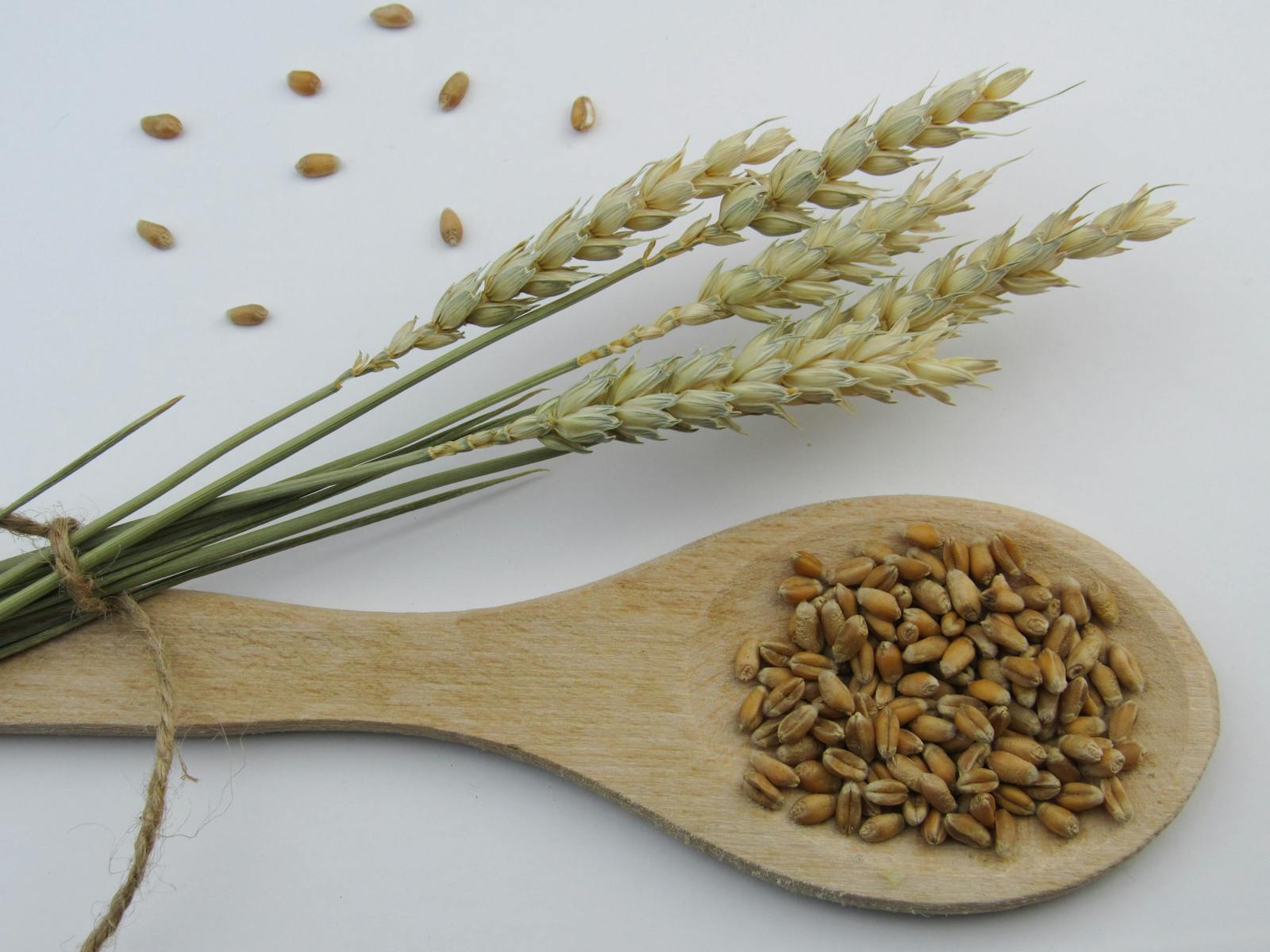
The first thing most people learn about kamut is that it isn’t really a name. It’s a registered trademark. The grain itself, the ancient wheat with the long amber kernels twice the size of modern bread wheat, has its own perfectly good botanical name: Triticum turgidum subsp. turanicum, or khorasan wheat. So when you ask what is kamut, the honest answer is: kamut is khorasan wheat, sold under a brand owned since 1990 by a Montana farming family who saw a way to protect a small heritage crop from the commodity treadmill.
That’s the short version. The longer one is more interesting, because it involves a US Air Force pilot, a handful of kernels mailed back from a Cairo market, and a grain that almost vanished before getting a second life in artisan bakeries.
Quick answer: Kamut is a registered trademark for khorasan wheat, an ancient Persian grain with amber kernels about twice the size of modern wheat. Botanically Kamut and khorasan are the same plant; the brand just requires it be grown organically to a set standard. It is a true wheat, so it contains gluten and is not gluten-free or celiac-safe.
What is Kamut, exactly?
Kamut is the registered trademark for organically-grown khorasan wheat that meets a specific protocol set by Kamut International, a small company headquartered in Big Sandy, Montana. Any farmer can grow khorasan wheat. Only certified Kamut International growers can sell it under the Kamut name. The certification requires the seed be a single ancient variety (called QK-77), grown organically, and tested for protein, mineral content, and varietal purity before it carries the brand.
In practice, the bag in your kitchen labeled “Kamut” and the bag labeled “khorasan wheat” are the same plant grown under slightly different rules. They taste identical. The brand exists mostly to enforce farming standards on a grain that would otherwise compete with industrial wheat on price alone, which it can’t.
Where did Kamut come from?
The trademark dates to 1990, but the grain is far older. Khorasan wheat is named after the ancient Persian region of Khorasan (modern eastern Iran, Afghanistan, and parts of Turkmenistan). It’s been cultivated there for at least 6,000 years. Before that, it was likely a wild ancestor or a hybrid of two earlier cultivated wheats: emmer wheat (T. turgidum subsp. dicoccum) and a wild relative.
The Western story starts in 1949, when a US Air Force pilot named Earl Dexter sent thirty-six kernels home from a market in Portugal that had supposedly come from a tomb in Egypt. The “King Tut’s wheat” provenance is romantic but unproven. What’s documented is that those kernels were grown for decades in Montana by Bob Quinn’s family, who eventually trademarked the variety as Kamut in 1990 specifically to keep speculators from genetically modifying it or breeding it for higher yield at the cost of its character. The history is laid out in detail at the Kamut International site.
Is Kamut the same as Khorasan wheat?
Yes, with one footnote. Kamut and khorasan are the same plant. The footnote is that Kamut International only certifies a single specific cultivar (QK-77), so technically other khorasan strains exist that aren’t sold as Kamut. In practice, almost all khorasan wheat in the global market traces to Quinn’s Montana farm, so the distinction is mostly legal.
If you see a recipe calling for kamut, you can buy khorasan wheat. If a recipe calls for khorasan, kamut works identically. They cook the same, taste the same, and bake the same.
What does Kamut taste like?
Buttery and slightly sweet, with a hint of nuttiness. It’s noticeably milder than modern hard red wheat, which has a sharper, more tannic flavor; the pale-bran hard white wheat class sits between the two. Bakers describe Kamut as having a “creamy” quality. It’s especially evident when you crack a fresh kernel between your teeth: there’s a richness that whole-grain modern wheat doesn’t have.
The kernels are also striking visually. They’re roughly twice the size of common wheat berries (8–9mm versus 4–6mm), with a glossy amber-gold color. If you’ve eaten freshly-cooked Kamut berries in a grain bowl, the size alone makes them feel like a more substantial ingredient than the wheat berries you’d buy in bulk.
Is Kamut healthier than modern wheat?
Mostly the comparison is overstated, but a few real differences hold up. According to a comprehensive 2022 review on heritage versus modern wheats (Brouns, Geisslitz, Shewry), khorasan and other ancient wheats often carry more of a few key nutrients.
- More protein by weight (typically 14–17% versus 11–13% for modern wheat)
- Higher selenium (a trace mineral that’s chronically low in modern wheat grown on selenium-poor American soils)
- Slightly more zinc and magnesium
What khorasan does not have, despite popular claims:
- Less gluten. Khorasan contains gluten. The gluten composition is different from modern bread wheat (different ratios of gliadin subunits), but the total amount is comparable.
- A celiac-safe profile. Kamut is not safe for people with celiac disease. If you have celiac, treat khorasan/kamut as off-limits and look at our buckwheat or teff pages for genuinely gluten-free options instead.
The middle ground worth noting: some people with non-celiac wheat sensitivity report tolerating heritage wheats like kamut better than modern bread wheat. The evidence is mixed and individual. We covered the science in detail in our diploid wheat and gluten sensitivity post.
Is Kamut gluten-free?
No. Kamut is a wheat species and contains gluten. If you see “Kamut” listed on a packaged food and you’re celiac or have a strict gluten intolerance, avoid it. The same applies to anything labeled khorasan, emmer, einkorn, spelt, or “ancient grain” without further qualification.
How do you cook Kamut?
It cooks three ways, depending on whether you bought whole berries, flour, or dried pasta.
- Whole berries. Soak overnight (this cuts cook time in half), then simmer in 3:1 water-to-grain at low heat for 45–60 minutes until tender but still chewy. Use them like farro: in grain bowls, salads, soups. They reheat beautifully.
- Flour. Substitute up to 50% of the bread flour in any wheat recipe with kamut flour. The dough will be slightly less elastic (different gluten composition) so it’s forgiving for newer bakers. Whole loaves of 100% kamut bread work but tend to be denser. See our ancient grain bread guide for more on heritage-wheat baking.
- Pasta. Kamut makes excellent pasta because the high protein content stands up to long cooks. Several Italian producers (Felicetti, Rustichella d’Abruzzo) make kamut spaghetti and rigatoni.
Common mistakes when baking with Kamut
A few patterns we see when home bakers first switch:
- Treating it like all-purpose flour. Kamut absorbs more water than modern bread flour. Add 5–10% more water than your usual recipe calls for, or the dough will be too stiff.
- Over-kneading. The gluten structure is different (less extensible). Five minutes of gentle kneading is enough; you don’t need the long machine knead a high-protein modern wheat dough wants.
- Expecting a tall sandwich loaf. 100% kamut bread will be denser and tighter-crumbed than what you get from modern flour. That’s the texture; not a failure. If you want bigger oven spring, blend 50/50 with bread flour.
- Buying old flour. Kamut flour goes rancid faster than commodity flour because it’s less processed. Buy small bags. Keep them in the freezer.
Where Kamut fits in your kitchen
If you’ve never tried it: start with whole berries in a grain bowl, not flour. The flavor difference from modern wheat is most obvious in the unmilled grain, and you don’t need to learn a new baking technique to taste it.
If you’re already a baker: try a 50/50 kamut/bread-flour boule first, then move up to 100% kamut once you know how the dough handles. The full khorasan wheat profile on this site has nutrition data, cook times, and water ratios for each preparation.
If you have celiac or strict gluten-free needs: skip kamut entirely. The marketing around heritage wheats sometimes implies safety that doesn’t exist. Look at quinoa, teff, buckwheat, or amaranth instead.
The short version, in one sentence: Kamut is khorasan wheat with a trademark and a story, and the trademark is genuinely useful because it forced a small grain to keep its character instead of getting bred down into the same yield-optimized commodity that filled supermarket bread. That alone is worth the small premium it costs.
Frequently asked questions
Why is Kamut more expensive than regular wheat?
Kamut costs more because the trademark requires it be grown organically from a single certified variety, and khorasan yields less per acre than modern high-yield wheat. You are paying for the organic protocol and a low-yield heritage crop, not just the name.
Is Kamut GMO?
No. Kamut is never genetically modified; the trademark was created in 1990 specifically to keep the grain from being bred or engineered for higher yield at the cost of its character. Certified Kamut must be the original QK-77 variety, grown organically.
How is Kamut pronounced?
It is said “kah-MOOT.” The name comes from an ancient Egyptian word for wheat, chosen by the Montana family who trademarked the grain.
Stock up on Kamut
See our hand-picked Kamut, from flour to whole grain, with the brands worth buying.
Shop Kamut →