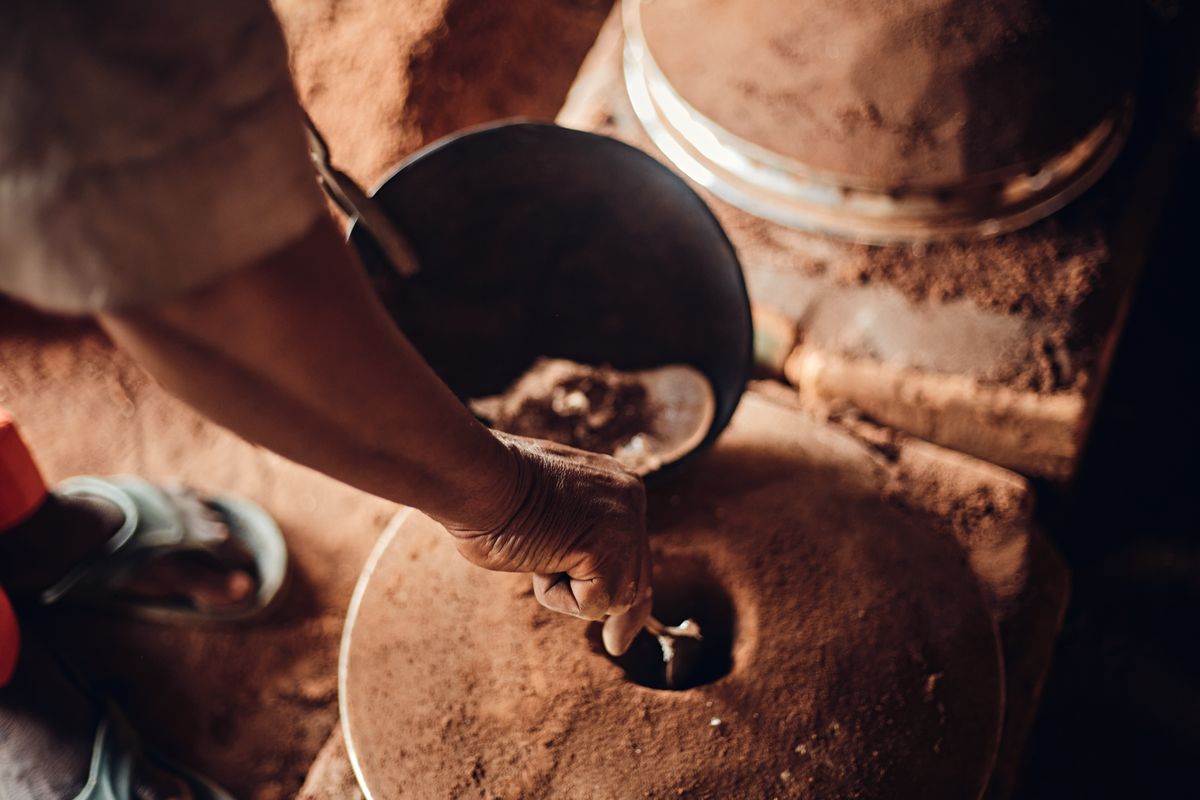
The hand crank vs electric grain mill question gets framed as a purity test: the crank is the honest, traditional choice, and the motor is for people who cut corners. Ignore that framing. It is marketing, not information. The real question is narrower and more useful: how much flour do you actually grind, how much are you willing to spend, and how much arm work are you prepared to do on a Tuesday morning? Answer those three and the choice makes itself. This is a comparison of what the two types really do, where the sales copy oversells, and which specific mills earn the money.
Quick answer: Choose a hand crank grain mill if you mill occasionally, grind small batches, or want to work off-grid, and an electric mill if you bake regularly or need fine flour fast. Electric mills grind about a pound a minute versus minutes per cup by hand, and modern impact mills stay just as cool as slow hand milling, so the "cold-milled" flavour advantage of cranks is mostly marketing. Prices overlap heavily, from about $30 for a budget clamp-on to $400-plus for either type.
What is the actual difference between a hand crank and electric grain mill?
Mechanically, both types do the same job: they force whole grain between two grinding surfaces (steel burrs, stone, or in some electric units a high-speed impact chamber) and shear it into flour. The difference is only the power source. A hand crank mill turns those surfaces with your arm. An electric mill turns them with a motor.
That is the whole distinction, and it matters because everything else people claim (better flavor, more nutrition, gentler grinding) follows from how the surfaces are driven, not from some inherent virtue of muscle over electricity. A burr mill grinds the same way whether a hand or a motor spins it.
Which grinds flour faster?
Electric, and it is not close. A mid-range electric mill produces roughly a pound of flour a minute. A hand crank mill, depending on how fine you want the flour and how strong you are, produces something like a cup in three to five minutes of steady cranking, and finer settings make it dramatically harder. If you bake one loaf a week, that gap is trivial. If you mill flour for a household that goes through several pounds, hand cranking stops being charming around week three. Be honest with yourself about which household you run.
Does a hand crank mill make better flour?
This is where the marketing does the most work, so let me be specific. The claim is that motorized mills overheat the flour, damaging nutrients and flavor, while slow hand milling stays cool. There is a real kernel here: heat does degrade some of the oils and vitamins in fresh whole-grain flour, and the Whole Grains Council is right that the intact germ in freshly milled flour is what makes it nutritious in the first place.
But the conclusion does not follow. Modern impact-style electric mills grind fast enough that the flour spends very little time in contact with anything hot, and they finish before meaningful heat builds up. Cheap electric burr mills run continuously and can warm the flour; good impact mills do not. Meanwhile, a hand crank mill run hard for fifteen minutes also warms up. Heat is a function of friction and time, not of whether a human or a motor is supplying the torque. The honest version: freshly milled flour of any kind beats the stale bagged stuff, and both a good manual mill and a good electric mill will give you that. Do not pay a premium for “cold-milled” as if it were a category only cranks can achieve.
The one flour-quality edge that is real: cheap hand mills struggle to produce fine flour at all. If you want pastry-fine flour, an entry-level crank mill will fight you, while a decent electric handles it in one pass.
How do hand crank and electric grain mills compare?
The table below lays the two types side by side across the factors that actually decide the purchase, from speed and effort to price and off-grid use.
| Factor | Hand crank mill | Electric mill |
|---|---|---|
| Speed | Slow: minutes per cup | Fast: about 1 lb per minute |
| Effort | Real arm work, more at fine settings | Push a button |
| Typical price | $30 to $450 | $250 to $400 |
| Heat to the flour | Stays cool at light use | Modern impact mills also stay cool |
| Works off-grid | Yes, anywhere | No, needs power |
| Fine flour | Hard on cheap units | Easy |
| Noise | Quiet | Loud for the grinding minute |
How much do they cost?
Price is the cleanest place to see the real trade-off, because the ranges overlap. On the manual side, a clamp-on Victoria hand mill runs about the price of a nice dinner and is the honest budget entry, good for cornmeal and coarse flours. Step up to Lehman’s flywheel hand mill for a sturdier unit that grinds down to pastry flour, and at the top a Country Living mill is a heirloom-grade hand crank that costs as much as a good electric and lasts decades.
On the electric side, an impact mill like the Kitchen Mill sits in the middle of the range, grinds fine flour fast, and is the workhorse most frequent bakers land on. There is no version of this where you save real money by going manual unless you buy the cheapest crank mill and accept its limits. Match the tool to the milling you will actually do, not to the aesthetic you want to project. Our best flour mills roundup and home grain mill guide break down individual models further.
So which grain mill should you buy?
Buy a hand crank mill if you mill occasionally, grind in small batches, care about grinding off-grid or during power cuts, or simply enjoy the ritual and do not mind the work. Start with the budget clamp-on and upgrade only if you outgrow it.
Buy an electric mill if you bake regularly, mill more than a pound or two at a stretch, want reliable fine flour, or know from experience that any extra friction between you and fresh bread means you will quietly go back to buying flour. Most people who mill for actual bread baking end up here, and pretending otherwise just leaves an expensive crank mill in the cupboard.
Whichever way you go, the payoff is the same: flour ground the day you bake, from grain you chose. If you want to see what is worth milling, the einkorn and rye grain pages are the two that convert skeptics fastest, because the freshly milled flavor is so far from the supermarket bag that the mill pays for itself in enthusiasm alone.
Frequently asked questions
Can you grind flour in a blender instead of a grain mill?
Only roughly. A high-powered blender or a dedicated dry-grain jar can crack grain into a coarse meal, but it heats the flour quickly and cannot reach the fine, even texture a real mill produces. It is fine for the occasional cup of cornmeal or a coarse whole-wheat, but not a substitute if you bake regularly.
What can you grind in a grain mill?
Most dry, hard grains and pulses: wheat, spelt, einkorn, rye, barley, oats, corn, rice, and dried beans, chickpeas, or lentils. What you should not grind is anything oily or wet, such as flax, nuts, or coffee, because the oils gum up burrs and can ruin an impact chamber. Check your mill’s manual, since a few soft-grain limits vary by model.
How long does freshly milled flour last?
Less time than the bagged kind, which is the trade-off for its flavour. Home-milled whole-grain flour is best used within a few days at room temperature, because the intact germ oils start to go rancid. Seal it and keep it in the fridge for a few weeks, or the freezer for a few months, and mill close to when you bake.
Ready to mill your own?
See the hand crank and electric mills we actually recommend, with the trade-offs laid out plainly.
Compare the mills →