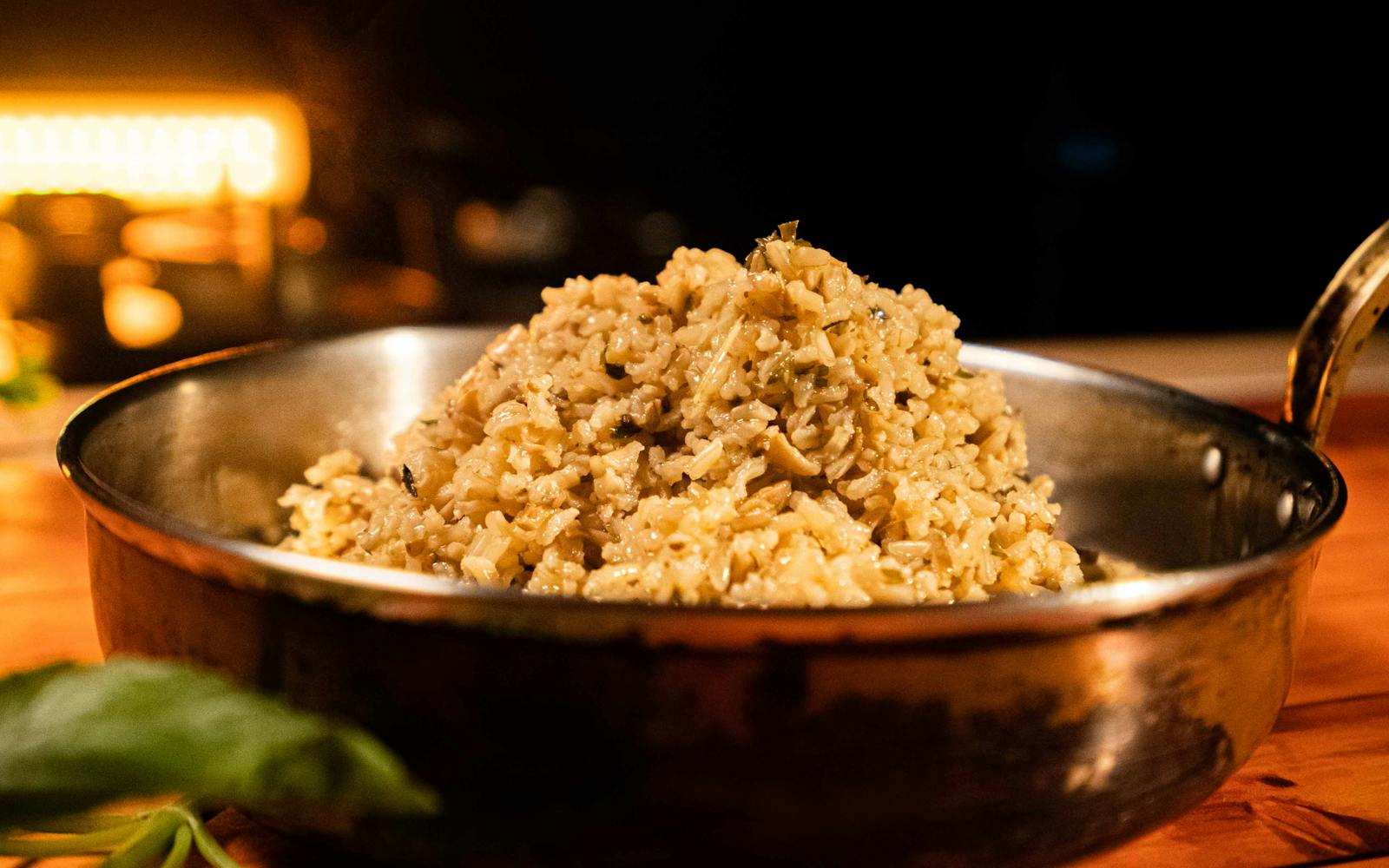
The first time I cooked spelt for a class in my Cotswolds kitchen, half the students pulled their pans off the heat at 25 minutes because the berries looked done. They were not. Spelt holds its bite for a stubborn extra ten minutes longer than you expect, and that gap is where most home cooks come unstuck. The cooked grain is meant to be tender with a firm centre, not crunchy, not mushy. The method below gets you there reliably for whole spelt berries or pearled.
A quick word on the plant before we start. Spelt (Triticum spelta) is a hexaploid wheat, very closely related to modern bread wheat but with a hardier hull and a more forgiving gluten structure. In Italian it is called farro grande, the largest of the three farros, and Italians have been cooking it the same way for two thousand years. The European Cereals Association notes that spelt was the dominant wheat species across Central Europe from the Bronze Age through the medieval period before modern hybridised wheats displaced it.
Quick answer: Cook spelt like pasta, in plenty of salted water (about 3 parts water to 1 part grain), then drain. Pearled spelt simmers 20 to 25 minutes with no soak; whole spelt berries need an overnight soak and 50 to 60 minutes. It is done when tender with a firm centre, not crunchy, and it looks ready before it is, so taste a grain before draining. Spelt is a wheat, so it contains gluten.
How long does it take to cook spelt?
The honest answer is “longer than you think.” Whole spelt berries take 50-60 minutes of simmering after an overnight soak. Pearled spelt (where the bran has been scoured off) takes 20-25 minutes with no soak. Semi-pearled lands somewhere in between at roughly 30-35 minutes.
| Cut | Soak | Simmer time |
|---|---|---|
| Pearled spelt | None needed | 20-25 min |
| Semi-pearled | Optional, 4 hours | 30-35 min |
| Whole spelt berries | 8 hours minimum | 50-60 min |
If you have a pressure cooker, whole berries take 22 minutes at high pressure with a 10-minute natural release. Pearled does 8 minutes high pressure.
How to cook spelt on the stove
The technique is the same Roman method you would use for farro: well-salted water, low simmer, drain when done. Spelt does not absorb water predictably like rice, so do not bother with absorption ratios. Cook it like pasta.
- 1 cup (180 g) spelt, pearled or whole berries, rinsed
- 3 cups (720 ml) water
- 1 tsp salt
- Rinse 1 cup of spelt under cool water for 20 seconds.
- If whole berries, soak overnight in cold water (8-12 hours). Drain.
- Combine drained spelt with 3 cups of water and 1 teaspoon of salt in a saucepan.
- Bring to a boil, drop to a steady low simmer, cover.
- Cook for the time in the table above, then start tasting.
- The grain is ready when it has a tender outer layer and a slight chew at the centre. Drain in a sieve.
A cup of dry spelt yields about 2.5 cups cooked.
How to cook with spelt: three uses
Once you have a pot of cooked spelt in the fridge, it goes nearly anywhere. My three reliable uses:
Spelt risotto. Treat it like a farrotto. Cook the spelt halfway in stock, then transfer to a pan with sautéed onions, mushrooms, and white wine. Add ladles of warm stock until the spelt is creamy and tender. Finish with a knob of butter and a generous handful of grated Parmesan. The starchier outer bran releases enough to mimic risotto’s texture without arborio rice.
Spelt salad, summer version. Toss warm spelt with olive oil, lemon, salt, and pepper. Once cooled, fold in cherry tomatoes, cucumber, mint, feta, and toasted hazelnuts. Holds for two days, gets better on the second.
Spelt pilaf. Sweat onion and garlic in olive oil, add the cooked spelt, stir in a tin of chickpeas and a handful of preserved lemon. Top with chopped parsley and a yoghurt dressing. The kind of supper that feeds four with minimal fuss.
What does spelt taste like?
Nutty, slightly sweet, with a clean wheaten flavour that reads as richer than commodity wheat berries but milder than einkorn. The texture is the more memorable feature: the cooked berry has a firm, satisfying chew that holds its shape for days under heat or in a salad dressing. That same chew is exactly what cooked kernels bring to a wheat berry bread, where spelt berries substitute beautifully. If you have cooked the sibling diploid grain, see our how to cook einkorn wheat berries guide for the contrast (einkorn is smaller, denser, and faster to overcook).
Pearled spelt has a slightly milder flavour than whole because the bran has been removed. Whole spelt is more assertive, more nutritional (USDA FoodData Central puts it at about 15% protein and 11% dietary fibre per 100 grams uncooked), and the better choice if you can plan ahead for the soak.
What are the most common mistakes when cooking spelt?
The three most common mistakes are skipping the soak on whole berries, pulling the pot off the heat too early, and cooking in too little water. Each one shows up a bit differently in my classes.
- Skipping the soak on whole berries. Whole spelt without a soak will cook unevenly, with chewy ends and a tender middle. The overnight soak does most of the work for you.
- Pulling it off the heat too early. Spelt always looks done before it actually is. The trick is to taste a grain at the timer’s end and decide. If it crunches between your teeth even slightly, give it another five.
- Cooking in too little water. Spelt absorbs more water than rice. If you use a 2:1 ratio you will end up with a gummy centre and a starchy pot bottom. Stick with 3:1 and drain off the excess.
A fourth, smaller issue: many supermarket bags labeled “spelt” are in fact pearled spelt, which cooks in roughly half the time of whole berries. If your spelt looks pale-golden and uniform with no visible bran flecks, it is almost certainly pearled. Adjust the timer accordingly.
What about spelt flour?
Spelt flour is a different beast and not what this post is about, but a quick note since people ask. It substitutes well into most modern wheat-flour recipes at around 80-85% of the original liquid (spelt absorbs less). It produces a slightly denser, more flavourful crumb. For which bakes actually suit it, see our spelt flour recipes roundup. For sourdough, see our ancient grain bread guide, which covers spelt-based loaves alongside einkorn and emmer wheat.
For cooked spelt as a grain, mind you, that is everything you need to know. Three to one, salted water, drain when tender, and do not panic when it looks underdone at the timer. The Romans figured this out and so will you.
Frequently asked questions
Is spelt gluten-free?
No. Spelt is a true wheat, so it contains gluten and is not safe for anyone with celiac disease or a wheat allergy, as our is spelt gluten free post explains. Its gluten is a little more fragile than modern wheat’s, but it is still gluten.
Do you need to soak spelt before cooking?
Only whole spelt berries, which cook faster and more evenly after an overnight soak (8 to 12 hours). Pearled spelt has the bran scoured off and needs no soak, cooking in 20 to 25 minutes straight from the bag.
How do you store cooked spelt?
Cooked spelt keeps in the fridge for about five days in a sealed container and freezes well for up to three months. Its firm chew holds up beautifully, which makes it worth cooking a big batch for salads and grain bowls through the week.
Stock up on Spelt
See our hand-picked Spelt, from flour to whole grain, with the brands worth buying.
Shop Spelt →