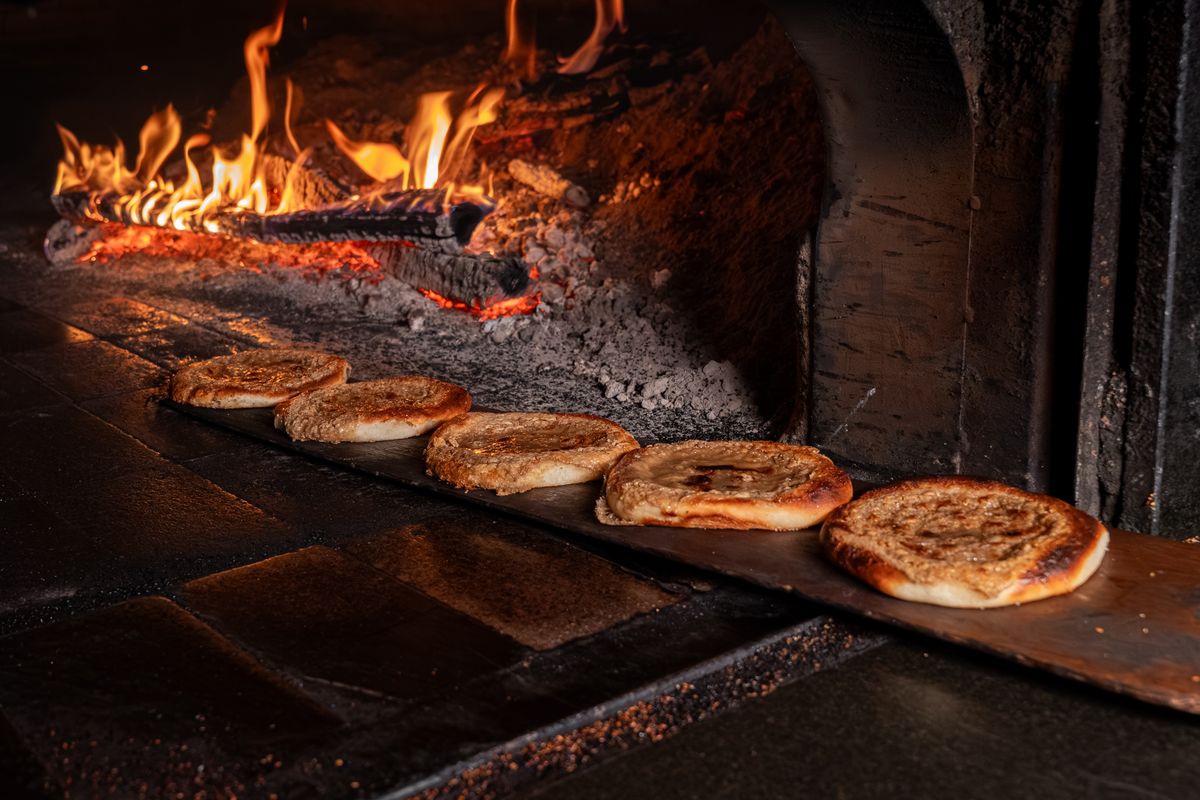
News broke this month of eight loaves of bread, about 5,000 years old, now on display at a museum in western Türkiye (Turkey). Archaeologists pulled them from a burned storeroom in 2025, and they join a run of finds that keep pushing the story of bread further back. The oldest bread in the world is far older than any of them, though: charred flatbread from a 14,400-year-old hunter-gatherer camp in Jordan, baked thousands of years before anyone farmed grain. What ties these finds together is what they were made from. Again and again it is einkorn, emmer and barley, the same ancient grains you can still buy and bake with today.
Quick answer: The oldest bread found so far is about 14,400 years old: charred flatbread remains from Shubayqa 1, a hunter-gatherer site in northeastern Jordan, made from wild einkorn, barley and oats along with the tubers of a wetland plant called club-rush. It predates farming by thousands of years. The best-preserved whole loaves are younger, including an 8,600-year-old dough from Çatalhöyük and several 5,000-year-old emmer and wheat loaves from Bronze Age Türkiye.
What is the oldest bread in the world?
The oldest bread found so far comes from Shubayqa 1, a site in the Black Desert of northeastern Jordan where Natufian hunter-gatherers lived about 14,400 years ago. Researchers from the University of Copenhagen, University College London and the University of Cambridge analyzed 24 charred food remains from the site’s fireplaces and published the results in PNAS in 2018. The remains closely resemble unleavened flatbread: wild relatives of einkorn, barley and oats that had been ground, sieved and kneaded before cooking, plus ground tubers of club-rush.
The timing is the remarkable part. The researchers place it at least 4,000 years before the emergence of agriculture, so people were baking with wild grain long before anyone planted it. The research team suggested that bread, a laborious food that took dehusking, grinding, kneading and baking, may have been prized enough that the wish to make more of it helped push people toward growing cereals on purpose.
Which find gets called “the oldest” depends on what you count. Shubayqa’s bread survives as small charred fragments, and the researchers describe them cautiously as bread-like products. The 8,600-year-old find at Çatalhöyük, which its excavators called the world’s oldest bread, is a whole palm-sized loaf, a different kind of evidence from charred crumbs.
What was ancient bread made from?
Ancient bread was made from the wild and early farmed plants people had on hand: wild einkorn, barley and oats at Shubayqa, wheat, barley and peas at Çatalhöyük, emmer with a little lentil at Küllüoba, and wheat and lentils at Seyitömer. None of it resembled modern white flour, and the Küllüoba loaf even contains bits of chaff, a sign its flour was never sieved.
| Find | Age | Made from |
|---|---|---|
| Shubayqa 1, Jordan | 14,400 years | Wild einkorn, barley and oats, plus club-rush tubers |
| Çatalhöyük, Türkiye | 8,600 years | Wheat, barley and peas |
| Küllüoba, Türkiye | 5,000 years | Coarse emmer with a little lentil |
| Seyitömer, Türkiye | 5,000 years | Wheat and lentils |
Notice the pattern. Einkorn, emmer and barley are among the “founder crops” of Near Eastern farming, the first plants people domesticated in the region, and lentils and peas are on that list too. The Bronze Age bakers at Küllüoba and Seyitömer were working with the same handful of plants that started agriculture in the first place.
Was ancient bread leavened?
Some of it probably was, but the evidence is thinner than the headlines suggest. The Shubayqa remains look like unleavened flatbread. The Çatalhöyük dough was described by its excavators as fermented, and the Küllüoba loaf has air pockets that point to kneaded and possibly leavened dough. Nobody had packaged yeast, so any rise would have come from wild yeasts and bacteria working in dough left to sit, the same process that drives a sourdough starter today.
The Çatalhöyük loaf, announced in March 2024, was found in the corner of an oven in an area of the site called Mekan 66. It is uncooked and about the size of a palm, with what looks like a finger impression in the middle, and radiocarbon dating put it at about 6600 BC. A thin layer of clay over the building helped the organic remains survive, and wheat, barley and pea seeds were found around the oven, as Hürriyet Daily News reported when the find was announced.
Why was a 5,000-year-old loaf buried under a doorway?
It was an offering. The excavators of Küllüoba, a mound in Eskişehir province, concluded the loaf was placed on purpose and then charred as part of a ritual to close down a building, a custom known from Neolithic sites such as Göbekli Tepe and Çatalhöyük that apparently carried on into the Bronze Age.
The team found it during the 2024 season at the lowest level of a room that held six ovens built one on top of another, near the doorway and sealed under half a meter of sterile red soil. It is a round, flat loaf about 12 cm (4.7 inches) across and 2.5 cm (1 inch) thick, with a piece missing from the edge that looks deliberately broken off. The full analysis, published in PLOS ONE in 2026, used electron microscopy, spectroscopy and thermal tests. It found coarsely ground emmer wheat with a small amount of lentil, chaff fragments showing the flour was never sieved, and signs the bread was baked above about 150°C (300°F). Radiocarbon dates put it around 3000 BC.
The most interesting detail for anyone who bakes with ancient grains is what the bread left out. The farmers at Küllüoba also grew einkorn, six-row barley and bread or durum wheat, and all of them turn up in the soil samples from the same area. Yet only emmer was found in the loaf, which points to emmer being chosen on purpose for a ritual bread.
What are the eight loaves on display in Kütahya?
They are eight charred loaves, about 5,000 years old, found in 2025 at Seyitömer Mound near Kütahya and now shown at the Kütahya Archaeology and Mining Museum along with the wheat and lentils found beside them. Unlike the Küllüoba loaf, they were ordinary stored food rather than an offering.
According to the museum’s director, who heads the excavation, the bread and grain were probably kept in sacks or bags on a shelf in a room near an oven. A fire brought the shelf down and scattered the food across the floor, and the heat charred the loaves, which is exactly what preserved them. The finds date to the early part of the Early Bronze Age, which began around 3000 BC in the region (GreekReporter has the details). Seyitömer itself is a 26-meter mound that has been dug since 1989, first as a rescue excavation ahead of lignite coal mining.
Put Küllüoba and Seyitömer side by side and you get both halves of Bronze Age bread: a special loaf made for a ceremony, and a storeroom full of everyday ones.
How to bake a Bronze Age-style emmer flatbread
You can get close to the Küllüoba loaf at home with whole emmer flour, a little ground lentil, water and a hot pan. This version keeps the original’s size, about 12 to 13 cm across, but rolls it thinner so it cooks through in a skillet, and adds a pinch of salt for flavor. It stays unleavened, like the Shubayqa flatbreads. L’Oro del Sud organic emmer flour works well, or use Jovial whole wheat einkorn flour with a little less water.
- 200 g (about 1 2/3 cups) whole emmer flour
- 25 g (2 tbsp) dry red lentils, ground to a powder
- 3 g (1/2 tsp) fine salt
- 140 g (1/2 cup plus 4 tsp) water (120 g, or 1/2 cup, for whole einkorn flour, which absorbs less)
- Grind the lentils to a fine powder in a spice grinder or blender, about 1 minute.
- Mix the emmer flour, ground lentils and salt in a bowl, pour in the water, and stir into a shaggy dough.
- Knead on the counter for 5 minutes until smooth and slightly tacky. Whole emmer never gets as stretchy as modern bread flour, and that is fine for a flatbread.
- Cover the bowl and rest the dough for 30 minutes so the bran softens and the dough relaxes.
- Divide into 4 pieces and roll each into a round about 5 inches (13 cm) across and 1/4 inch (6 mm) thick.
- Heat a large (12-inch) dry cast-iron skillet over medium-high heat for 3 minutes.
- Cook the flatbreads two at a time, 3 minutes per side, until blistered with brown spots and no longer doughy at the edges. Wrap the first batch in a clean towel to keep it soft while the second cooks.
Eat them warm with olive oil, soft cheese or a bowl of lentil soup, which is about as Bronze Age as a weeknight dinner gets.
Where to go from here
If this sent you down the ancient-wheat rabbit hole, start with what emmer wheat actually is and how it stacks up in our emmer vs einkorn breakdown. For full loaves rather than flatbreads, the ancient grain bread guide covers how the old wheats behave in a modern bread dough. The einkorn, emmer and barley pages list the flours and whole grains worth buying.
Frequently asked questions
Is ancient bread gluten-free?
No. Einkorn, emmer and barley all contain gluten, so bread made from them is not safe for anyone with celiac disease.
Can you eat 5,000-year-old bread?
No. The Bronze Age loaves survived because fire turned them to carbon, so what sits in the museum is essentially charcoal in the shape of bread.
Why does ancient bread survive at all?
Usually because it was charred, since carbonized bread is stable and soil microbes cannot break it down. That is why so many ancient loaves come from hearths, ovens and buildings destroyed by fire, though very dry places such as Egyptian tombs have preserved some bread as well.
Bake with the grain of the Bronze Age
See our hand-picked emmer, from flour to whole farro, with the brands worth buying.
Shop emmer →