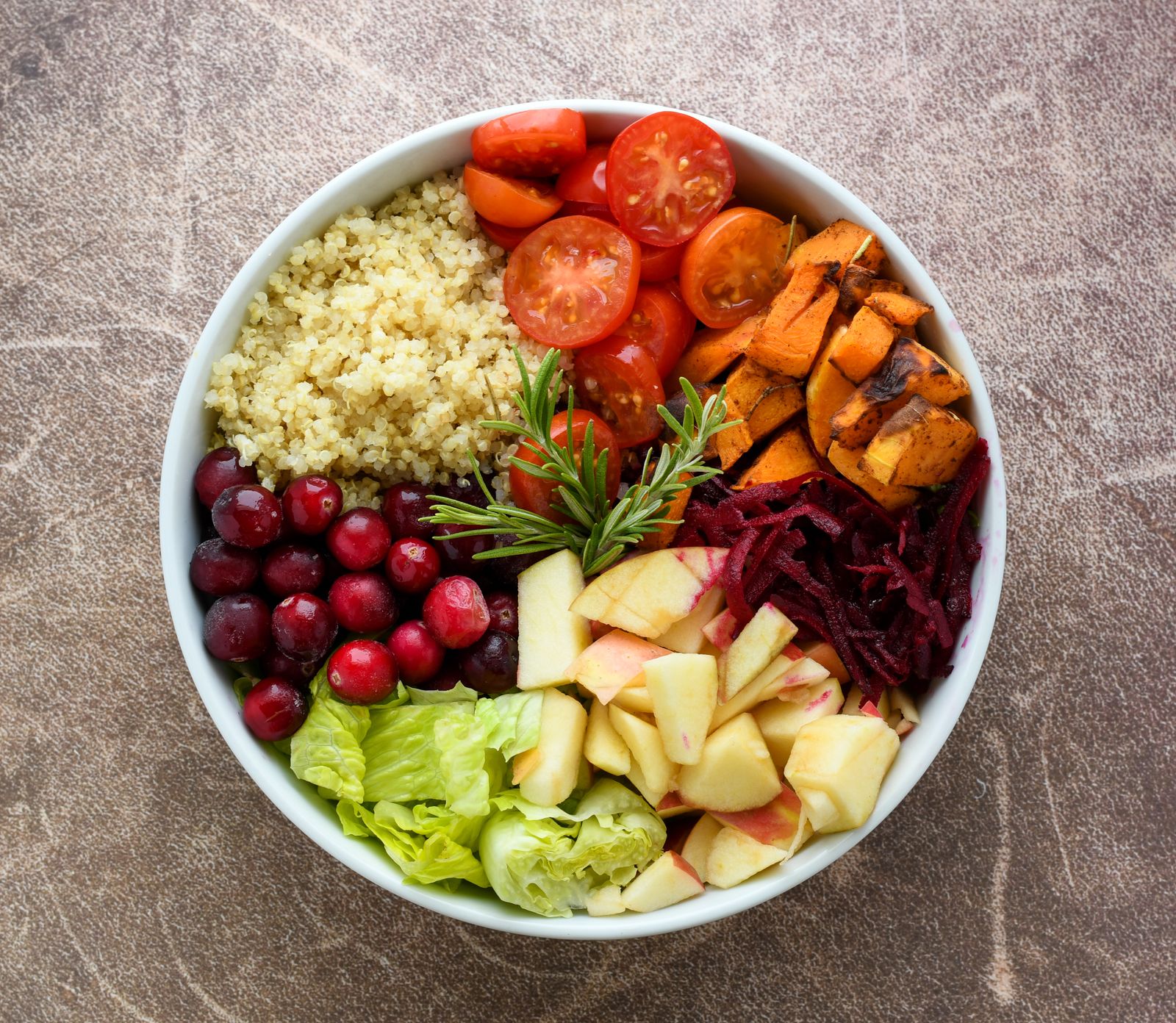
Quinoa gets marketed as the obvious upgrade over rice, and the truth is more interesting than the marketing. On some measures quinoa is genuinely ahead. On others the gap is smaller than people assume, and brown rice quietly closes most of it. Here is the quinoa vs rice comparison done properly, with the numbers and without the hype.
Quick answer: Quinoa is more nutrient-dense than rice, with more protein (and a complete one), more fiber, and more iron and magnesium per cup, plus a gentler effect on blood sugar. It has slightly fewer carbs but is not low-carb. Brown rice narrows the gap on most measures, while white rice wins on texture, cost, and easy digestion. All three are naturally gluten-free.
Quinoa vs rice: the nutrition at a glance
These figures are per 1 cooked cup, drawn from USDA FoodData Central. Rounding aside, this is the honest picture.
| Per cooked cup | Quinoa | Brown rice | White rice |
|---|---|---|---|
| Calories | 222 | 248 | 205 |
| Protein | 8 g | 5.5 g | 4.3 g |
| Carbs | 39 g | 52 g | 45 g |
| Fiber | 5 g | 3 g | 0.6 g |
| Iron | 15% DV | 5% DV | 2% DV |
| Magnesium | 30% DV | 19% DV | 5% DV |
The headline differences are real: quinoa carries more protein, more fiber, and more micronutrients per cup, especially against white rice. But notice that brown rice sits much closer to quinoa than white rice does. A lot of the “quinoa is healthier” story is really a “whole grain beats refined grain” story.
Is quinoa or rice better for you?
It depends on what you are optimizing for, so let me be specific rather than hand-wave.
- For protein: quinoa wins clearly. It is one of the few plant foods that is a complete protein, meaning it supplies all nine essential amino acids in usable amounts. Rice is short on lysine. If you eat plant-forward, this is the single best reason to choose quinoa.
- For fiber and minerals: quinoa, then brown rice, then white rice in a distant third.
- For digestibility and simplicity: white rice. It is low-residue, gentle on sensitive guts, and the traditional base for a reason.
- For cost and shelf appeal: rice, almost always cheaper per serving.
So “better” is not a single answer. Quinoa is the more nutrient-dense choice, but it is a pseudocereal, the seed of a broadleaf plant, not a true cereal grain like rice. They are not direct substitutes in every dish.
How do the carbs in quinoa vs rice compare?
This is where the marketing oversimplifies. Per cooked cup, quinoa has fewer total carbs than either rice (39 g vs 45 to 52 g), but it is not a low-carb food. All three are starchy.
What matters more than the raw carb count is how quickly that starch hits your blood sugar, which brings us to glycemic load. Quinoa’s higher fiber and protein slow digestion, so the same gram of carbohydrate lands more gently. Reviews indexed in the National Library of Medicine put quinoa at a low-to-moderate glycemic index, below white rice and roughly level with or slightly under brown rice. The practical takeaway: if you are managing blood sugar, quinoa and brown rice both beat white rice, and the choice between those two is close.
Is quinoa gluten-free like rice?
Yes. All three are naturally gluten-free, which makes this comparison relevant for anyone with celiac disease or gluten sensitivity. Quinoa, brown rice, and white rice contain no wheat, barley, or rye protein. As always, check the packaging for a certified label if cross-contamination is a concern, since shared facilities are the usual culprit. We go deeper on this in our piece on whether quinoa is gluten-free.
When should I choose rice over quinoa?
Plenty of times, honestly. I am a quinoa researcher and I still reach for rice regularly.
- Texture-led dishes: sushi, risotto, paella, and sticky-rice dishes depend on rice starch behaving the way only rice does. Quinoa cannot stand in.
- Bland-by-design bases: when you want the grain to disappear under a curry or stir-fry, rice is the better blank canvas. Quinoa has a distinct grassy, nutty note that not every dish wants.
- Budget and batch cooking: rice is cheaper and more forgiving in bulk.
- Sensitive digestion: quinoa’s saponin coating and higher fiber can bother some people. Rinse quinoa well, or pick white rice if your gut prefers it.
A fair rule: use quinoa when the grain is a feature, and rice when the grain is a backdrop.
What about wild rice?
Worth a mention, because it is the dark horse here. Despite the name, wild rice is not true rice at all. It is an aquatic grass seed, and nutritionally it rivals quinoa, with strong protein and fiber and a chewy, savory bite. If this comparison has you curious about higher-protein grains, wild rice is the next one to try, and our wild rice recipes are a good place to start.
The bottom line
Quinoa is the more nutrient-dense option, clearly ahead on protein and minerals, and the better default if you want the most nutrition per bowl. But brown rice is closer than the hype suggests, white rice still earns its place for texture and digestibility, and the real upgrade for most people is simply choosing a whole grain over a refined one. Eat both, and let the dish decide.
If you want to start cooking with it, a good tri-color quinoa is an easy first bag, and the simplest method is our rice-cooker quinoa guide.
Frequently asked questions
Is quinoa or rice better for weight loss?
Quinoa has the edge because its protein and fiber make a serving more filling, so you tend to eat less and stay satisfied longer. Neither is inherently slimming, though; portion size and what you serve with it matter far more than the grain you pick.
Can I substitute quinoa for rice one-to-one?
Often, but not always. Quinoa swaps in well as a base under stews, in salads, and in grain bowls, but it cannot replace rice where the starch is the point, such as sushi, risotto, or paella. Cook quinoa in about two parts water to one part grain rather than following rice ratios.
Is quinoa actually a grain?
Not botanically. Quinoa is a pseudocereal, the seed of a broadleaf plant related to spinach, so it is technically a seed rather than a true cereal grain like rice. Nutritionally and in the kitchen, though, it behaves like a whole grain.
Ready to cook more quinoa?
See our pick of quinoa, whole seed and flour, with the brands worth buying and how to use each.
Shop quinoa →