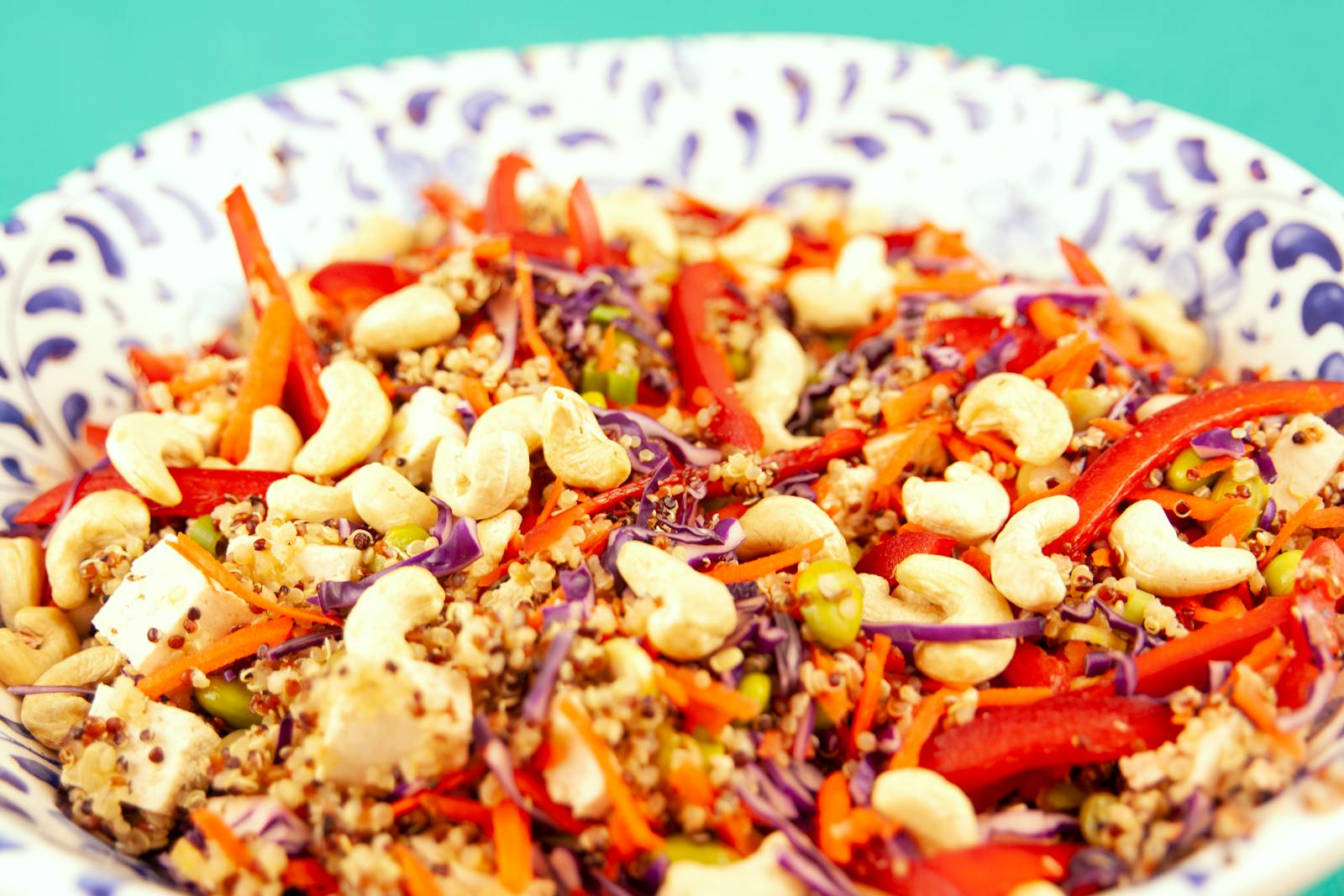
I get the is quinoa gluten free question almost every week, and the answer I give as a registered dietitian is the same every time: yes, quinoa is naturally gluten-free and one of the safest gluten-free grains you can put on your plate. The full answer has two practical footnotes about cross-contamination and one tangent about the bitter coating most shoppers eventually ask me about, but the headline is unambiguous. Quinoa is gluten-free, and that includes quinoa flour.
To be more precise: quinoa contains zero gluten, full stop. It comfortably clears the FDA’s “gluten-free” threshold of less than 20 parts per million when sourced from a clean supply chain. For most people with celiac disease or non-celiac gluten sensitivity, quinoa is one of the easiest grains to add to a daily rotation, no caveats required beyond reading the label.
Quick answer: Yes, quinoa is naturally gluten-free, and so is quinoa flour. Quinoa is a pseudocereal, a broadleaf plant related to spinach rather than a grass, so it never had a gluten gene. It is one of the safest gluten-free grains and celiac-safe by medical consensus; the only caveat is cross-contamination during shared milling or storage, so buy a certified gluten-free bag if you have celiac disease. The bitter coating is saponin, not gluten.
Why is quinoa gluten free at the botanical level?
Because quinoa is not a grass. Gluten is a protein produced by grasses in the family Poaceae, which includes wheat, barley, and rye. Quinoa (Chenopodium quinoa) is a broadleaf plant in the family Amaranthaceae, much more closely related to spinach, chard, and beets than to anything in the wheat aisle. The gluten gene simply does not exist in its genome.
This category is called a pseudocereal: a non-grass plant whose seeds we use the way we use cereal grains. Amaranth and buckwheat sit in the same category and are equally gluten-free for the same botanical reason. Our gluten-free grains hub walks through the full list of pseudocereals and true cereals that are safe on a gluten-free diet.
The pseudocereal status is also why quinoa is a complete protein, which is unusual for any plant food: it contains all nine essential amino acids in appreciable amounts, while most true cereal grains are short on lysine. The USDA FoodData Central quinoa entry puts cooked quinoa at roughly 120 kcal, 4.4g protein, 2.8g fibre per 100g.
Can quinoa get cross-contaminated with gluten?
In theory, yes. In practice, much less than oats, for two reasons that put quinoa at the safer end of the cross-contamination spectrum.
- It’s rarely grown in rotation with wheat. Quinoa’s main production zones are the Andes (Peru, Bolivia, Ecuador), parts of the US Mountain West, and Canada. Andean quinoa fields are almost never in wheat rotation. North American quinoa farms tend to be dedicated operations rather than wheat-rotation acreage.
- It’s typically processed in single-purpose facilities. Most quinoa brands sold in North America (Ancient Harvest, Bob’s Red Mill, Trader Joe’s, Costco) process quinoa in facilities that handle other gluten-free foods only, or are certified gluten-free.
The contamination that does happen usually comes from shared bulk-bin storage, shared milling equipment for quinoa flakes or quinoa flour, or warehouse-level mixing. The fix is the same as for oats: buy product with a third-party gluten-free certification seal (GFCO, NSF, or the Celiac Support Association seal). For celiac consumers, this matters; for non-celiac wheat sensitivity, the risk is typically too small to worry about.
The Celiac Disease Foundation’s grain reference is unambiguous on this: quinoa is one of the grains they recommend without reservation.
Is quinoa flour gluten-free?
Yes, same answer. Quinoa flour is finely milled whole quinoa seed and contains no gluten. The same cross-contamination caveat applies: a quinoa flour milled in a wheat-flour facility could pick up trace gluten. For celiac safety, look for a certified gluten-free seal on the bag.
Our quinoa flour post covers what quinoa flour actually does in baking, which is a separate question from whether it’s gluten-free. Short version: quinoa flour is mildly bitter and grassy, behaves like a strong-flavour gluten-free flour (similar to buckwheat in profile), and works best in blends rather than alone.
What about the bitter coating on quinoa? Is that gluten?
No. The bitter coating is saponin, a soapy compound the plant produces to discourage birds from eating the seed. Saponins are not gluten and have no connection to gluten sensitivity or celiac disease. They are simply unpleasant-tasting.
Most pre-packaged quinoa sold in North America has been pre-rinsed at the processor to remove saponins, but it does not hurt to give the grain a quick rinse in cold water before cooking anyway. Bulk-bin quinoa from Andean importers sometimes still carries the saponin coating and benefits from a thorough rinse, sometimes two, until the rinse water runs clear and stops foaming.
If your cooked quinoa tastes faintly bitter or soapy, the saponins are the cause, not anything to do with gluten.
Is quinoa safe for people with celiac disease?
Yes, with the certification caveat above. The medical consensus is firm. The original 2009 study by Zevallos and colleagues at the University of Bologna fed quinoa to celiac patients for six weeks and found no increase in inflammatory markers, no antibody response, and no symptom recurrence. Subsequent research has confirmed the result. Quinoa is a celiac-safe grain.
For non-celiac wheat sensitivity, quinoa is similarly comfortable. Many people transitioning off wheat find quinoa one of the easiest swaps to make, both because it cooks like rice and because its complete-protein profile makes it more nutritionally substantial than rice on its own; our quinoa vs rice comparison puts the two side by side.
This puts quinoa in a different category from oats, which require a celiac-specific certified supply chain because of routine field cross-contamination. Quinoa needs the same vigilance only at the margin.
How does quinoa compare to other gluten-free grains for safety?
Here is the dietitian’s quick reference.
| Grain | Gluten-free status | Celiac-safety risk |
|---|---|---|
| Quinoa | Naturally GF | Very low |
| Amaranth | Naturally GF | Very low |
| Buckwheat | Naturally GF | Low |
| Rice | Naturally GF | Very low |
| Sorghum | Naturally GF | Low |
| Teff | Naturally GF | Low |
| Millet | Naturally GF | Low |
| Oats | Naturally GF | Moderate (cross-contamination) |
| Spelt/einkorn/emmer | NOT gluten-free | High (these ARE wheat) |
For more on the buckwheat-specific picture, see our is buckwheat gluten free post. For the long-form fermentation question on wheat sourdough specifically, see is sourdough bread gluten free. For the heritage-wheat trap that sometimes confuses shoppers, our emmer vs einkorn comparison is the explainer; both grains are wheat and contain gluten, despite the ancient-grain marketing.
Where should I start with quinoa?
Here are a few practical recommendations from the clinic.
- Buy a certified gluten-free brand if you have celiac disease. Ancient Harvest, Bob’s Red Mill, and most major brands carry the GFCO seal.
- Rinse before cooking to remove any residual saponin bitterness. 30 seconds under cold water is enough for pre-rinsed brands; longer for bulk-bin.
- Cook 1:2 white quinoa to water for fluffy quinoa; 1:3 for soft, almost porridge-like. Bring to a boil, drop to simmer, cover, 15 minutes. Rest 10 minutes off the heat. Fluff with a fork.
- Aim for half a cup of cooked quinoa per serving as a base, then build the meal around it. For background on the broader culinary tradition that brought quinoa to Western plates, our quinoa history post is the companion piece.
Quinoa is gluten-free. It is also one of the most nutritionally dense plant foods you can put on a celiac or gluten-sensitive diet, full stop. The only smart move is to pick a brand that takes cross-contamination seriously, and then to rinse the bag before it touches the pot.
Frequently asked questions
Are red and black quinoa gluten-free too?
Yes. White, red, black, and tri-color quinoa are all the same gluten-free species; the colour only changes the texture slightly (darker types stay a little firmer). All of them are safe on a gluten-free diet.
Do I need certified gluten-free quinoa if I have celiac disease?
It is the safest choice. Quinoa’s cross-contamination risk is low, but shared bulk bins and milling equipment can introduce trace gluten, so a certified gluten-free bag removes the doubt. For non-celiac sensitivity, ordinary quinoa is usually fine.
Can quinoa upset your stomach even though it has no gluten?
Yes, and it is not the gluten. Unrinsed quinoa carries bitter saponins that can irritate digestion, and quinoa contains fermentable fibres (FODMAPs) that bother some people. Rinse it well and start with modest portions if it feels harsh.
Stock up on Quinoa
See our hand-picked Quinoa, from flour to whole grain, with the brands worth buying.
Shop Quinoa →