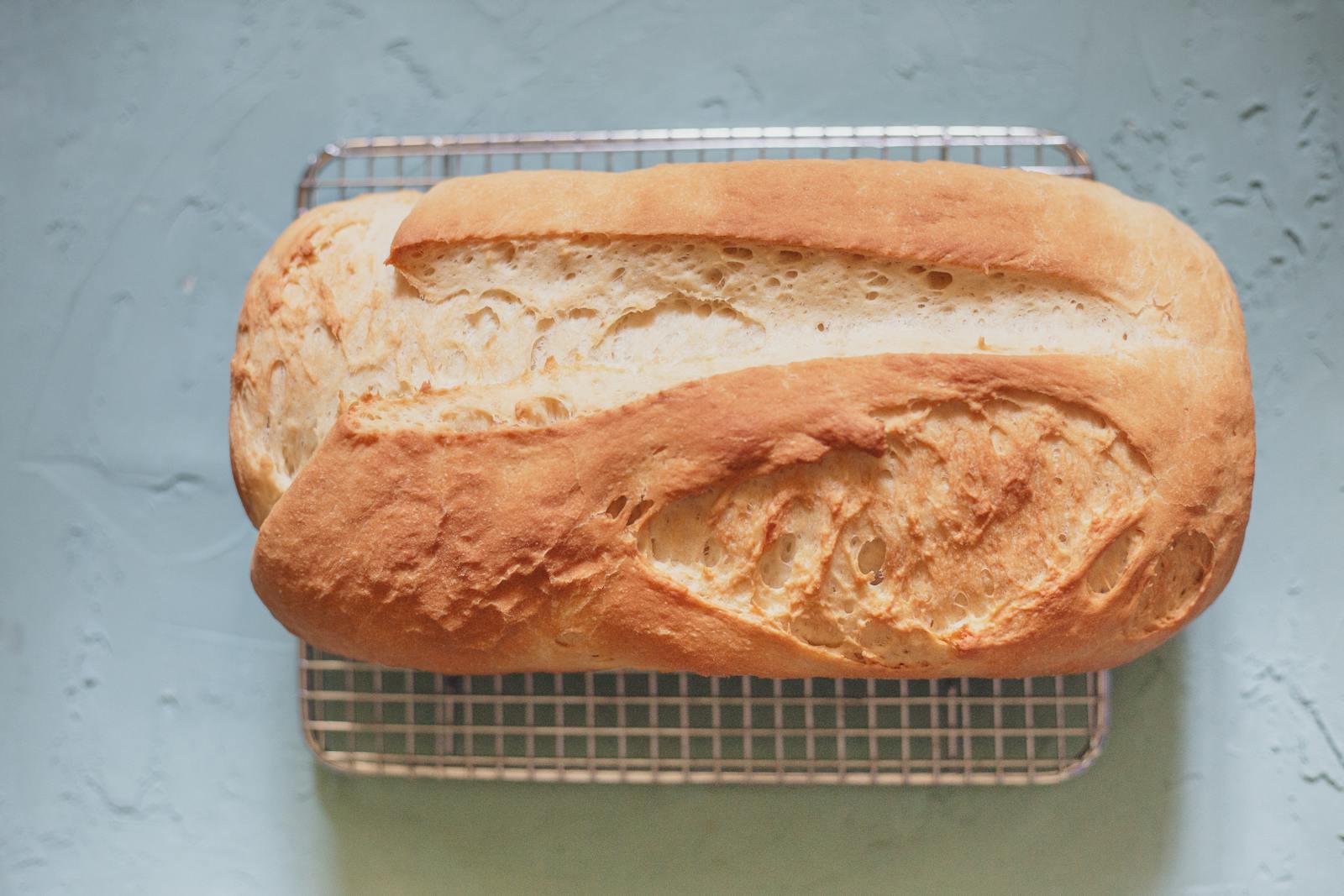
I will be straight with y’all: einkorn bread is the most rewarding ancient-wheat loaf you can bake, and also the most frustrating the first time. The flavor is incredible (sweet, almost honeyed, deeply nutty in a way modern wheat cannot touch), the color is a beautiful pale gold, and the crumb is tender in a way that ferments fast and slacks easily if you turn your back on it. After teaching this in classes for ten years, mind you, I have watched experienced sourdough bakers underestimate einkorn dough and end up with a sad puddle on the counter. The technique is different, and once you get it, the loaf is worth every minute.
This guide covers why einkorn dough behaves differently, the practical adjustments you need to make, and two recipes (one yeasted, one sourdough). If you want the broader baking context, our ancient grain bread guide is a good companion, and if einkorn proves too temperamental on the first try, spelt is the most forgiving ancient wheat to learn on (the einkorn vs spelt comparison shows exactly where the two diverge).
Quick answer: Einkorn bread is baked with einkorn, the oldest wheat, and it is prized for a sweet, honeyed, deeply nutty flavour and a golden crumb. Because einkorn is a diploid wheat with weaker gluten, its dough needs less water (about 60 to 68% hydration), a shorter ferment, and gentle handling, or it slackens into a puddle. Both yeasted and sourdough versions work. Einkorn is a true wheat, so einkorn bread contains gluten and is not safe for celiacs.
Why is einkorn bread different from regular bread?
The short answer is genetics. Einkorn (Triticum monococcum) is a diploid wheat, meaning it carries two sets of seven chromosomes (2n = 14). Modern bread wheat is hexaploid (2n = 42), with three times the genetic material and a wider menu of gluten proteins. For more on this distinction, see our emmer vs einkorn post, which explains why ploidy matters in the kitchen.
The practical consequence: einkorn has fewer high-quality gluten-forming proteins than modern wheat. The dough does not develop the strong elastic network that traps gas and holds shape during a long proof. Einkorn dough behaves more like a tender enriched dough, even at standard hydration.
Three things follow:
- Use less water than you would for modern wheat. Most einkorn recipes work at 60-68% hydration, where you might use 75-80% for a regular sourdough.
- Ferment shorter. Einkorn yeast activity moves fast. Bulk fermentation that takes 4-5 hours with bread wheat may finish in 2.5-3 hours with einkorn at the same temperature.
- Resist the urge to over-knead. Stretching the dough too much breaks the fragile gluten network. A short knead or a few sets of stretch-and-folds is plenty.
A simple yeasted einkorn bread recipe
Beginner-friendly, no starter required.
- 400 g (about 3 1/3 cups) whole einkorn flour
- 260 g (generous 1 cup plus 1 tbsp) warm water, around 95°F (65% hydration)
- 4 g (about 1 1/4 tsp) instant yeast
- 8 g (1 1/2 tsp) fine salt
- 15 g (2 tsp) honey
- Variant (sourdough): swap the yeast and honey for 80 g active einkorn starter; see the sourdough method below
- Mix. Combine flour, salt, and yeast in a bowl. Whisk the honey into the warm water until dissolved, pour wet into dry, and stir with a spatula until a shaggy dough forms. No need to knead aggressively. Cover.
- Bulk ferment. 90 minutes at 75°F. Give the dough one fold at the 30-minute mark (wet your hand, lift one side, fold it over the middle, rotate the bowl, repeat three times). The dough will look slack but should rise about 50% in the bowl.
- Shape. Flour a counter lightly. Tip the dough out, pat it into a rough rectangle, fold top down and bottom up, then roll into a log. Place seam-side down in a parchment-lined 9x5 loaf pan, or shape into a round and place on parchment.
- Final proof. 45-60 minutes at 75°F. The dough should look puffy but not balloon out.
- Bake. Preheat oven to 425°F. If you have a baking stone or steel, use it. Slash the top with a sharp knife. Bake 35-40 minutes until deep golden and the internal temperature reads 200°F. The crust will be thinner than a wheat loaf.
- Cool fully before slicing, at least 90 minutes. Einkorn bread firms up dramatically during cooling, and slicing warm always reads as gummy.
How do you make an einkorn sourdough loaf?
The same principles apply, just with a starter instead of commercial yeast. You can build an einkorn starter from scratch in 7-10 days using equal parts einkorn flour and water (the method is the same as any other sourdough start). Or feed an existing wheat starter with einkorn for 2-3 cycles to convert it.
| Ingredient | Amount |
|---|---|
| Whole einkorn flour | 400 g |
| Water | 260 g |
| Active einkorn starter | 80 g |
| Salt | 8 g |
Mix everything together. Bulk ferment 3-4 hours at 75°F with two folds in the first hour. Shape, cold-retard overnight in the fridge (8-14 hours). Bake straight from the fridge at 450°F in a Dutch oven, lid on for 25 minutes, lid off for 15-20 more until the crust is deeply golden.
I teach this loaf alongside my gluten-free sourdough method, and students often tell me einkorn is the easier of the two once they accept that it is not going to behave like wheat. The reward is a tangier, more complex loaf than the yeasted version.
Why does einkorn bread taste so different?
Two reasons. Einkorn carries more carotenoids (the pigments that make it golden) than any other cultivated wheat, a difference documented by USDA FoodData Central, which contributes to a richer, slightly sweet flavor. And its different gliadin profile produces less of the harsh wheaten edge you get from highly-bred modern wheats. The loaf reads as honeyed, almost custard-like in the crumb, with a clean nutty finish.
Some people with mild gluten sensitivity (not celiac disease, which is non-negotiable) report tolerating einkorn better than modern wheat. The Cornell Small Farms program has published on this, citing einkorn’s narrower gluten-protein profile. The science is still emerging. I would not recommend einkorn as a celiac substitute, period.
What are the most common einkorn bread mistakes?
Too much water, over-fermenting, and slicing too soon. These are the three things that go wrong most often in my classes.
- Too much water. People apply a 75% hydration habit from regular sourdough and end up with batter, not dough. Start at 65% and adjust up only after you have baked the basic loaf successfully.
- Over-fermenting. Einkorn ferments fast. If your dough looks doubled and slack with bubbles popping on the surface, you are past the window. Bake immediately.
- Slicing too soon. Like most heritage loaves, einkorn keeps setting as it cools. A 90-minute rest minimum, two hours is better.
A fourth, smaller issue: einkorn flour sourced from Italian or American mills behaves slightly differently. Italian einkorn (often labeled farro piccolo) tends to be milled finer; American einkorn from companies like the brands carried by most natural-food stores is often a coarser whole grain einkorn flour. The recipes above work for both, but Italian flour will absorb a touch less water.
What else can you do with einkorn flour?
Pancakes, pie crusts, pasta dough, cookies, and quick breads. Once you have built confidence with the basic loaf, einkorn flour does well in all of them, and our einkorn flour recipes roundup works through eight of them in order of how forgiving they are.
- Pancakes (use 1:1 substitution for AP flour in any recipe; reduce liquid by 10%).
- Pie crusts (the lower gluten makes for tender, slightly flaky crust).
- Pasta dough (especially good for hand-cut tagliatelle).
- Cookies and quick breads (where you do not need much gluten structure).
For the whole grain rather than the flour, see how to cook einkorn wheat berries, a one-page guide to simmering einkorn for grain bowls and salads.
The bread takes a few tries to dial in. The flavor is worth every loaf that came before it.
Frequently asked questions
Is einkorn bread gluten-free?
No. Einkorn is the oldest cultivated wheat, so einkorn bread contains gluten and is never safe for anyone with celiac disease. Its gluten is weaker and structurally different from modern wheat, which is why some people with milder sensitivity report tolerating it better, but the evidence is still emerging, as our ancient wheats and gluten sensitivity post covers.
Can you substitute einkorn flour for regular flour in bread?
Yes, but adjust for its weaker gluten. Swap it in one-to-one by weight, then cut the water by 10 to 15 percent, knead gently, and shorten the rise, since einkorn ferments fast and absorbs less. Expect a denser, more tender loaf than one made with modern bread flour.
Does einkorn bread rise like normal bread?
Not as much. Einkorn’s fragile gluten traps less gas, so the loaf rises less and bakes into a tighter, more tender crumb than a modern wheat loaf. That lower, denser rise is normal for einkorn and is the trade-off for its flavour, not a sign you did anything wrong.
Stock up on Einkorn
See our hand-picked Einkorn, from flour to whole grain, with the brands worth buying.
Shop Einkorn →