 By Cora Whitfield · Published · 1289 words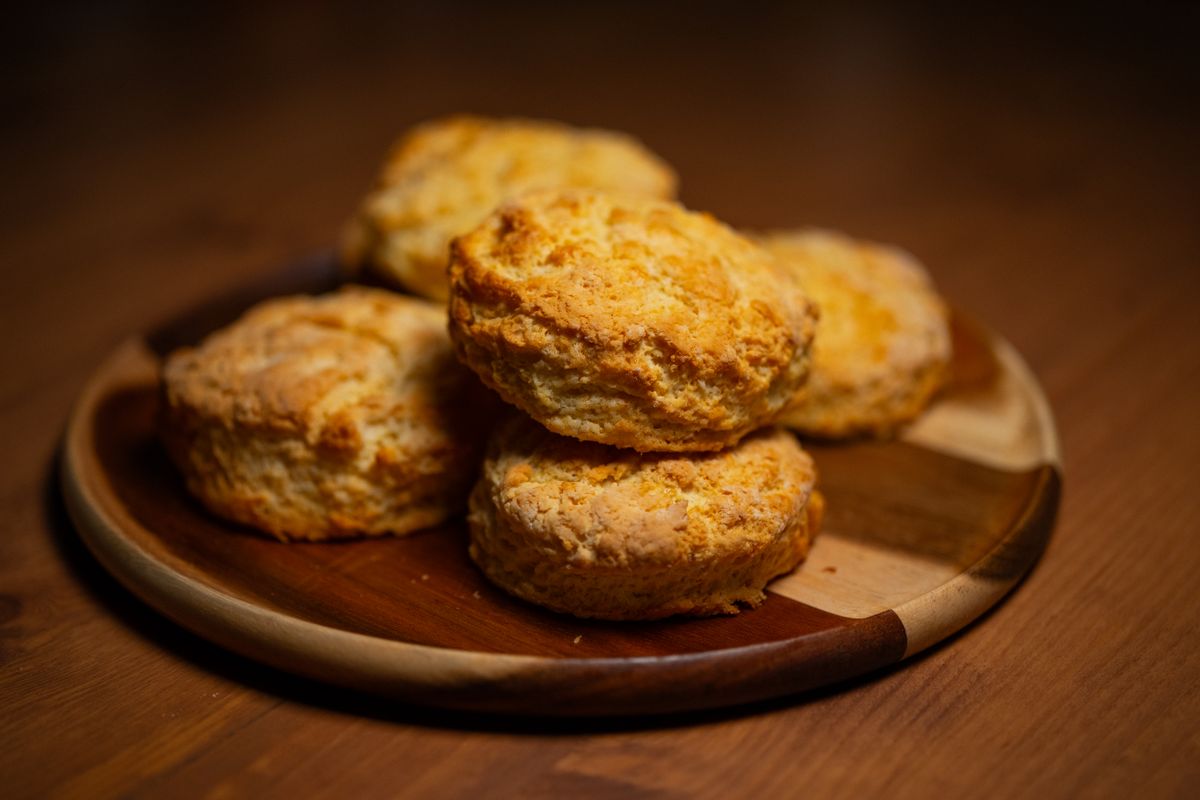
Where I teach in North Carolina, a biscuit is not a side dish, it is a birthright, and going gluten-free does not revoke it. The biscuit is actually one of the friendliest bakes to convert: it never wanted much gluten anyway, which is why old Southern bakers reach for soft low-protein flour and handle the dough like a sleeping baby. Gluten-free biscuits need just two adjustments to stand tall, colder butter and a gentler shaping fold, and this recipe walks both, then finishes the job the only correct way, with sausage gravy.
Quick answer: To make gluten-free biscuits, cut cold grated butter into a rice-based gluten-free flour blend with xanthan gum, baking powder, and a little sugar, stir in cold buttermilk, fold the dough over itself three times for layers, and cut straight down without twisting. Bake at 425°F for 15 to 18 minutes until golden. The stack-and-fold is what builds the pull-apart layers, and buttermilk's acid powers the rise.
How do you make gluten-free biscuits?
Makes 8 tall biscuits. The only equipment that matters is a cold stick of butter and a light hand.
- 2 cups (240 g) gluten-free all-purpose flour blend with xanthan gum
- 1 tbsp (14 g) baking powder
- 1/2 tsp baking soda
- 1 tbsp (12 g) sugar
- 1 tsp fine salt
- 1/2 cup (113 g) cold butter, frozen 10 minutes and grated
- 1 cup (240 ml) cold buttermilk, plus more for brushing
- Whisk the dry ingredients in a large bowl: flour blend, baking powder, baking soda, sugar, and salt.
- Grate the very cold butter on a box grater straight into the flour and toss with your fingers until every shred is coated. Grated butter distributes evenly without any cutting-in skill required.
- Stir in the cold buttermilk just until no dry pockets remain. The dough should look shaggy, not smooth; smooth means overmixed for wheat, but here it just means wet, so add a spoonful of flour if it slumps.
- Stack and fold three times. Turn the dough onto parchment, pat to a rough rectangle about 3/4 inch thick, fold it in half, pat again, and repeat twice more. Those folds become the pull-apart layers.
- Cut straight down with a 2.5-inch cutter dipped in flour, no twisting, so the layered edges stay open. Re-pat scraps and cut again; unlike wheat dough, the last biscuit is as tender as the first.
- Chill 10 minutes, brush, and bake. Set the biscuits on a tray with sides touching, brush the tops with buttermilk, and bake at 425°F for 15 to 18 minutes until deep golden. Touching sides make them climb instead of spread.
What makes gluten-free biscuits rise tall?
Steam and chemistry doing the work gluten used to take credit for. The grated cold butter melts in the oven and releases steam inside each fold, jacking the layers apart, while the baking soda hits the buttermilk’s acid for immediate lift and the baking powder fires again in the heat. Three details protect that rise: the butter must go in cold so it survives to the oven, the folds must be gentle so the layers stay distinct, and the baking powder must be fresh, since a tired can is the number one reason biscuits bake into pucks (it is also the one leavener worth checking the label on, since its starch buffer is occasionally wheat). Set them close together and they brace each other upward like commuters on a full train.
Why are my gluten-free biscuits dry or crumbly?
Usually the blend, sometimes the bake. A blend without xanthan gum cannot hold the crumb together, so check the bag first; our gluten-free flour guide lists which blends carry their own binder. If the blend is right, dryness comes from overbaking past deep golden or from shorting the fat, so weigh the butter rather than eyeballing. And gluten-free flours drink more liquid than wheat, which is why this recipe runs wetter than a classic biscuit dough; resist the urge to flour it into submission. A finished biscuit split and brushed with melted butter forgives nearly everything, which is the oldest trick in the Southern playbook.
What flour blend works for Southern-style biscuits?
A rice-based 1-to-1 blend with xanthan gum, the same pantry anchor as the rest of our gluten-free baking, built from white rice flour if you mix your own. For flavor closer to the soft red-wheat flours the South was built on, swap a quarter of the blend for sorghum flour, which brings a round, faintly sweet wholemeal note without weighing the crumb down. A spoonful of buckwheat flour goes darker and earthier, better under gravy than under jam. The Celiac Disease Foundation keeps the list of naturally safe flours if you are building the pantry from scratch.
How do you make gluten-free biscuits and gravy?
Brown a pound of breakfast sausage in a skillet, stir 3 tablespoons of your gluten-free flour blend into the drippings, cook it a minute so the starch loses its raw taste, then whisk in 2 1/2 cups of milk and simmer until thick, seasoning hard with black pepper. The blend thickens exactly like wheat flour, and plain white rice flour works too with a slightly silkier result. Split two biscuits per plate, ladle it over, and you have the full Southern breakfast with nothing missing; our gluten-free breakfast guide covers the rest of the morning table.
Where to go from here
Biscuits are the fastest win in the gluten-free bread world: no yeast, no proof, twenty active minutes. If your kitchen keeps a sourdough jar, our sourdough discard biscuits route the same technique through tangier territory, and the wider biscuit tradition connects to everything from shortcake to cobbler topping, all of which this dough handles. The gluten-free flour guide and gluten-free grains guide map the pantry behind it all. Make a double batch Sunday; the freezer note below makes weekday biscuits a nine-minute affair.
Frequently asked questions
Are biscuits and cookies the same thing?
Only across the Atlantic: in Britain a biscuit is what Americans call a cookie, which is why searches like gluten-free chocolate chip biscuits lead to our gluten-free cookies recipe instead. This post is the American biscuit, a soft leavened quick bread.
Can I make gluten-free biscuits dairy-free?
Yes: use a firm plant butter, frozen and grated the same way, and sour a cup of unsweetened almond or soy milk with a tablespoon of lemon juice as mock buttermilk. The acid matters for the rise, so do not skip the souring step.
Can I use this dough for strawberry shortcake?
Yes, it is the classic move: add 2 extra tablespoons of sugar to the dry mix and a splash of vanilla to the buttermilk, then split the baked biscuits over macerated strawberries and cream. Sweetened this way they also make a fine cobbler topping.
Can I freeze biscuit dough?
Yes, and raw is best: cut the biscuits, freeze them solid on a tray, and bag them. Bake straight from frozen at the same temperature with about 3 extra minutes; the cold butter actually rises a touch taller.
Anchor the biscuit pantry
White rice flour is the base of the blend behind these biscuits, the gravy, and every gluten-free bake on this site.
Shop rice flour →Meet the flavor grains
Sorghum, buckwheat, and the rest of the naturally gluten-free grains that give a plain blend some Southern soul.
Browse all grains →