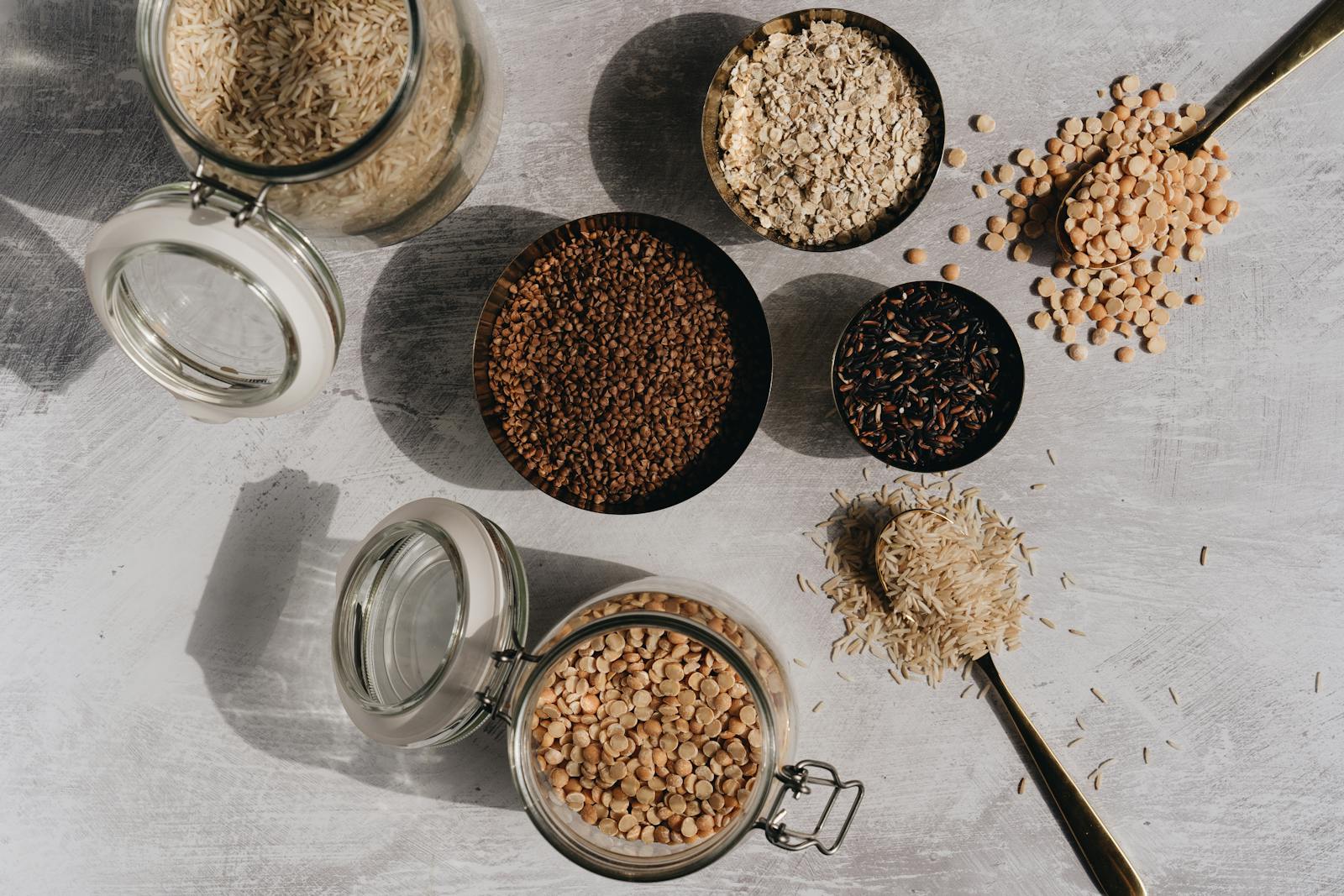
As a registered dietitian, the gluten-free grains question is one of the most common I field, and it is also one of the most muddled by marketing. Here is the clear answer, the one I give clients on day one of a gluten-free diet: rice, corn, quinoa, amaranth, buckwheat, sorghum, teff, millet, wild rice, and oats (with one important caveat) are all gluten-free. Wheat, barley, and rye are not, and neither are the heritage wheats sometimes marketed as if “ancient” meant “safe.”
That is the whole list in one sentence. The rest of this guide explains the nuances that matter: the pseudocereal distinction, the oats caveat, the heritage-wheat trap, and how to read a label so you can actually trust it.
Quick answer: The gluten-free grains are rice, corn, quinoa, amaranth, buckwheat, sorghum, teff, millet, and wild rice, plus oats when they are certified gluten-free. Wheat, barley, and rye contain gluten, and so do the heritage wheats, einkorn, emmer, spelt, and khorasan (Kamut), despite the "ancient grain" label. Pseudocereals like quinoa and buckwheat are among the safest because they are not grasses at all.
What grains are gluten-free?
Gluten is a protein found specifically in wheat, barley, and rye. Any grain or grain-like seed that is not one of those three, and has not been cross-contaminated, is gluten-free. The full working list, with a one-line profile of each, is below.
| Grain | Type | Quick profile |
|---|---|---|
| Rice (white, brown, black) | True cereal | The default GF staple, mild, universally available |
| Corn / maize | True cereal | Polenta, tortillas, cornmeal; naturally GF |
| Quinoa | Pseudocereal | Complete protein, fast-cooking, slightly bitter coating |
| Amaranth | Pseudocereal | Tiny seed, high protein, porridge-like when cooked |
| Buckwheat | Pseudocereal | Earthy, despite the name not related to wheat at all |
| Sorghum | True cereal | Mild, the most wheat-like; great as flour |
| Teff | True cereal | World’s smallest grain, makes Ethiopian injera |
| Millet (incl. foxtail millet) | True cereal | Mild, fluffy, an underrated everyday grain |
| Wild rice | Aquatic grass seed | Not true rice; nutty, chewy, GF |
| Oats | True cereal | GF by nature, but see the caveat below |
Chia and hemp are technically seeds rather than grains, but they show up in the same conversation. Both are gluten-free and both work as grain-adjacent additions to a GF diet; the easiest way into chia is a properly set chia pudding.
What is the difference between a cereal grain and a pseudocereal?
This distinction trips up almost everyone, so it is worth a moment. True cereal grains (rice, corn, sorghum, teff, millet, oats, and also wheat/barley/rye) are the seeds of grasses in the family Poaceae. Pseudocereals (quinoa, amaranth, buckwheat) are seeds of broadleaf plants that are not grasses at all. Buckwheat is botanically closer to rhubarb; quinoa is related to spinach.
Why does this matter for a gluten-free diet? Because gluten is a grass-family protein. Pseudocereals, being non-grasses, never had any risk of containing gluten in the first place. They are among the safest choices on the list. Our quinoa history post covers how one of these pseudocereals went from an Andean staple to a global one.
Are oats gluten-free?
Oats are the asterisk on every gluten-free grains list, and the answer is: the oat plant is gluten-free, but most commercially sold oats are not safe for people with celiac disease.
The problem is not the oat. It is the supply chain. Oats are routinely grown in rotation with wheat, harvested with the same equipment, transported in the same trucks, and milled in the same facilities. Cross-contamination is the norm, not the exception. A standard container of oats can carry enough wheat gluten to harm someone with celiac disease.
The fix is to buy oats specifically labeled and certified gluten-free, carrying a GFCO, NSF, or Celiac Support Association seal. These are grown and processed on a dedicated, tested supply chain. For non-celiac gluten sensitivity, regular oats are often tolerated, but anyone with diagnosed celiac disease should buy certified gluten-free oats only.
Which “ancient grains” are NOT gluten-free?
This is the trap I most want clients to avoid. The phrase “ancient grain” is a marketing term, not a dietary one (our guide to what counts as an ancient grain unpacks the label in full), and several ancient grains are actually wheat, which always contains gluten.
- Einkorn, emmer, spelt, khorasan (Kamut) are all heritage varieties of wheat. They contain gluten. They are not safe for people with celiac disease. The fact that they are older or less industrially bred than modern wheat does not change their gluten content. Our emmer vs einkorn comparison covers these heritage wheats in detail, and every one of them is gluten-bearing. The spelt case gets its own full treatment in is spelt gluten-free, since spelt is the heritage wheat clients most often assume is safe.
- Barley and rye are also sometimes folded into “ancient grain” blends. Both contain gluten.
- Sourdough made from any of the above is still not gluten-free. Long fermentation reduces some gluten peptides but nowhere near enough for celiac safety, which we cover in full in is sourdough bread gluten free.
The reliable rule: ancient grains that are gluten-free are the pseudocereals and the non-wheat cereals (teff, sorghum, millet). Ancient grains that contain gluten are the heritage wheats. “Ancient” tells you nothing about gluten on its own.
How do I read a gluten-free label?
There are three things to look for.
- The “gluten-free” claim itself. In the US, the FDA permits this label only on foods containing less than 20 parts per million of gluten, the threshold below which the large majority of people with celiac disease show no measurable intestinal damage. The EU and UK use the same 20 ppm standard.
- A third-party certification seal. GFCO (the circled “GF”), NSF Gluten-Free, or the Celiac Support Association seal mean an independent body has tested the product, not just the manufacturer. For celiac consumers, certified is meaningfully safer than a bare “gluten-free” claim.
- The allergen statement. US labels must declare wheat. They are not required to declare barley or rye as allergens, so read the full ingredient list for malt (usually barley) and rye.
The Celiac Disease Foundation maintains a thorough, regularly updated guide to label reading if you want to go deeper.
Which gluten-free grain should I start with?
If you are new to gluten-free eating and feeling overwhelmed, this is the practical order I suggest to clients.
- Start with rice and quinoa. Both are forgiving, widely available, and quinoa adds a complete protein the others lack.
- Add sorghum and millet next. Both are mild and behave like familiar grains. Sorghum in particular is the most wheat-like, and our sorghum flour guide covers baking with it.
- Branch into teff, buckwheat, and amaranth once you want more flavour and nutrition variety. These are stronger-tasting and reward a little experience.
- For oats, buy certified gluten-free from the start and never compromise on that.
For the nutrition picture, the USDA FoodData Central database has complete profiles for every grain on this list. The short version: quinoa and amaranth lead on protein, teff and sorghum lead on iron and fibre, and all of them outperform white rice nutritionally. The deeper question of whether buckwheat is genuinely gluten-free, including the supply-chain caveats, is covered in our is buckwheat gluten free post.
A gluten-free diet built only on rice is nutritionally thin. A gluten-free diet that rotates through quinoa, sorghum, millet, teff, buckwheat, and amaranth is genuinely excellent, often better than the wheat-based diet it replaced. The grains on this list are not a consolation prize. They are, many of them, a nutritional upgrade.
Frequently asked questions
Is rice gluten-free?
Yes. All plain rice, white, brown, black, and wild, is naturally gluten-free, which is why it is the default starting grain on a gluten-free diet. Watch only for seasoned rice mixes, which can hide barley or wheat-based flavourings.
Is corn gluten-free?
Yes. Corn contains no gluten; the confusing term “corn gluten” refers to a corn protein that is unrelated to wheat gluten and is safe for celiacs. Plain cornmeal, polenta, and corn tortillas are all gluten-free, though check processed corn products for added wheat.
What is the healthiest gluten-free grain?
There is no single winner, but quinoa and amaranth lead on protein (both are complete proteins), while teff and sorghum lead on iron and fibre. Rotating through several beats relying on one, and all of them out-nourish plain white rice.
Build your ancient-grain pantry
Stock up from our full lineup of heritage and gluten-free grains, flours, and whole grains.
Browse all grains →