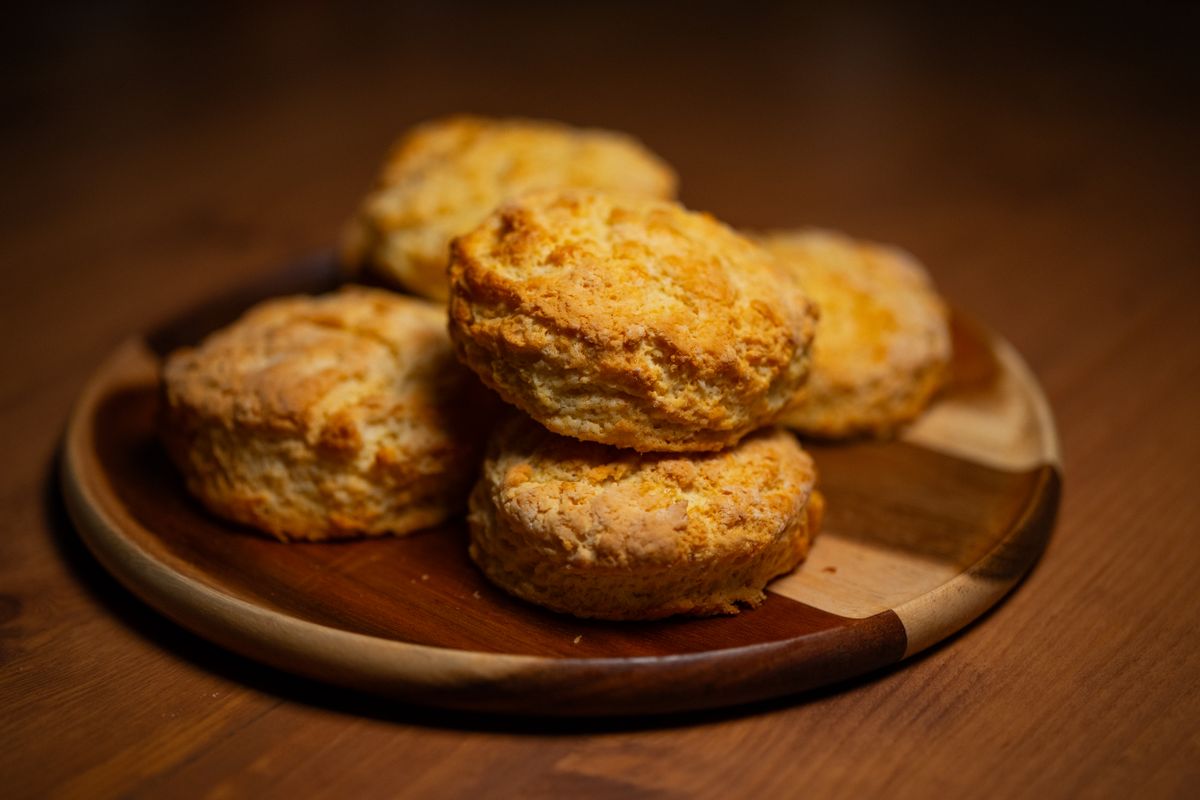
Sourdough discard biscuits are what I make when the discard jar hits half full and supper needs bread in under an hour. I grew up on my grandmother’s buttermilk biscuits here in North Carolina, and I will tell you plainly: discard makes them better. The acidity does the same tenderizing work buttermilk does, plus it brings a faint tang and a deeper bake on the crust, and it uses up the starter you were about to throw away. This is the recipe I teach, with the cheddar, drop, and extra-buttermilk variations my students ask for.
Quick answer: Sourdough discard biscuits are flaky baking-powder biscuits made with unfed sourdough starter in place of some of the liquid. Cut cold butter into flour, stir in about a cup of discard with a splash of cold buttermilk, fold the dough three times for layers, and bake at 425°F for about 22 minutes. The discard adds tang and tenderness; the baking powder does the lifting, so no rise time is needed.
Can you make biscuits with sourdough discard?
Yes, and it is one of the best uses for it. Biscuits do not depend on yeast for lift; baking powder and steam do that work, so the sleepy, unfed starter that cannot raise a loaf is perfect here. What discard contributes is flavor and texture: its acidity tenderizes the gluten the way buttermilk does in a classic Southern biscuit, and the fermented flour deepens the crust color. If your jar of discard has been in the fridge up to a week, it is exactly right for this recipe; our sourdough discard recipes roundup explains the freshness rules that apply to every discard bake.
How do you make sourdough discard biscuits?
The method is classic Southern technique with one liquid swapped. Cold ingredients and a light hand matter more than anything else.
- 240 g (2 cups) all-purpose flour
- 12 g (1 tbsp) baking powder
- 3 g (1/2 tsp) baking soda
- 6 g (1 tsp) fine salt
- 113 g (8 tbsp) cold unsalted butter, cubed
- 200 g (about 3/4 cup) sourdough discard, cold, unfed
- 60 g (1/4 cup) cold buttermilk, plus more for brushing
- Heat the oven to 425°F with a rack in the upper third. Line a baking sheet with parchment.
- Whisk the dry ingredients. Combine the flour, baking powder, baking soda, and salt in a large bowl. The soda is not optional; it neutralizes the discard’s acid and gives extra lift.
- Cut in the cold butter with your fingertips or a pastry cutter until the biggest pieces are pea-sized. Flat shards of butter are what steam into flaky layers.
- Stir in the discard and buttermilk. Mix just until a shaggy dough forms with no dry streaks. It should feel slightly tacky; add another spoonful of buttermilk only if you see dry flour.
- Fold for layers. Turn the dough onto a floured counter, pat it into a rough rectangle about 3/4 inch thick, and fold it in thirds like a letter. Pat out and repeat the fold twice more, three folds total. This lamination is what stacks the flaky layers.
- Cut and bake. Pat to 1 inch thick, cut straight down with a 2.5 inch cutter (no twisting, which seals the edges), and place the biscuits touching on the sheet. Brush the tops with buttermilk and bake 22 minutes, until deep golden.
Do sourdough discard biscuits taste sour?
Barely, and that is the charm. A week-old discard gives the biscuits a gentle buttermilk-like tang that reads as depth rather than sourness; a freshly discarded starter (a day or two old) is nearly neutral. If you want the tang more pronounced, use discard that has sat in the fridge for a full week and swap the buttermilk for more discard. The flavor lands close to a good buttermilk biscuit with a quiet sourdough finish.
What are the best variations?
Three, and each one maps onto the same base recipe.
- Cheddar biscuits: fold 100 g (1 cup) of coarsely grated sharp cheddar and a sliced scallion into the dry mix after cutting in the butter. Bake the same way; the edges fry golden in the cheese.
- Drop biscuits: add 30 g (2 tbsp) more buttermilk for a wetter dough, skip the folding entirely, and scoop 8 mounds straight onto the sheet. You trade the tall layers for a craggy, crunchy top and a five-minute-faster path.
- Extra-buttermilk biscuits: for the closest match to the classic Southern profile, use 120 g discard and 120 g buttermilk. The crumb turns slightly more tender and the tang softens.
For a heritage-grain spin, swap a quarter of the all-purpose flour for spelt (nutty, still tender) or einkorn flour, whose weak gluten is actually an advantage in biscuits; it bakes tender where bread bakers fight it, the same trait our einkorn guides describe.
Can I use active starter instead of discard?
Yes, with no changes. Active starter is just discard with better posture: same flour, same water, more bubbles. The bubbles will not survive the folding, and the baking powder does the lifting anyway. Bake day flexibility is the point of this recipe; it takes whatever state your jar is in. If you do not keep a starter yet, a dehydrated heirloom culture gets one going in about a week, and our 7-day starter guide walks the schedule.
Why did my biscuits come out flat or tough?
Three culprits cover nearly every flat or tough biscuit that comes through my classes.
- Warm butter. If the butter softens into the flour instead of staying in shards, the layers fuse and the biscuits bake flat. Cube it cold, work fast, and chill the shaped biscuits 10 minutes if your kitchen runs hot.
- Overworked dough. Biscuit dough is mixed less than seems right. Stir to shaggy, fold three times, stop. Kneading builds gluten, and gluten is for bread, not biscuits.
- Old leavening. Baking powder loses strength after about a year open. If your biscuits rise poorly with everything else right, buy a fresh tin; it is the cheapest fix in baking. The Wikipedia entry on biscuits covers why American biscuits lean on chemical leavening where British scones and yeast rolls diverge; our discard scones recipe applies the same jar to the sweet side of that family tree.
Where to go from here
The discard jar feeds a whole rotation: our sourdough discard recipes hub collects every bake, from discard English muffins to pizza dough, and the feeding guide explains how to keep the jar producing without waste. For safe discard storage limits, the USDA’s guidance via FoodSafety.gov is the conservative reference: refrigerated discard is happiest used within a week.
Frequently asked questions
Can you freeze sourdough discard biscuits?
Yes, both ways. Freeze unbaked cut biscuits on a sheet, bag them, and bake from frozen with 3 to 4 extra minutes; or freeze baked biscuits up to 3 months and refresh in a 350°F oven for 8 minutes.
Can I make these with self-rising flour?
Yes. Use 240 g self-rising flour and skip the baking powder and salt, but keep the baking soda; the discard’s acidity still needs it. Southern brands milled from soft wheat give an even more tender crumb.
How much discard does this recipe use up?
About 200 grams, which is roughly what a weekly-fed starter throws off in two or three feedings. Doubling the batch clears a full jar and the biscuits freeze well.
Are sourdough discard biscuits healthier than regular biscuits?
Marginally at best. The fermented flour in the discard is slightly more digestible and the tang lets you use less salt, but these are still butter biscuits. The honest win is waste reduction, not nutrition.
Keep the discard coming
A live heirloom starter culture and the simple kit to house it, so the biscuit jar never runs dry.
Shop starter kits →Bake them with heritage flour
A quarter-swap of spelt or einkorn turns a good biscuit into a nutty, tender great one. See the flours we trust.
Shop einkorn →