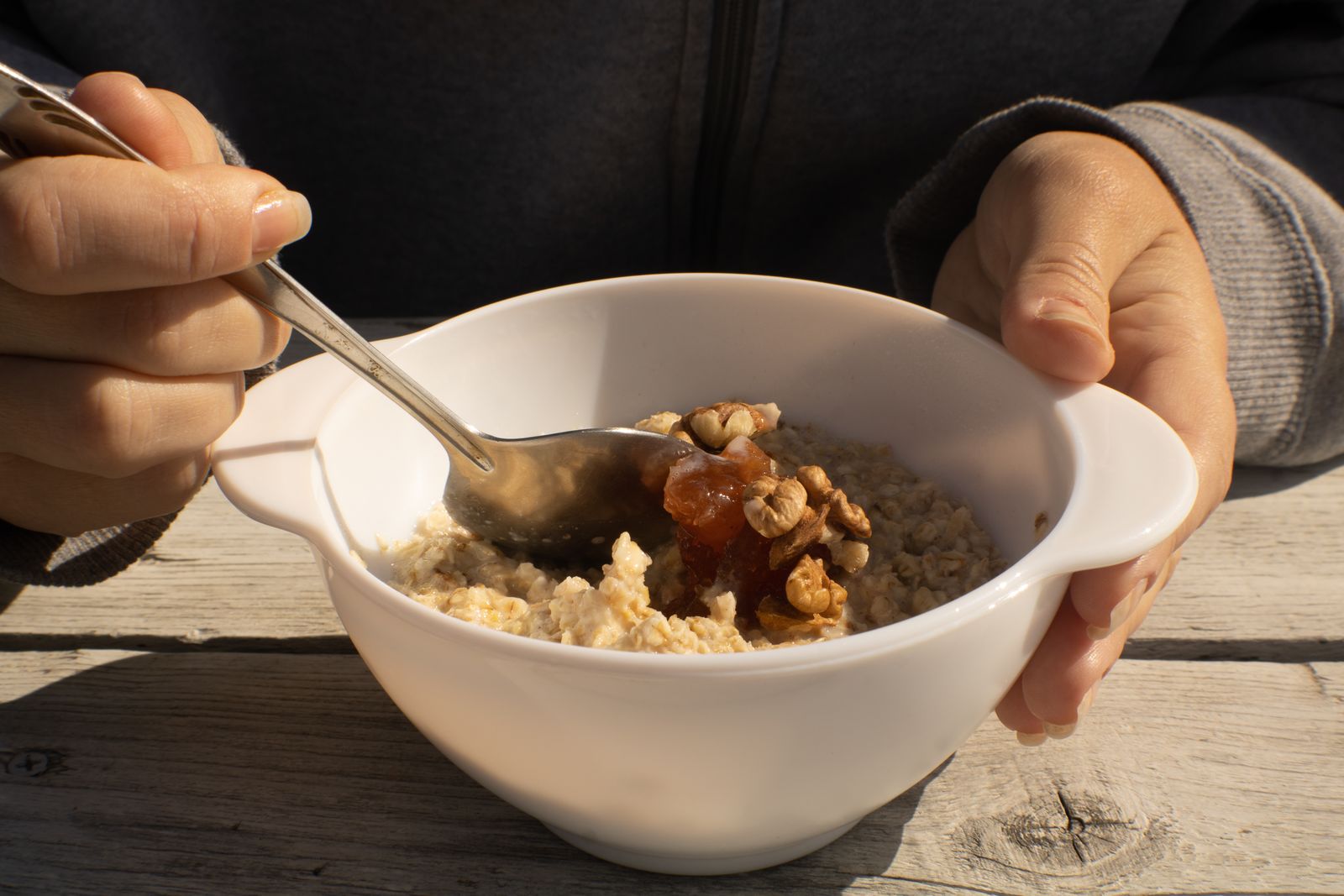
Where I grew up in the Highlands, porridge was made from pinhead oats, which is just the old name for steel cut. They take longer than the rolled sort, and they reward you for it: a nutty, chewy bowl that holds its body instead of turning to paste. Here is how to cook steel cut oats properly, four different ways, with the timings I actually use.
Quick answer: Cook steel cut oats (also called pinhead oats) by simmering 1 part oats in 4 parts salted water, uncovered, for 25 to 30 minutes, stirring now and then. For a weekday shortcut, boil the water, stir in the oats, cover, and leave them on the switched-off stove overnight, then reheat for 5 minutes. They cook up chewier and nuttier than rolled oats and hold their body instead of turning to paste.
How do you cook steel cut oats on the stovetop?
Simmer 1 part steel cut oats in 4 parts salted water, uncovered, for 25 to 30 minutes. That is the whole method, and the ratio that never fails me.
- 1 cup (160 g) steel cut oats
- 4 cups (960 ml) water, or water and milk
- Pinch of salt
- 1 tbsp (14 g) butter, optional, for toasting the dry oats first
- Bring 4 cups water (or water and milk) to a boil with a pinch of salt.
- Stir in 1 cup steel cut oats and drop the heat to a low simmer.
- Cook uncovered 25 to 30 minutes, stirring now and then so the bottom does not catch.
- Take them off the heat a touch before they look done. They keep thickening as they sit.
That makes about four servings. If you want them creamier, toast the dry oats in a knob of butter for two minutes before the water goes in. It is a small step that deepens the flavour no end.
Steel cut oats vs rolled oats: what is the difference?
This is the question I get asked most, so let me be plain about it. Both start as the same whole oat groat. The difference is only in how the groat is cut up.
| Type | How it’s made | Cook time | Texture |
|---|---|---|---|
| Steel cut | Groat chopped into 2 to 3 pieces | 25 to 30 min | Chewy, nutty |
| Rolled (old-fashioned) | Groat steamed and pressed flat | 5 to 10 min | Soft, creamy |
| Quick oats | Rolled thinner and pre-cooked | 1 to 3 min | Soft, mushy |
Nutritionally they are nearly identical, since it is the same grain, and the USDA FoodData Central entries for oats bear that out. The cut matters most in baking rather than the bowl: rolled flakes toast crisp on top of an apple crisp with oats, while steel cut stay stubbornly hard there. There is also oat bran, the fibre-dense outer layer stripped before rolling, which cooks into its own quick porridge. Steel cut oats simply have a slightly lower glycemic response because the pieces are denser and digest more slowly. None of the three contains wheat, though oats need a certified label if you are avoiding gluten, owing to cross-contact in the field and mill that the Celiac Disease Foundation describes. I get into that fully in our piece on whether oatmeal is gluten free.
How do you make overnight steel cut oats?
Boil the water, stir in the oats, cover, and leave the pot on the switched-off stove overnight; five minutes of reheating finishes them in the morning. It is the trick that makes pinhead oats a weekday food rather than a weekend one, and there are two versions, not the same thing.
The soak-and-simmer (my preferred): the night before, boil 4 cups water, stir in 1 cup oats, cover, and switch off the heat. Leave them on the stove overnight. In the morning they have drunk up most of the water, and 5 minutes of gentle reheating finishes them. You get the full cooked texture in a fraction of the morning time.
The cold method: soak 1 part oats in 1 part milk or water in the fridge overnight, then eat cold or warmed. Steel cut oats stay firmer and chewier this way than rolled oats do, so it suits people who dislike a soft bowl. If you prefer that softer style, our overnight oats guide uses rolled oats instead.
Can you cook steel cut oats in a rice cooker or Instant Pot?
You can, and both are grand for hands-off mornings.
- Rice cooker: 1 cup oats to 3 cups water, run the porridge or brown-rice setting. Grease the bowl first or they foam up the sides.
- Instant Pot: 1 cup oats to 3 cups water, high pressure 4 minutes, then a 10-minute natural release. This is the closest to set-and-forget you will get.
Note the ratio drops to 1:3 in a sealed cooker because no water steams off. If you like the gadget approach, our rice-cooker quinoa method follows the same logic.
Why are my steel cut oats gummy or burnt?
Gummy means the heat was too high and you stirred too much; burnt means a thin pan; still hard means old oats or a weak simmer. The common stumbles are all easy to fix.
- Gummy and gluey: the heat was too high and you stirred too much, which whips out the starch. Keep it at a bare simmer and stir sparingly.
- Burnt on the bottom: a thin pan on high heat. Use a heavy-bottomed pot and lower the flame.
- Still hard after 30 minutes: your oats were old, or the simmer was too weak. Add a splash more hot water and give them another 10 minutes.
- Bland: you skipped the salt. A pinch of salt in the cooking water is not optional. It is the difference between porridge and wallpaper paste.
What can I put on steel cut oats?
Traditionally we ate them plain, or with a dab of salt and a pour of cold milk, what we called supping round the bowl. But the chewy texture stands up to bold toppings better than soft oats do. Stewed apple and cinnamon, toasted walnuts with honey, or a spoon of nut butter and banana all work a treat. For a savoury bowl, try a poached egg and a little cheese. Steel cut oats are not just for breakfast. And if you take to the chew of them, pot barley cooks much the same way and makes a fine porridge in its own right.
A good bag of steel cut oats keeps for a year in the cupboard, so they are worth buying in quantity. We point to a reliable steel cut oats on the oat page, alongside notes on the rest of the oat family.
Frequently asked questions
Are steel cut oats gluten-free?
The oat plant is gluten-free, so steel cut oats contain no gluten of their own, but ordinary oats are cross-contaminated with wheat in the field and mill. For celiacs, only certified gluten-free steel cut oats are safe, as our is oatmeal gluten free post explains.
Are steel cut oats healthier than rolled oats?
They are nutritionally almost identical, since they are the same whole oat groat, just cut rather than rolled. Steel cut oats do have a slightly lower glycemic response because the denser pieces digest more slowly, so they keep you full a touch longer.
How do you store cooked steel cut oats?
Cooked steel cut oats keep in the fridge for about four to five days, which makes them ideal for batch cooking. Portion them into jars, and reheat with a splash of water or milk to loosen them back to a creamy texture.
More ways to cook with oats
See our pick of oats, from steel cut to flour, with the brands worth buying and how to use each one.
Shop oats →