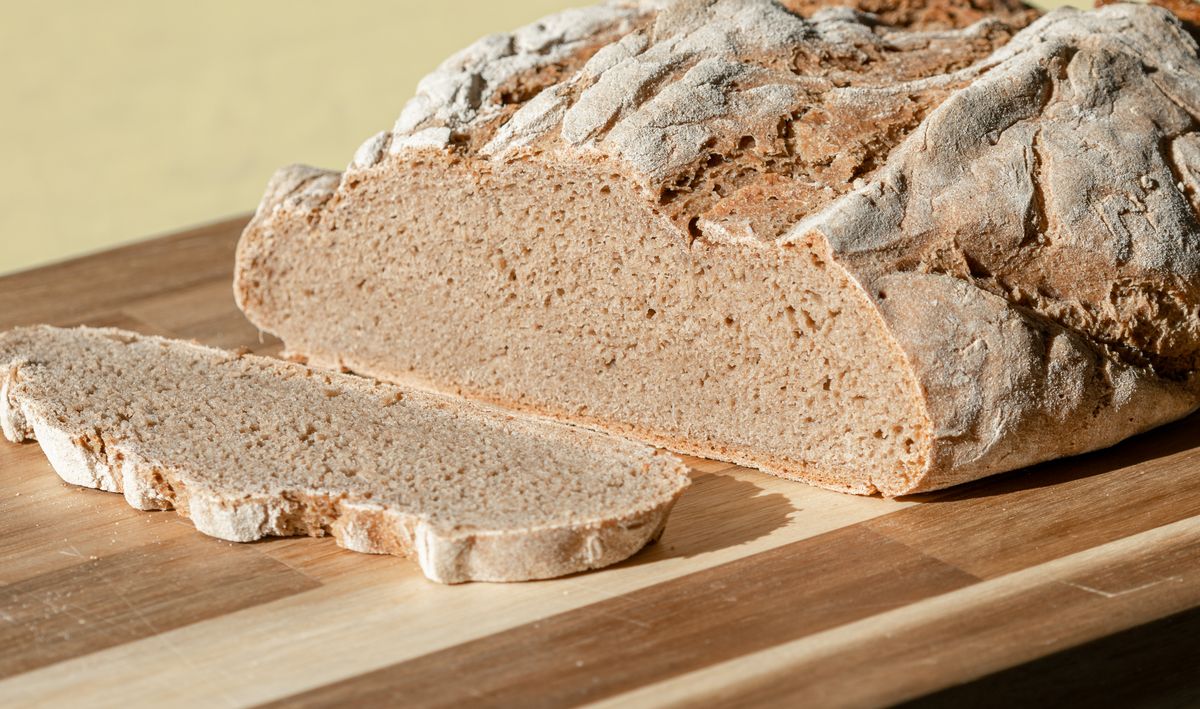
Marble rye bread is a bit of a magic trick: one loaf, two colors, swirled together so every slice shows a spiral of pale gold against near-black. It looks like the hardest thing in a deli case and is actually one of the more forgiving rye breads to make at home, because the two doughs are nearly identical. The dark half is simply the light half with cocoa and a little coffee stirred in. Master that one idea and the rest is ordinary bread baking. Here is how the swirl really works, the caraway debate, and the one folding step that keeps the marble from turning to mush.
Quick answer: Marble rye bread is a deli loaf made by swirling two nearly identical rye-and-wheat doughs, one left pale and one darkened. The dark half is not a different flour or pumpernickel; it is the same dough coloured with cocoa, molasses, and a little coffee, which add colour without a chocolate or coffee taste. Roll both doughs into sheets, stack and coil them into a tight swirl, and bake. It is a wheat-and-rye loaf, so it contains gluten.
What is marble rye bread?
Marble rye is a deli-style loaf, most associated with Jewish and Eastern European baking in America, made by laminating two rye doughs of different colors and rolling them up so they spiral. It is the bread under a good pastrami on rye, and the reason those sandwiches have that handsome striped cross-section. Both doughs are built on the same rye-and-wheat blend. What sets marble rye apart from a plain whole grain rye bread is entirely visual: the technique of coloring, stacking, and rolling. The flavor of a well-made marble rye is one flavor, not two, because the darkening ingredients are chosen to add color without fighting the rye.
What makes the dark half of rye bread dark?
This is the part people get wrong, so let me be specific. The dark swirl is not pumpernickel, and it is usually not a different flour. The color comes from added ingredients stirred into the same base dough: unsweetened cocoa powder, strong brewed coffee or espresso powder, and molasses, sometimes with a spoon of caramel color in commercial versions. None of them make the bread taste like chocolate or coffee. In the small amounts used, they read only as a deep, malty, faintly bitter darkness that flatters rye.
The old assumption is that dark rye equals more rye flour. It can, but for marble rye the honest shortcut is coloring the light dough rather than reformulating it, which is exactly why the two halves bake at the same rate and stay bonded. If you want the dark half to also taste darker, swap a couple tablespoons of the wheat flour in that dough for dark rye flour, but keep the hydration matched to the light dough or the two will proof unevenly.
What you need for the two doughs
Both doughs share a base of medium rye flour and bread flour, roughly one part rye to two parts wheat. Rye alone has too little gluten to hold a clean swirl, so the wheat is doing the structural work while the rye carries the flavor. If you want a nuttier, more characterful loaf, swap the bread flour for spelt flour, which has enough gluten to hold the marble while adding its own sweetness.
- 1 cup (120 g) medium rye flour, split evenly between the doughs
- 2 cups (240 g) bread flour, split evenly
- 1 cup plus 1 tsp (245 ml) warm water, split evenly (about 68% hydration)
- 2 tsp (6 g) instant yeast, split evenly
- 1.5 tsp (8 g) fine salt, split evenly
- 2 tbsp (11 g) cocoa powder, dark dough only
- 1 tbsp (20 g) molasses, dark dough only
- 1 tsp instant coffee, dark dough only
- 1 tbsp caraway seeds, optional, split evenly
Here is what separates the two:
| Element | Light dough | Dark dough |
|---|---|---|
| Base flour | Rye + bread flour | Same |
| Coloring | None | 2 tbsp cocoa + 1 tbsp molasses + 1 tsp instant coffee |
| Caraway | Optional | Optional (keep both the same) |
| Hydration | ~68% | Match the light dough |
Make them as two separate bowls of dough, proofed side by side through the first rise. Keeping the flour, salt, yeast, and water identical is what guarantees they expand together in the oven instead of one blowing past the other.
How do you make marble rye bread?
The method is ordinary bread baking with one extra step: build two matched doughs, roll each into a sheet, stack and coil them into a swirl, then proof and bake. Here is the full sequence.
- Mix both doughs. Build the light dough, then build the dark dough with the cocoa, molasses, and coffee added to the wet ingredients. Knead each to a smooth, slightly tacky ball.
- First rise. Let both rise, covered, until roughly doubled, about 60 to 90 minutes at room temperature.
- Roll and stack. Gently deflate each and roll both into rectangles of the same size, a little under a half inch thick. Lay the dark sheet directly on the light one.
- Roll up the swirl. Starting from a short edge, roll the stacked sheets into a tight log, pinching the seam. That coil is your marble.
- Shape and second rise. Tuck the ends under, set the loaf seam-side down in a pan or on parchment, and proof again until puffy, 45 to 60 minutes.
- Bake. Bake at 425°F for the first 10 minutes, then drop to 375°F for another 25 to 30, until the internal temperature reads about 200°F and the bottom sounds hollow.
One cup of rye flour to two of wheat gives a loaf sturdy enough to slice thin for sandwiches, which is the whole point of the bread.
How do you get the swirl without the layers separating?
This is the failure mode, and it has one cause: dry dough surfaces do not stick. If the sheets have skinned over or you have dusted them heavily with flour, the swirl delaminates in the oven and you get a hollow spiral gap. The fixes are simple. Roll the two sheets and stack them promptly, before either dries. Use the barest dusting of flour on the bench, brushing off any excess before you stack. If the surfaces look dry, a very light mist of water between the two layers acts as glue. Roll the log snugly, without trapping air pockets, and pinch the final seam so it holds. Do that and the marble stays married from mixing through the last slice.
Caraway or no caraway?
Caraway seed is the flavor most people mean when they say a bread “tastes like rye,” even though the taste is the caraway, not the grain. It is traditional in deli rye and entirely optional. Add a tablespoon, split between the doughs, if you want the classic delicatessen profile, or leave it out for a cleaner, maltier loaf that lets the rye and cocoa speak. If you use it, keep the amount identical in both doughs so the swirl reads as one bread. For more on how rye behaves as a whole grain, the how to cook rye berries guide covers the intact form, and our rye flour breakdown explains light, medium, and dark milling, which is worth understanding before you shop.
How should you store marble rye?
Rye holds moisture longer than a lean wheat loaf, so a marble rye keeps well for three to four days wrapped in a paper bag inside a bread box, cut side down. Do not refrigerate it, which stales bread faster. It freezes beautifully: slice the cooled loaf first, then freeze in a bag, and pull slices straight to the toaster. Rye’s nutritional case holds up too, with more fiber than wheat bread and a lower glycemic response per the USDA FoodData Central entry, and the grain’s long history in northern and eastern Europe is a good rabbit hole on Wikipedia if you want to know why cold-climate cultures built their bread on it.
Frequently asked questions
Is marble rye bread gluten-free?
No. Marble rye is built on a rye-and-wheat blend, both of which contain gluten, so it is not safe for anyone with celiac disease. The wheat flour is essential here because rye alone lacks the gluten to hold a clean swirl, as our is rye bread gluten free post covers.
Is marble rye the same as pumpernickel?
No. Pumpernickel is a very dark, dense bread made from 100 percent coarse rye and baked long and slow. Marble rye is a lighter deli loaf where the dark swirl is just the same rye-and-wheat dough tinted with cocoa and molasses, not a separate pumpernickel dough. They look related but are different breads.
What do you make with marble rye bread?
It is the classic deli-sandwich bread, sturdy enough to slice thin and hold a pile of filling. Pastrami and corned beef are the traditional partners, a Reuben with sauerkraut and Swiss is the icon, and it also toasts well for grilled cheese or an egg-and-cheese breakfast sandwich.
Bake your own rye
See the rye flours and berries worth buying, plus the brands we trust for a proper deli loaf.
Shop rye →