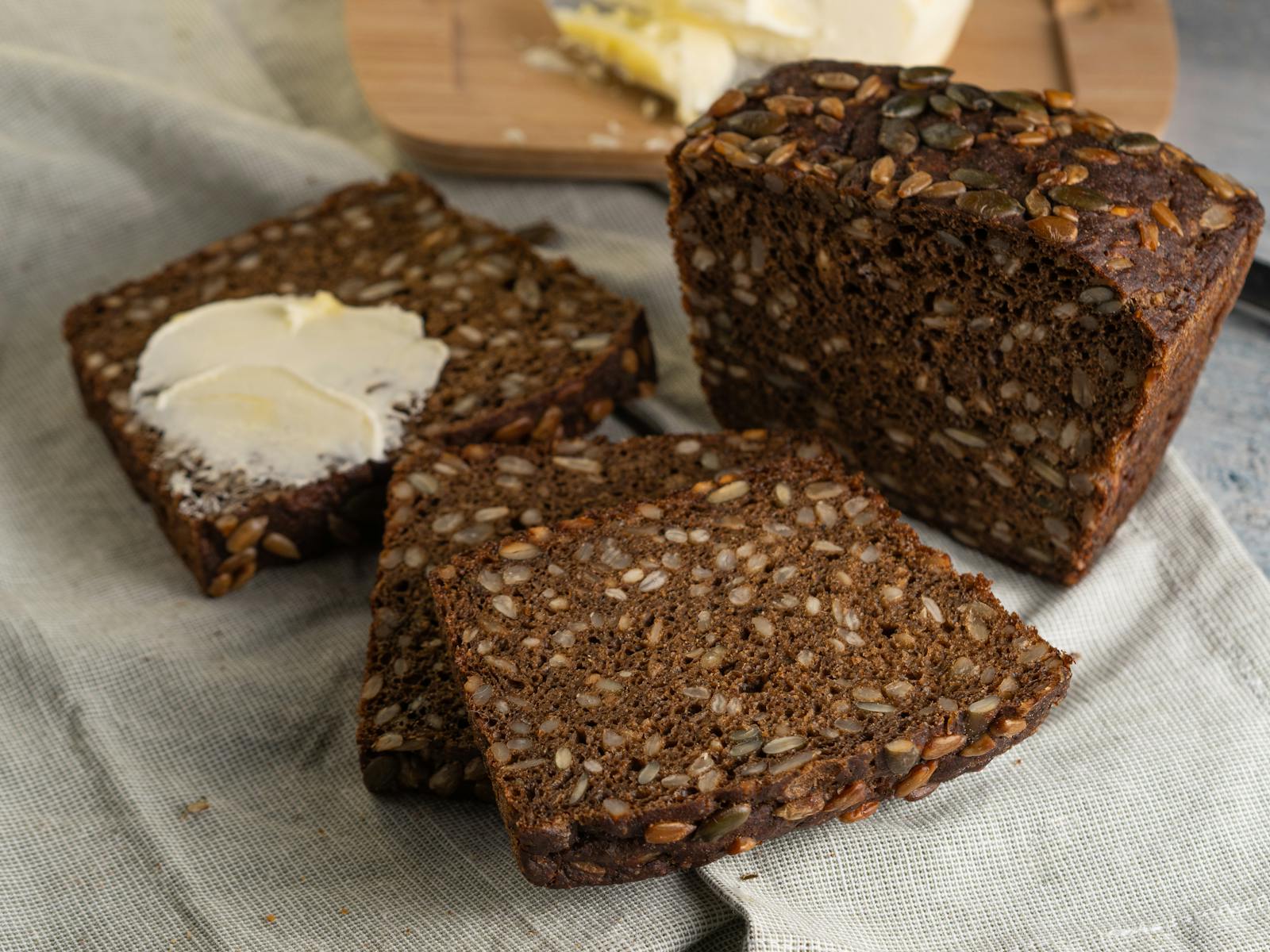
I grew up watching my grandmother make limpa in a small kitchen in northern Minnesota, and the question she would ask first was not how much flour, but which rye flour. Rye flour comes in more types than any other common grain flour sold in the United States, and most home bakers conflate them, then blame their bread when the loaf comes out wrong. Light rye is not the same as medium rye is not the same as dark rye is not the same as pumpernickel is not the same as whole rye.
I want to map them clearly. The taxonomy below is the one Danish, Swedish, and Finnish bakers use, slightly adapted for American mills. Once you know which rye is in front of you, the rest of rye baking is mostly arithmetic.
Quick answer: Rye flour comes in five grades sorted by how much of the grain they keep: light, medium, dark, pumpernickel, and whole rye. A US bag labeled simply "rye flour" is almost always medium. Rye behaves unlike wheat because its gluten is weak and its pentosans soak up water into a sticky gel, so rye doughs are wet, barely kneaded, dense-crumbed, and long-keeping. Rye is not gluten-free.
What are the 5 types of rye flour?
Rye flour is classified by extraction rate, which is the percentage of the original whole rye grain that ends up in the bag. The higher the extraction rate, the darker, denser, and more flavorful the flour. The five common grades sold in American markets are set out below.
| Type | Extraction | What it contains | Best use |
|---|---|---|---|
| Light (white) rye | ~60% | Endosperm only, almost no bran | Cracker, fast-rising sandwich rye |
| Medium rye | ~70-80% | Endosperm + some bran | Most American “rye flour” without a label, deli rye |
| Dark rye | ~85-95% | Most of the bran, some germ | Nordic-style dark bread, sour rye |
| Pumpernickel | ~100% (coarse) | Whole grain, coarsely ground | Pumpernickel, vollkornbrot |
| Whole rye | ~100% (fine) | Whole grain, finely ground | Sourdough starter, dense breads |
A bag labeled simply “rye flour” in an American supermarket is almost always medium rye. If you want dark or whole rye, you usually need to read the bag carefully or buy a good dark rye flour from a specialty mill like Hayden Flour Mills or Maine Grains.
Why does rye flour behave so differently from wheat flour?
This is the part that makes or breaks a first rye bake. Rye contains gluten proteins, but they are structurally weaker than wheat’s. What rye has in abundance instead is pentosans, complex carbohydrates that absorb water aggressively and form a gel rather than an elastic network. The result is a dough that behaves like sticky clay: it does not stretch, it does not bounce back, it does not develop a windowpane.
The practical consequences are dramatic. Rye dough:
- Hydrates to 80% or higher without becoming structurally weak (the pentosans hold the water).
- Does not benefit from long kneading. Mix until uniform, then stop.
- Ferments faster than wheat at the same temperature because the wild yeast and bacteria populations are denser.
- Produces a tight, even crumb rather than the airy, open structure of a wheat loaf.
- Becomes more flavorful, not less, when sliced and rested for 12-24 hours.
The high pentosan content also explains why pure rye bread keeps for weeks while wheat bread stales in days. Pentosans bind moisture and resist retrogradation, the starch-recrystallizing process that makes bread feel stale.
For an overview of how rye fits alongside other heritage grains, see our ancient grain bread guide, which covers rye alongside wheat-family heritage flours. The rye grain page has the agronomic detail.
Is rye flour gluten-free?
No. Rye contains gluten proteins called secalins, which are similar to wheat’s gliadins and trigger celiac disease in genetically susceptible people. The Celiac Disease Foundation classifies rye alongside wheat and barley as a strictly avoided grain. If you need a gluten-free dense bread, our gluten-free sourdough method uses a brown rice and sorghum blend that hits the closest match to dark rye texture I have found.
Why do bakers use rye flour for sourdough starters?
This is one of those professional baking secrets that is not really a secret, just under-explained. Rye flour is the most reliable feed for the first three to five days of a new sourdough starter because rye has the highest natural population of wild yeasts and lactic-acid bacteria of any cereal grain. The bran particles in whole rye flour carry these microbes directly into your starter jar. A starter fed pure whole rye flour will become active 24-48 hours faster than the same starter fed white wheat flour.
Many professional bakers maintain a 100% whole-rye starter permanently and only switch to wheat at the levain stage. The technique is simple:
- Days 1-5: 100% whole rye flour, 100% hydration, daily feed.
- Day 6 onward: switch to whatever flour you intend to bake with (often medium rye or bread flour).
This is why “whole grain rye flour for sourdough starter” is a search term with real volume. People hear from a bread instructor to use rye and want to confirm.
How do you bake bread with dark or whole rye flour?
Here is a simple Nordic-style 100% dark rye loaf, the kind my grandmother called limpa, though strictly speaking limpa includes orange and caraway.
| Ingredient | Amount |
|---|---|
| Dark rye flour | 500g |
| Water (warm) | 425g |
| Active rye sourdough starter | 100g |
| Salt | 10g |
| Caraway seeds (optional) | 1 tbsp |
| Molasses (optional) | 2 tbsp |
Mix until uniform (about 3 minutes, no kneading). Transfer to a parchment-lined loaf pan (rye loaves bake in pans, not free-form). Cover with a damp cloth, bulk ferment 4-6 hours at 75°F until the dough has risen about 30% and the surface is slightly cracked. Bake at 425°F for 50-60 minutes, until the internal temperature reads 200°F. Cool fully (at least 4 hours, ideally overnight) before slicing. The bread is not done setting until it has cooled. Slicing warm rye is the most common mistake I see in classes.
This loaf will keep for 10 days wrapped in cloth at room temperature, and the flavor improves through day 3 or 4.
How does rye flour compare to wheat for nutrition?
Rye is meaningfully more nutritious than refined wheat per the USDA FoodData Central rye entry, with about 23% more fiber, more protein, more iron, and a notably lower glycemic load. Whole rye in particular is one of the better cereal grains for blood-sugar response, partly because of those same pentosans that make the dough difficult, and partly because rye starch digests more slowly than wheat starch.
If you have not baked with rye before, start with medium rye in a 50/50 blend with bread flour. Get comfortable with how the dough handles. Then move up to dark and finally whole rye on the path toward something like Danish rugbrød, the dense Nordic loaf that is still my standard breakfast at home. For more on baking with heritage flours generally, our einkorn bread guide covers the parallel case of working with an ancient wheat flour that behaves unlike modern wheat.
Rye repays patience. The flavor that develops in a properly fermented rye loaf is unlike anything else in the bread world: faintly tangy, slightly sweet, almost smoky in a way that only fermentation produces. It is worth learning the five types so you can pick the one that matches what you are trying to bake.
Frequently asked questions
What is the difference between dark rye and pumpernickel flour?
Both keep most or all of the grain, but pumpernickel is whole rye ground coarsely, while dark rye is a high-extraction flour ground fine. Pumpernickel gives a rougher, denser crumb; dark rye is smoother and a little easier to work. Our what is pumpernickel bread explainer covers what that coarse grind becomes after a 24-hour bake, and our where to buy German pumpernickel guide covers where to find the finished loaf if you would rather not bake it.
Can I substitute rye flour for wheat flour?
Not one-to-one for structure, because rye’s weak gluten cannot build the same airy crumb. The reliable move is to blend rye in at 20 to 40 percent of the total flour and keep the rest wheat, which adds rye flavour while the wheat carries the rise.
Why is my rye bread dense or gummy?
Some density is normal; rye simply bakes tighter than wheat. A gummy interior usually means the loaf was sliced before it finished setting, so cool a rye loaf fully, at least four hours and ideally overnight, before cutting, and make sure it baked to an internal temperature around 200°F.
Ready to start baking with rye?
See our hand-picked rye flour and whole grain, with quality brands ready to ship.
Shop rye →