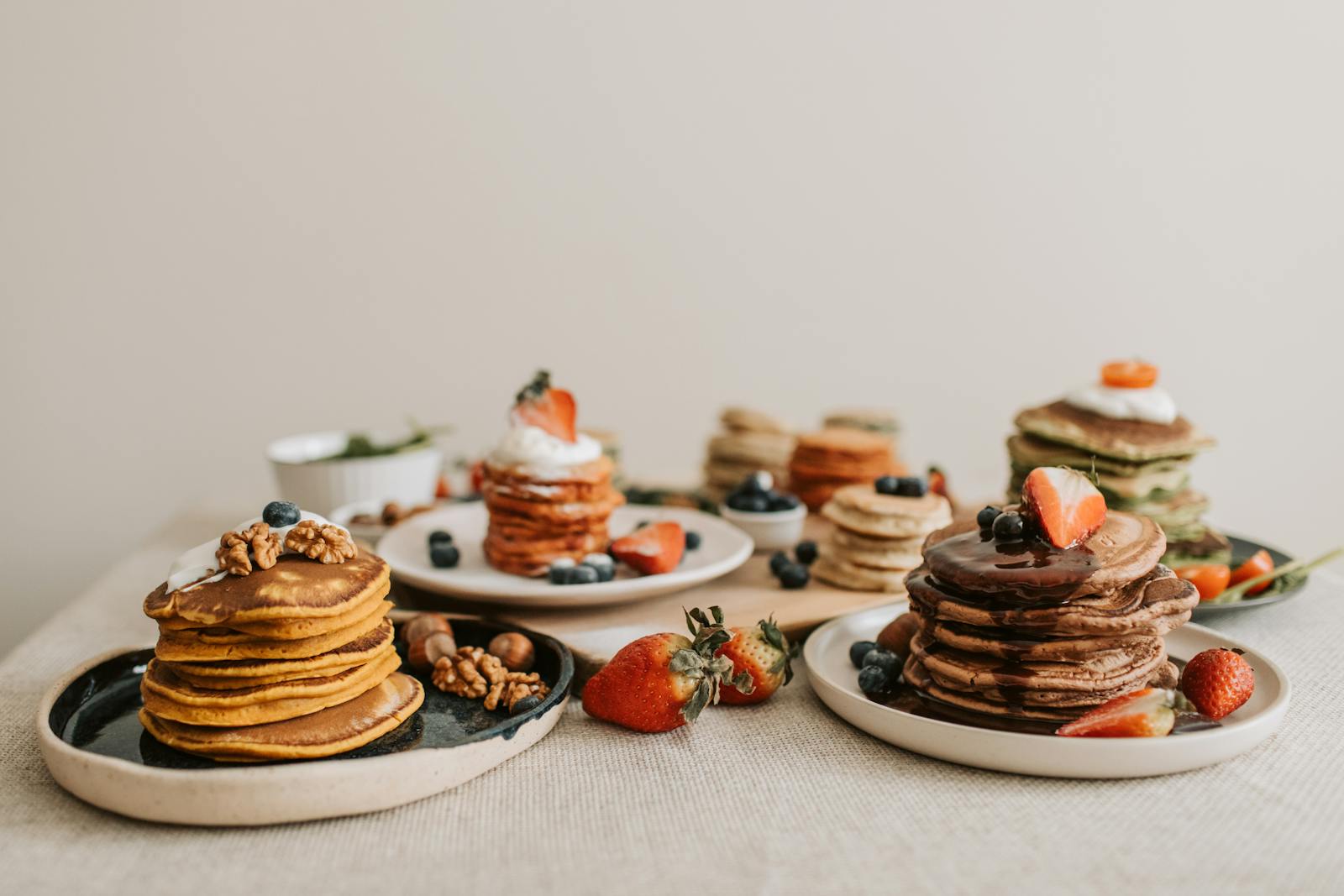
In my grandmother’s kitchen in the Highlands, oat flour pancakes were called drop scones, and we ate them off the girdle (the Scots word for a flat griddle) at four o’clock with a pat of butter and a smear of bramble jam. They were not a health food. They were not a “gluten-free alternative.” They were what you made when you had oats, milk, and an egg, which in a crofter household was most days. The American rediscovery of oat flour pancakes around 2015 felt, frankly, like watching someone introduce me to my own dinner.
The recipe below is essentially the one my grandmother taught me, with a few small adjustments for modern kitchens. It is reliably tender, slightly sweet, and lands somewhere between an American pancake and a proper Scots drop scone. It is also genuinely gluten-free, provided you pay attention to one small thing. If you like a deeper, earthier flavour, buckwheat makes a classic gluten-free pancake in the same tradition.
Quick answer: Oat flour pancakes are tender, lightly sweet pancakes made from oat flour instead of wheat, a Scottish drop-scone tradition long before they were a gluten-free trend. Whisk oat flour with milk, an egg, and baking powder, then rest the batter 10 minutes so the flour absorbs the liquid, and cook on medium-low. They are naturally gluten-free only if you use certified oat flour, because ordinary oats are cross-contaminated with wheat. Expect a denser, more filling pancake than a fluffy wheat one.
Are oat flour pancakes gluten-free?
Oats themselves do not contain gluten. They contain a related protein called avenin that most people with celiac disease tolerate, though a small percentage react to it as well (about 1 in 12 by some estimates). The problem with oat flour is not the oat. It is the field, the truck, and the mill.
Oats in the US, Canada, and the UK are routinely rotated with wheat, barley, and rye. Cross-contamination happens at sowing, at harvest, at storage, and at milling. The Celiac Disease Foundation is clear that standard oat flour is not safe for celiacs; a certified gluten-free oat flour, processed in dedicated facilities and tested to under 20 parts per million, is.
If you have celiac disease, look for the GFCO, NSF Gluten-Free, or Celiac Support Association seal on the bag. If you are merely gluten-sensitive, regular oat flour is usually fine. This is the same caveat we cover in our is buckwheat gluten-free post, and it applies to nearly every gluten-free flour sold in mainstream markets.
Foolproof oat flour pancakes recipe
Everything comes together in one bowl plus a jug, and the only special demand is the 10-minute rest.
- 1 cup (95 g) oat flour
- 1 cup (240 ml) milk, any kind
- 1 large egg
- 1 tsp baking powder
- 1/4 tsp salt
- 1 tbsp honey or maple syrup (optional)
- 1/2 tsp vanilla extract (optional)
- Butter or oil, for the pan
Method:
- Whisk the dry ingredients (oat flour, baking powder, salt) in a bowl.
- In a separate bowl, beat the egg, then whisk in the milk, honey, and vanilla.
- Pour the wet into the dry. Stir just until combined. Lumps are fine. Let the batter rest for 10 minutes; this is non-negotiable because oat flour needs time to absorb liquid.
- Heat a heavy pan or girdle over medium-low. Melt a small knob of butter and swirl to coat.
- Pour about 1/4 cup of batter per pancake, leaving room. Cook until bubbles form on the surface and the edges look set, about 2-3 minutes.
- Flip and cook 1-2 minutes more, until golden brown.
- Stack and keep warm in a low oven (200°F) while you finish the rest.
Serve with butter and golden syrup, fresh berries, or (the Highland way) a smear of crowdie cheese with rowan jelly.
Why are oat flour pancakes denser than wheat pancakes?
Oats contain no gluten, which means oat flour cannot form the elastic network that traps air bubbles in a wheat batter. The result is a pancake that is denser, more tender, and slightly sweeter than its wheat counterpart. People who expect light-and-fluffy American pancakes sometimes find oat flour pancakes a disappointment on the first try. Mind you, that is a preference, not a fault. A properly made oat pancake should hold together when you lift it, not float off the plate.
The rest is more meaningful than light-and-fluffy. Oat flour pancakes are higher in protein (around 5 grams per 100 grams cooked vs 4 in standard pancakes per USDA FoodData Central), considerably higher in soluble fiber thanks to oat beta-glucan, and they keep you full longer.
What are common mistakes with oat flour pancakes?
Skipping the 10-minute rest, cooking too hot, and assuming any oat flour is gluten-free. Skipping the rest is the biggest mistake of the three.
- Skipping the rest. Oat flour absorbs liquid more slowly than wheat flour. A 10-minute rest after mixing is what turns the batter from runny to spoonable. If you cook it immediately, you get thin, spreading pancakes that brown too fast.
- Cooking on high heat. Without gluten to give the pancake structure, high heat dries out the edges before the center sets. Medium-low is the sweet spot. A drop of water should hiss but not bounce off the pan.
- Using regular oat flour and assuming it is gluten-free. Cross-contamination is the silent issue. If you are cooking for someone with celiac, buy certified. The same label rule applies to a boxed gluten-free pancake mix, where the base flour and the certification are the two lines worth reading.
A fourth, smaller issue: if your oat flour smells stale or bitter, it has gone rancid. Oat flour contains more natural oils than wheat flour and oxidizes faster. Store it in the fridge and use within three months.
Three good variations
Once you have the base recipe dialed, the riffing begins.
- Banana oat flour pancakes. Add 1 mashed ripe banana to the wet ingredients and reduce the honey to 1 teaspoon. The banana adds natural sweetness and a custardy texture.
- Blueberry pancakes. Scatter 1/2 cup fresh or frozen blueberries onto each pancake after pouring the batter into the pan, before the first flip. Frozen works better than fresh because the berries stay intact.
- Savoury cheddar pancakes. Skip the honey and vanilla. Add 1/2 cup grated mature cheddar and 1 tablespoon finely chopped chives to the dry ingredients. Serve with smoked trout, a poached egg, or alongside a winter soup. This is the version most Highland cooks I know actually make.
For something denser and more bread-like, see our gluten-free sourdough bread guide, which uses oat flour as part of the blend. For the broader baking context on heritage flours, the ancient grain bread guide covers oat-flour bread alongside the wheat-family heritage grains.
The principle is the same as my grandmother’s: oats, milk, an egg, and a hot girdle. Fifteen minutes of hands-on work from bowl to plate. Pancakes that taste like something rather than nothing. The same batter logic, with cornstarch added for crispness, gives you gluten-free waffles if you own an iron.
Frequently asked questions
How do you make oat flour for pancakes?
Just blend rolled or quick oats into a fine powder in a blender or food processor, about 30 to 60 seconds, until it looks like flour. One cup of oats makes roughly one cup of oat flour, so you can grind exactly what the recipe needs. Sift out any coarse bits for the smoothest pancakes, and use certified gluten-free oats if that matters to you.
Can you make oat flour pancakes without eggs?
Yes. Swap the egg for a flax egg (1 tablespoon ground flax plus 3 tablespoons water, rested 5 minutes) or half a mashed banana, and use any plant milk. The batter still needs its 10-minute rest, and egg-free versions come out a touch denser but hold together well.
How do you store oat flour pancakes?
Cooled pancakes keep in the fridge for about three days and freeze for up to three months with parchment between them. Reheat straight from frozen in a toaster or a hot dry pan rather than a microwave, which keeps the edges from going rubbery, so a double batch makes several fast breakfasts.
Ready to start baking with oat?
See our hand-picked oat flour and whole grain, with quality brands ready to ship.
Shop oat →