 By Margaret Holloway · Published · 1382 words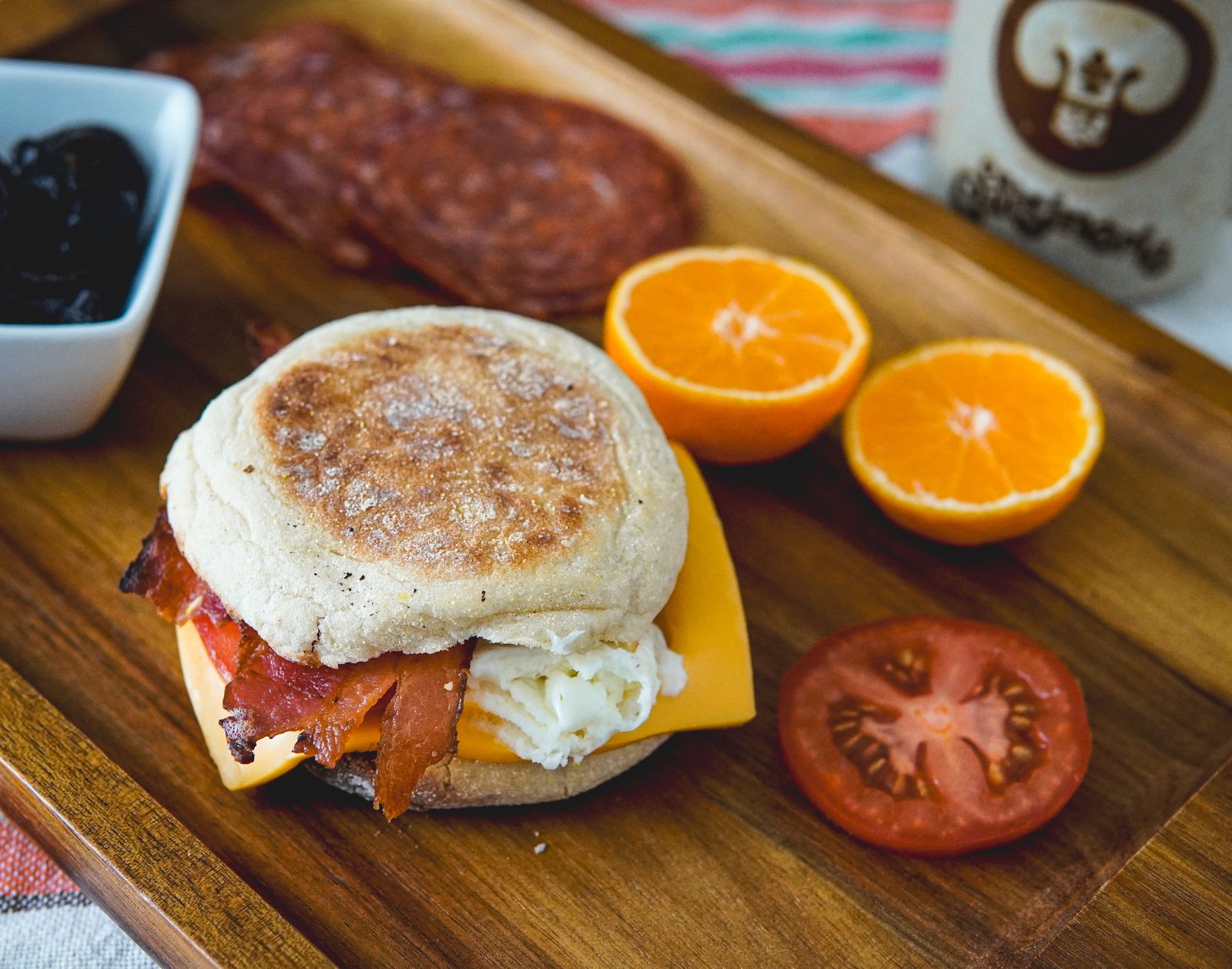
There is a particular smugness that comes from splitting open a homemade English muffin, toasting it, and watching the butter disappear into all those craggy holes. Sourdough discard English muffins give you that pleasure twice over: once for the nooks and crannies, and again for using up the cup of starter you would otherwise have tipped down the sink. They are cooked on a griddle, not baked, they need no special skill, and they are leagues better than the cardboard discs from the supermarket.
Mind you, these are quick muffins, raised with a little baking powder alongside the discard rather than a long ferment. That makes them a weeknight job, not a weekend project. The discard is there for flavour and that faint, welcome tang.
Quick answer: Sourdough discard English muffins are quick, griddle-cooked muffins that stir cold, unfed starter into the dough for tang, with baking powder giving the lift instead of a long ferment. Mix a soft, slightly sticky dough, rest it 20 minutes, cut rounds dusted with cornmeal, then cook low and slow on a griddle for 6 to 8 minutes a side. Split them with a fork, not a knife, to keep the nooks and crannies. They contain gluten.
Why use sourdough discard for English muffins?
Tang, a soft open crumb, and no waste. Discard is fermented flour and water, and in a griddle muffin it earns its place three times over.
- That signature tang. Fermentation produces lactic and acetic acid, which gives the muffin a depth plain ones lack.
- A soft, open crumb. The extra hydration helps build the holes you want for trapping butter.
- No waste. A cup of discard becomes breakfast for the week.
What you need
A note on flour first: ordinary all-purpose makes a fine muffin, but a heritage flour makes a characterful one. I use spelt for a nutty edge, or einkorn for an especially tender crumb. Spelt brings a little more than flavour: per USDA FoodData Central it carries more protein and minerals than refined white flour. If you mill your own, a fresh spelt flour or einkorn flour is a treat here.
- 1 cup (240 g) sourdough discard, unfed and stirred down
- 3/4 cup (180 ml) warm milk, whole for tenderness
- 2 cups (240 g) flour, all-purpose or heritage (see note above)
- 2 tbsp (28 g) butter, softened
- 1 tbsp sugar, just to feed the rise
- 1 tsp baking powder, the lift these need
- 1 tsp salt
- Cornmeal or semolina, for dusting (the classic crunchy coating)
- Butter or neutral oil, for the griddle (optional)
How do you make sourdough discard English muffins?
This is a quick, griddle-cooked dough with no long rise, so it comes together in about an hour. Here are the steps.
- Mix the dough. Stir the discard, warm milk, and softened butter together, then add the flour, sugar, baking powder, and salt. Bring it to a soft, slightly sticky dough. It should be tacky, not stiff.
- Rest it for 20 minutes. A short rest relaxes the dough and lets the flour hydrate. There is no long rise to wait on.
- Shape. Pat the dough out to about 3/4 inch thick on a cornmeal-dusted surface, then cut rounds with a 3 inch cutter. Dust both sides with cornmeal.
- Griddle low and slow. Cook in two batches on a dry or barely greased griddle over medium-low heat, 6 to 8 minutes a side, until deep golden and cooked through. Low heat is everything: rush it and the outsides scorch before the middles set.
- Cool, then split. Let them cool, then split with a fork rather than a knife. The fork tears along the natural holes and preserves the nooks and crannies.
How do you get nooks and crannies?
This is the whole point, so it is worth getting right. The holes come from a wet, slack dough and a gentle rise, not from anything you do at the griddle. Three things help most.
- Keep the dough wet. A sticky dough traps more gas and bubbles. Resist the urge to flour it stiff.
- Split with a fork. Forking the muffin open along its seam reveals the craggy interior. Slicing with a knife smears it flat.
- Do not press them down while they cook. Let them puff.
Do you cook English muffins in the oven or on the stove?
On the stove, on a griddle or heavy pan, which is what makes a muffin a muffin and not a roll. The flat top and bottom and the pale, soft sides are the signature of griddle cooking. Some recipes finish very thick muffins in a low oven for a few minutes, but for a standard 3/4 inch muffin the griddle alone does the job. It is the same gentle griddle method behind the classic English muffin and many an old griddle bread.
Why are my English muffins flat or dense?
Flat usually means old baking powder or a dough that is too dry; dense and gummy means the griddle ran too hot for the centre to cook through. Both are easy to mend, and the table covers two related faults as well.
| Problem | Usual cause | Fix |
|---|---|---|
| Flat, no rise | Old baking powder, or dough too dry | Use fresh baking powder; keep the dough slack |
| Dense, gummy middle | Heat too high, undercooked centre | Lower the heat; cook 6 to 8 min a side |
| Burnt outside, raw inside | Griddle too hot | Medium-low is the only setting that works |
| No nooks | Dough too stiff, or split with a knife | Wetter dough; split with a fork |
Can you make the dough ahead or freeze the muffins?
Both. The shaped rounds will sit, covered, in the fridge overnight, ready to griddle in the morning. Cooked muffins freeze beautifully: cool, bag, and freeze, then split and toast straight from frozen. A homemade muffin in the toaster on a Tuesday is a small, civilised victory.
More to bake with your discard
Once the jar earns its keep, you will want the rest. Work through our sourdough discard recipes, bake a batch of sourdough discard chocolate chip cookies or a discard banana bread, then graduate to a proper whole-grain sourdough loaf. If your discard tastes flat, our best flour for a sourdough starter guide will sort it, and keen bakers should also see our rye flour notes and the wider ancient grain bread guide. And for the griddle experience with the flour math already done, FarmSteady’s English muffins making mix is the one-bag version of this bake.
Frequently asked questions
How do you serve homemade English muffins?
Split them with a fork and toast the cut sides, then load the craggy holes with butter and jam. They are the classic base for a breakfast sandwich with egg, cheese, and bacon, and the traditional foundation for eggs Benedict under poached eggs and hollandaise. Savoury or sweet, toasting first is what makes them shine.
How long do homemade English muffins keep?
Cooled muffins keep in a sealed bag or tin at room temperature for two to three days. For longer, freeze them (split or whole) for up to three months and toast the halves straight from frozen, which crisps them beautifully. They do not need refrigerating, which actually stales them faster.
Can you make sourdough discard English muffins gluten-free?
Only with a gluten-free discard, because a standard wheat or rye starter contains gluten. If you keep a gluten-free starter fed with rice or sorghum flour, use a gluten-free flour blend with a binder and expect a slightly denser, more delicate muffin. Our gluten-free grains guide covers the flours that work.
Griddle these with real heritage flour
Nutty, small-batch spelt flour and whole spelt berries to keep your starter and your griddle busy.
Shop spelt →