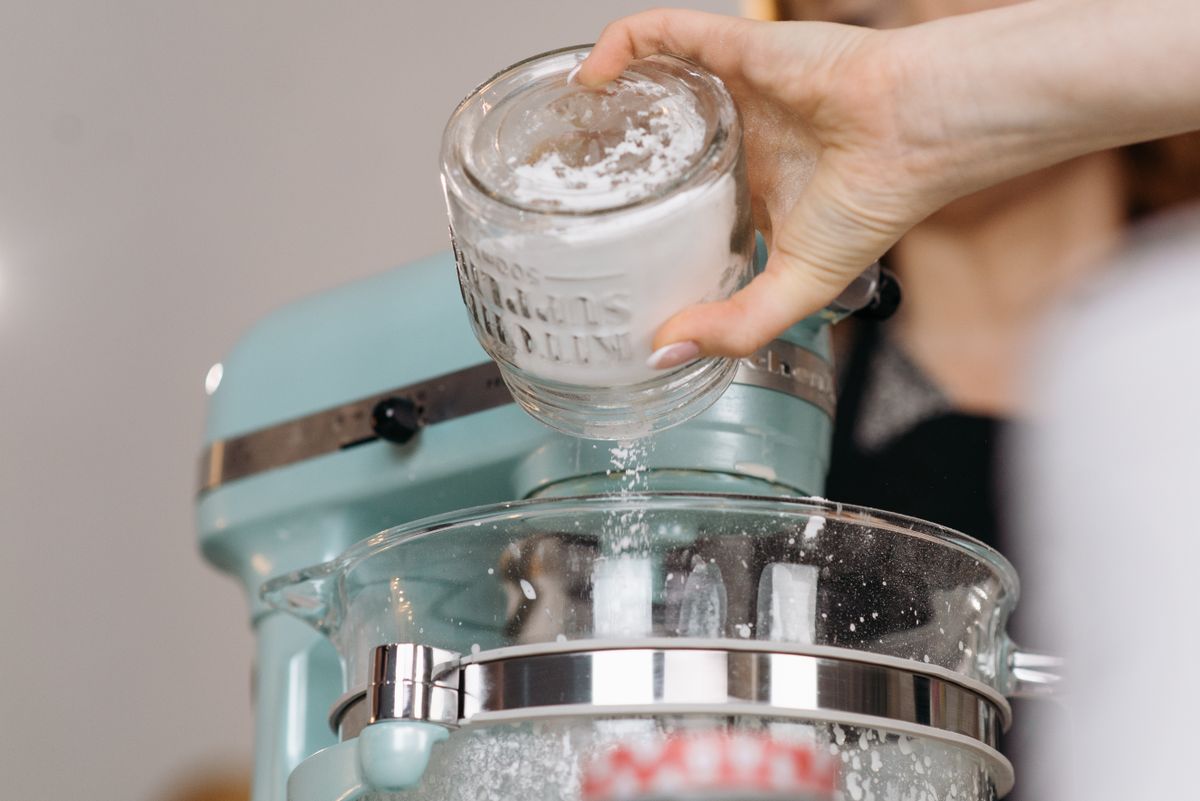
In my grandmother’s kitchen the rye starter sat in a crock by the stove, and feeding it was as ordinary as putting the coffee on. Learning how to feed a sourdough starter is the one habit that keeps that wild culture alive, and it is simpler than the internet makes it look: you pour most of it away, stir in fresh flour and water, and wait. Keep a rhythm your kitchen can actually hold to, and the same jar will raise bread for decades. Here is the ratio, the schedule for both the counter and the fridge, how to tell when it is ready to bake, and how to revive a neglected starter.
Quick answer: To feed a sourdough starter, discard most of it, then stir in equal weights of fresh flour and water, the classic 1:1:1 ratio (for example 50g starter, 50g flour, 50g water). Feed it once or twice a day if you keep it on the counter, or about once a week if you keep it in the fridge. It is ready to bake when it reliably doubles within 4 to 12 hours of a feed, looking domed and bubbly. Discarding keeps its acidity and volume in check, and the discard is worth baking with rather than binning.
Why do you have to feed a sourdough starter?
A starter is a living colony of wild yeast and lactic acid bacteria, and like anything alive, it has to eat. Feeding does two jobs: the fresh flour restocks the sugars the microbes live on, and discarding first keeps the jar from filling up and turning too acidic for the yeast to stay strong. Skip feedings and the culture runs out of food, floods itself with acid, and goes sluggish. The wild fermentation that makes sourdough tangy is exactly what you tend when you feed, and the yeast-and-bacteria balance that the research indexed at the National Library of Medicine describes is what a steady rhythm keeps healthy. If you have not built a starter yet, our how to make a sourdough starter guide covers the 7-day build first.
How do you feed a sourdough starter?
The everyday feed is three things in equal weights: your existing starter, fresh flour, and water. You keep a small amount of starter, stir the fresh flour and water into it, and let it rise. Weighing on a kitchen scale beats measuring by volume here, because a starter’s texture makes cups wildly inconsistent.
- 50 g (about 1/4 cup) active sourdough starter
- 50 g (about 1/2 cup) flour, whole rye or unbleached all-purpose
- 50 g (3 1/2 tbsp) room-temperature water
- Discard down to about 50 g. Pour off all but roughly a quarter cup of starter. This is not waste, so keep the discard in a jar in the fridge to bake with.
- Add equal weights of flour and water. Stir 50 g fresh flour and 50 g room-temperature water into the 50 g you kept.
- Mix until smooth, with no dry flour left, and scrape down the sides of the jar so nothing crusts.
- Mark the level with a rubber band or a marker, cover loosely (never airtight), and leave it at warm room temperature.
- Watch for the peak. It is fed and working when it rises to roughly double, domed and bubbly, in 4 to 12 hours. Bake at that peak, or feed it again to keep it going.
A good whole rye flour is my desert-island feed because its bran wakes a starter up fastest, but any unbleached flour works. Avoid bleached flour, where the chlorine treatment knocks back the very microbes you are feeding.
What is the right feeding ratio?
One part starter to one part flour to one part water, by weight, is the everyday default. The ratio simply controls how long the starter takes to peak and how sour it gets: feed it more flour and water per part of starter and it takes longer, stays milder, and needs feeding less often. In a warm kitchen or when you want to stretch to one feed a day, lean on the bigger ratios.
| Ratio (starter : flour : water) | Peak time at ~70°F | Best for |
|---|---|---|
| 1 : 1 : 1 | 4 to 8 hr | daily counter feeding, baking soon |
| 1 : 2 : 2 | 8 to 12 hr | overnight, a slightly milder starter |
| 1 : 5 : 5 | 12 to 24 hr | warm kitchens, once-a-day feeding, taming sourness |
How often should you feed a sourdough starter?
It depends entirely on where you keep it, and both approaches are valid. A starter on the counter is in fast, active mode and wants feeding once or twice a day; a starter in the fridge is in slow storage mode and is happy with about one feed a week. Match the rhythm to how often you bake rather than to some rule.
| Where you keep it | Feed | Notes |
|---|---|---|
| Room temperature (baking often) | 1 to 2x per day | fastest and most active; feed before it peaks and collapses |
| Fridge (maintenance) | about once a week | cold slows it right down; warm it up and feed 1 to 2 times before baking |
| Long break | see the rescue below | it can coast for weeks unfed in the fridge |
For weekend bakers the fridge is the sane choice: feed once midweek, then give it a couple of feeds the day before baking. Our best flour for a sourdough starter guide covers which flour to use at each stage.
When is a fed sourdough starter ready to bake?
The doubling test is the one that matters: a starter that reliably rises to double within 4 to 12 hours of a feed, domed and webbed with bubbles, has the strength to raise a loaf. Mark the jar at feeding time and watch the clock, not your hopes. The float test (a spoonful floats when gassy) is a fair spot-check, but it gives false negatives on heavy rye starters, so do not let a sinking spoonful overrule two clean doublings. Your nose is the third gauge: a ready starter smells tangy and faintly fruity, not like nail polish or old socks.
Why isn’t my starter rising after feeding?
Nine times out of ten the culprit is temperature or timing, not a dead starter. Here are the usual causes, and the fixes I have learned tending jars through cold Nordic winters.
- The kitchen is too cold. Below about 65°F a starter crawls. Move it somewhere warm, near the oven light or on top of the fridge, and give it time.
- It is underfed for the warmth. In a hot kitchen a 1:1:1 feed can peak and collapse before you look. Feed it more often, or switch to a 1:5:5 ratio so it lasts.
- It is young or was fed erratically. A new or neglected starter needs a few days of feeding at the same time each day to find its rhythm. Consistency fixes more problems than any single trick.
- You are judging it too soon or too late. Peak might be at hour 5 in summer and hour 10 in winter. Watch the rubber-band line, not the clock alone.
A few 100% rye feeds are the standard rescue for a genuinely sluggish culture, and activity usually doubles within 48 hours. Our rye flour guide explains why rye’s bran-rich flour earns that job.
Do you have to discard every time you feed?
For a starter you are keeping and baking with, yes, discarding before each feed is what keeps its volume and acidity in check so the yeast stays vigorous. The way to make peace with it is to keep a small starter (as little as 20 to 50 g between feeds) so there is little to throw, and to treat the discard as an ingredient rather than trash. It is essentially unfermented bread batter, and our sourdough discard recipes collection turns it into pancakes, crackers, bagels, and cinnamon rolls. And while your starter finds its feet over its first week, dinner still happens, so a rice-cooker batch of perfectly cooked quinoa asks even less of you than the jar does.
Where to go from here
Once feeding is second nature, the starter is ready to work. Our whole grain sourdough bread is the natural first loaf, and the Real Bread Campaign’s sourdough guidance is a good independent reference for what real sourdough fermentation involves. If you feed a heritage flour, the rye and spelt grain pages cover the two that give a starter the most character.
Frequently asked questions
What is hooch, and can you still use a starter that has it?
Hooch is the thin, grey-to-brown liquid that pools on a starter that has gone too long without a feed; it is just alcohol and acids the microbes produced when they ran out of food. It is harmless. Pour it off for a milder starter or stir it back in for a tangier one, then feed as normal. It is simply the jar telling you it is hungry.
How long can a sourdough starter go without feeding?
On the counter, feed it every day or two. In the fridge it can coast for two to four weeks unfed, and often longer, developing hooch and a sharp smell that a feed or two will fix. For a genuinely long break, dry a thin layer of starter into flakes that keep for months, or keep a dried heirloom culture on the shelf as a backup that rehydrates in a few days.
Can you feed a sourdough starter gluten-free?
Yes. A gluten-free starter is fed on the same schedule and ratios using brown rice, sorghum, or buckwheat flour instead of wheat or rye. It behaves a little differently and can be soupier, but it ferments and rises. Our gluten-free sourdough bread guide builds and bakes with one.
Feed yours with real rye
See our hand-picked stone-ground rye flour and whole rye berries, the feed that wakes a starter up fastest.
Shop rye →