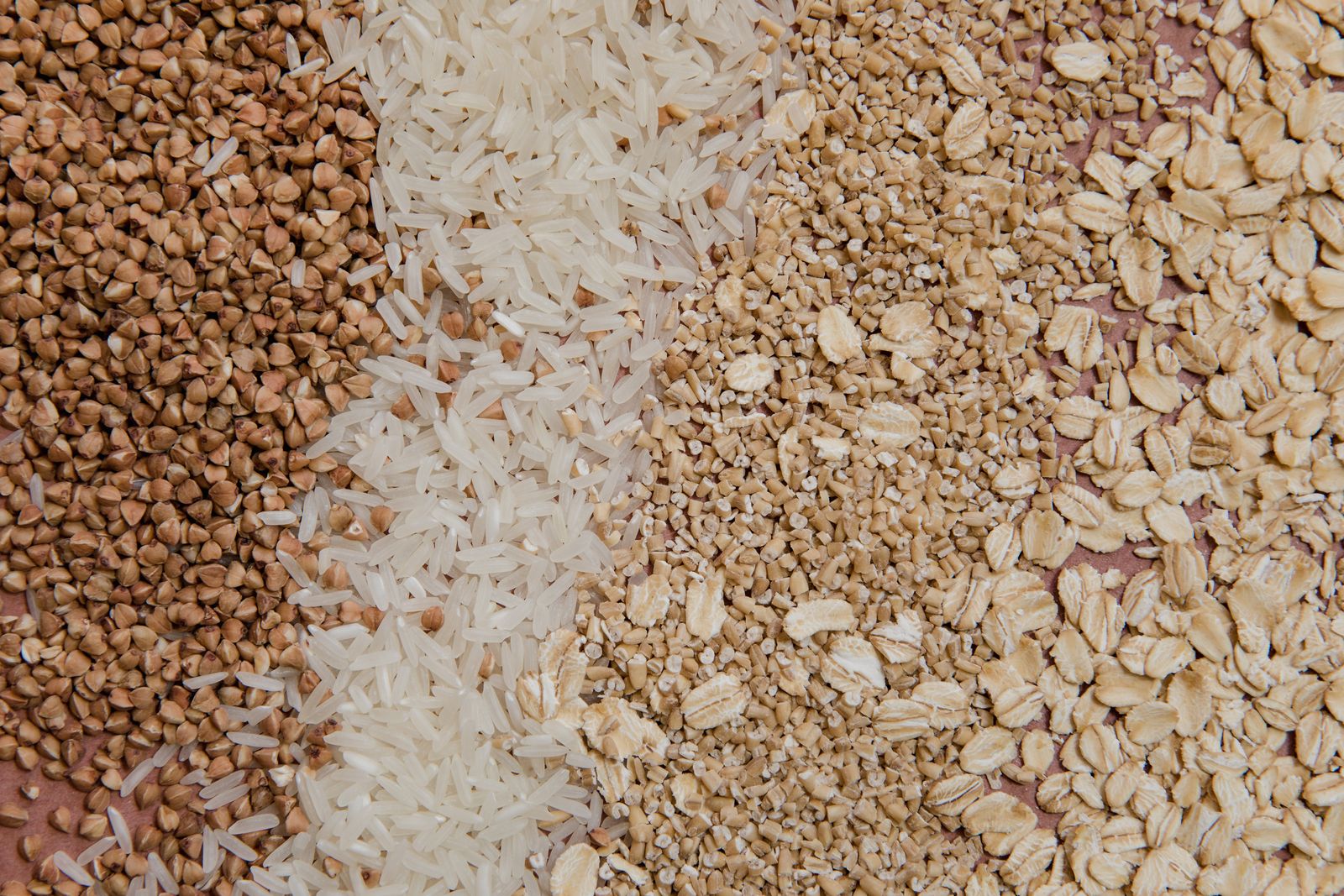
Walk down any grocery aisle and you will see “ancient grains” stamped on cereal boxes, bread bags, and snack labels. It is one of the most-used phrases in food marketing, and one of the least defined. So let me give you a straight answer.
Quick answer: Ancient grains are cereals and pseudocereals that have stayed largely unchanged for hundreds or thousands of years, unlike heavily bred modern wheat, corn, and rice. There is no legal definition, but the usual list covers the heritage wheats (einkorn, emmer, spelt, khorasan) plus older non-wheat grains and seeds like millet, sorghum, teff, amaranth, quinoa, buckwheat, and chia. Some contain gluten (the heritage wheats); the rest are naturally gluten-free.
What are ancient grains?
Ancient grains are cereal and pseudocereal crops that have stayed essentially unchanged for hundreds or thousands of years, in contrast to modern wheat, corn, and rice, which plant breeders have reshaped heavily over the last century or so. There is no legal definition and no governing body that certifies the term. In practice the food industry uses it for a recognizable shortlist: the heritage wheats (einkorn, emmer, spelt, and khorasan), plus a set of older non-wheat grains and seeds such as millet, sorghum, teff, amaranth, quinoa, buckwheat, and chia.
The Whole Grains Council, the trade group that did the most to popularize the phrase, describes ancient grains loosely as those “largely unchanged over the last several hundred years.” That is a useful rule of thumb rather than a hard line. Spelt, for instance, has been grown in Europe since the Bronze Age. Einkorn is older still, one of the very first plants humans ever domesticated, with grains found at Neolithic sites in the Fertile Crescent dating back more than 10,000 years.
How are ancient grains different from modern wheat?
This is the distinction that actually matters, and it is the one the label is gesturing at. Modern bread wheat (Triticum aestivum) is a high-yielding hexaploid, the product of intensive 20th-century breeding programs aimed at higher yield, shorter straw, and consistent baking performance. The heritage wheats sit lower on that family tree.
| Grain | Genetics | First cultivated | Gluten behavior |
|---|---|---|---|
| Einkorn | Diploid (2 sets of chromosomes) | ~10,000 years ago | Weak, fragile gluten |
| Emmer | Tetraploid (4 sets) | ~9,000 years ago | Moderate gluten |
| Spelt | Hexaploid (6 sets) | ~7,000 years ago | Strong but extensible gluten |
| Modern bread wheat | Hexaploid (6 sets) | ~20th-century selection | Strong, elastic gluten |
In fact the genetics explain most of the practical differences. Einkorn’s simpler genome gives it a delicate, less elastic dough that behaves nothing like a modern bread flour. I cover that gap in more detail in our look at gluten sensitivity and the diploid ancient wheats. The non-wheat ancient grains, meanwhile, took a different evolutionary road entirely, which brings us to the next question.
Are all ancient grains gluten-free?
No, and this is the most common point of confusion. The ancient grains split into two camps, one that contains gluten and one that does not.
- Contain gluten: einkorn, emmer, spelt, khorasan, rye, and barley. These are members or relatives of the wheat family. Anyone with celiac disease must avoid them.
- Naturally gluten-free: millet, sorghum, teff, amaranth, quinoa, buckwheat, and chia. Despite their names, buckwheat and quinoa are not wheat at all. They are “pseudocereals,” seeds from broadleaf plants that we cook like grains.
If you are eating gluten-free, the second list is your starting point, though always check packaging for cross-contamination warnings. We keep a fuller breakdown in our guide to gluten-free ancient grains.
Which grains count as ancient grains?
The working shortlist most writers and the trade use is grouped by family below.
- Heritage wheats: einkorn, emmer, spelt, khorasan, and the truly wild wild emmer
- Other old cereals: rye, barley, oats, sorghum, teff, and millet
- Pseudocereals: quinoa, amaranth, buckwheat, and chia
You will notice common wheat, modern corn, and white rice are absent. That is the whole point of the category. Some lists also include freekeh and bulgur, though those are really processing methods (roasted and parboiled wheat) rather than distinct grains.
Are ancient grains actually healthier?
Here I have to be careful, because the marketing runs ahead of the evidence. Ancient grains are usually sold as whole grains, and whole grains of any kind are well supported by research for fiber, micronutrients, and steady energy. According to USDA FoodData Central, grains like quinoa, amaranth, and teff carry more complete protein and more iron than refined white flour.
What is far less certain is the claim that an ancient grain is inherently better than a modern whole-grain wheat. A whole-wheat loaf and a spelt loaf are nutritionally closer than the label suggests. The honest summary, backed by reviews indexed in the National Library of Medicine, is this: the benefit comes mostly from eating the whole grain, not from the grain being ancient. Where ancient grains genuinely shine is variety. Rotating teff, quinoa, and millet through your week gives you a broader spread of nutrients and flavors than wheat alone.
How do I start cooking with ancient grains?
Start with one grain and one method rather than buying ten bags at once. There are two easy on-ramps.
- Cook them like rice. Most whole ancient grains simmer in salted water until tender. Quinoa takes about 15 minutes, while chewier grains like spelt and farro take 25 to 45. Each grain page on this site lists exact water ratios and timing.
- Bake with the flour. Ancient grain flour behaves differently from all-purpose, usually thirstier and less elastic. The gentlest entry is swapping 25 to 50 percent of the flour in a recipe you already trust. Our ancient grain bread guide walks through that swap loaf by loaf, and if you want a bolder, earthier flavor, our notes on baking with rye flour are a good next step.
A good rule for beginners: if you want a familiar, bread-friendly result, reach for a bag of spelt flour. If you want the oldest, most distinctive flavor, try einkorn. If you are cooking gluten-free, quinoa and millet are the most forgiving places to begin.
Frequently asked questions
What is the oldest ancient grain?
Einkorn is generally considered the oldest, one of the very first plants humans domesticated, with grains found at Neolithic sites in the Fertile Crescent dating back more than 10,000 years. Emmer followed soon after.
Is quinoa an ancient grain?
Yes, and one of the best known. Quinoa is a pseudocereal, the seed of a broadleaf plant, that was a staple of Andean civilisations for thousands of years, as our quinoa history post covers. It is naturally gluten-free.
Are oats an ancient grain?
Oats are an old, long-cultivated cereal and are usually included on ancient-grain lists, though they are not part of the wheat family. The oat plant is naturally gluten-free, but ordinary oats are cross-contaminated with wheat, so celiacs need certified gluten-free oats.
Find your first ancient grain
Browse every grain we cover, from einkorn to teff, with cooking notes and the brands worth buying.
Explore the grains →