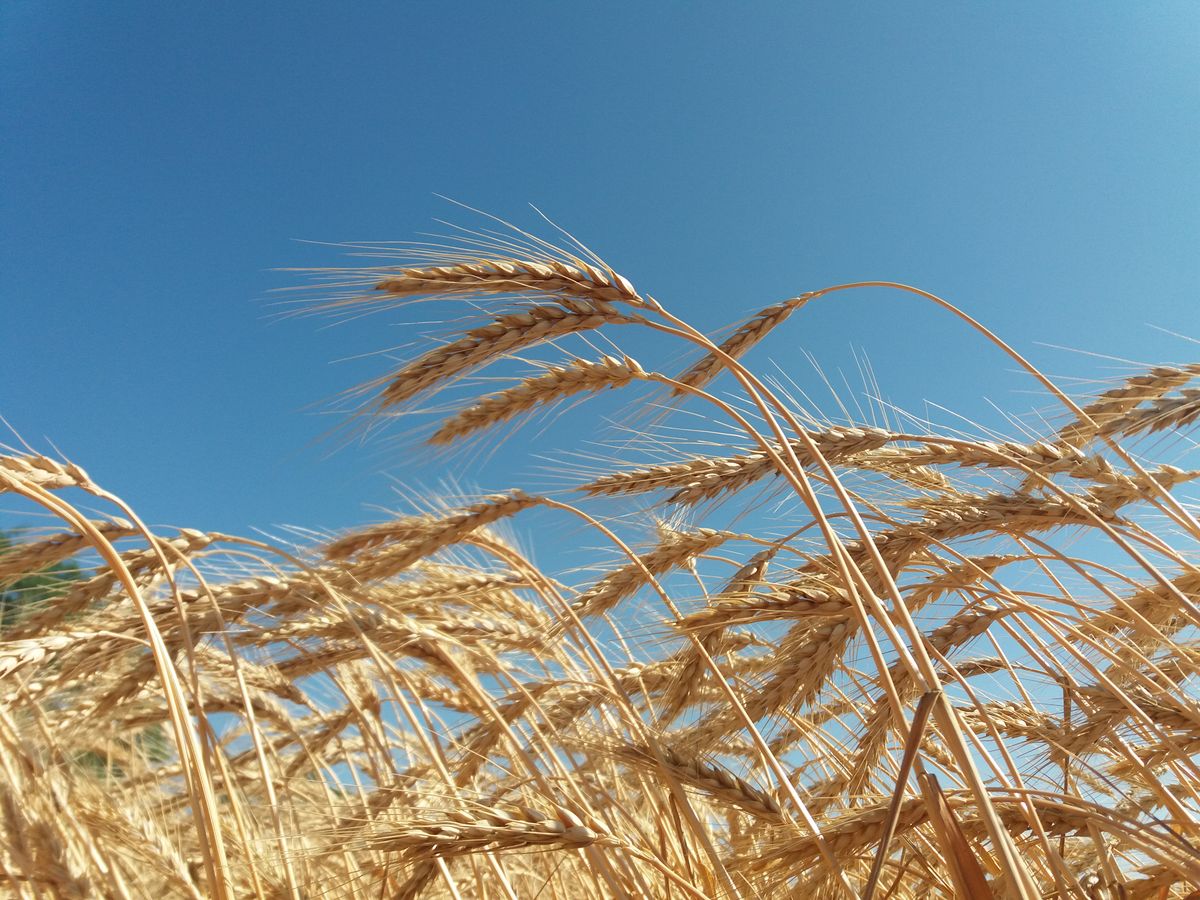
Where did wheat come from? The short answer has held for decades: wild grasses in the Fertile Crescent, the arc of land running from the Levant through southeast Türkiye to Iraq and western Iran, tamed by the first farmers more than 10,000 years ago. What 2026 changed is the middle of that story. A study of ancient grains published in April found that domesticated emmer, the wheat that durum and bread wheat descend from, was not born in one place at all. It took two wild populations and at least two separate crossings between them. Two more studies this year looked at what 10,000 years of farming did to wheat’s genes, and at what the oldest wheat, einkorn, still has to offer.
Quick answer: Wheat came from wild grasses of the Fertile Crescent. Einkorn and emmer were domesticated there more than 10,000 years ago, and bread wheat appeared 8,000 to 9,000 years ago when domesticated emmer crossed with a wild goatgrass south of the Caspian Sea. A 2026 genetic study of ancient grains found that domesticated emmer itself came from two separate wild emmer populations, one northern and one southern, crossing at least twice.
Where did wheat come from?
Wheat came from a handful of wild grasses that still grow in the Fertile Crescent today. Wild einkorn (Triticum boeoticum) became cultivated einkorn, and wild emmer (Triticum dicoccoides), itself the product of a natural cross between two wild grasses hundreds of thousands of years earlier, became domesticated emmer. Emmer is the ancestor of both durum and bread wheat, which together make up nearly all the wheat grown today.
The family tree, in short:
- Einkorn: domesticated from wild einkorn in southeast Türkiye more than 10,000 years ago, and still a separate branch with its own simpler genome.
- Emmer: domesticated from wild emmer in the same era. In the US it is mostly sold as farro.
- Durum: a free-threshing form of emmer whose grains fall out of their husks at threshing. It is the pasta wheat.
- Bread wheat and spelt: bread wheat was born when domesticated emmer crossed with a wild goatgrass, Aegilops tauschii, 8,000 to 9,000 years ago south of the Caspian Sea, adding a third genome, and spelt most likely came from early bread wheat crossing back with emmer. Our post on wheat chromosomes explains how that stacking works and why it matters for gluten.
Why did wheat have to change before people could farm it?
Because wild wheat throws its seed away. The ear of a wild wheat shatters when it ripens, scattering its grains on the ground so the plant can reseed itself, which is perfect for the grass and useless for a farmer with a sickle. Domestication meant favoring plants whose ears held together until harvest, and in emmer that takes broken copies of a gene called Brittle rachis 1 on both of its two genomes, known as Btr1-A and Btr1-B.
That two-gene requirement is what made the timeline hard to untangle. A plant with only one of the two mutations still drops its grain, so somewhere along the way both had to end up in the same plant.
What did the 2026 ancient grain study find?
It found that domesticated emmer was born from a cross between two different wild emmer populations, and that this happened at least twice. The team, publishing in Nature Plants in April 2026, sequenced the genomes of wheat grains 3,000 to 6,000 years old that had been excavated in the southern Levant.
Their reading of the DNA goes like this. The Btr1-A mutation probably arose in a northern wild population and the Btr1-B mutation in a southern one, so neither population could produce a wheat that held its grain on its own. Domesticated emmer appeared when the two populations crossed and both mutations landed in the same plant. That crossing happened at least twice, producing separate domesticated lineages, and those lineages then kept picking up useful traits by crossing with whatever wild emmer grew nearby.
The most surprising result is where the ancient grains’ closest relatives live now. The Levantine wheat matched best with wheat collected in modern times from Ethiopia, the Arabian Peninsula and India, so lineages that began in the Levant survived far to the south and east. The authors describe wheat domestication as a prolonged, regionally connected process rather than a single event, which challenges the long-running idea that wheat was tamed once, in one core area.
What do 1,420 wheat and barley varieties reveal?
They reveal genes that both crops held on to through 10,000 years of farming under similar climate pressures, which makes those genes strong candidates for breeding climate-ready varieties. In a study published in Molecular Plant in September 2026, researchers at INRAE and CNRS in France compared 1,420 modern wheat and barley varieties with the remains of 5,000-year-old wheat and identified genetic variants that both species had retained.
In wheat they confirmed the role of three genes first described in other plants: one affecting yield, one affecting flowering date and one involved in epigenetic regulation, the switching of genes on and off. To get there they compared 84 flowering-plant genomes, reconstructed 10 ancestral plant genomes more than 200 million years old, and released the resulting gene catalogue as free tools for breeders. The team says rice, maize and sorghum are next (INRAE’s release has the details).
Why are wheat breeders going back to einkorn?
Because einkorn kept genes for disease resistance and stress tolerance that modern wheat lost during domestication and breeding. A project at the University of Maryland and the University of Haifa, funded through the US-Israel BARD program, sequenced 280 einkorn lines chosen from more than 700 collected around the world.
Two years of field trials in Israel turned up five high-yielding lines that held up under heat and drought, along with genes linked to resistance against powdery mildew and yellow rust, two fungal diseases that plague wheat fields. The researchers have built genetic markers for those traits and started crossing them into bread wheat (BARD’s summary covers the project).
What this means for the wheat you buy
None of this makes ancient wheat a health food or changes how it bakes, but it does make the old grains on the shelf more interesting. Einkorn is the wheat that started it all, and whole wheat einkorn flour bakes into dense, nutty loaves. Emmer is the grain this year’s big study was about, and a bag of farro is the easiest way to taste it. Khorasan and spelt are later branches of the same family tree.
For how these grains behave in the kitchen, see our emmer vs einkorn comparison, and for what the earliest bakers made with them, our post on the oldest bread in the world.
Frequently asked questions
Is einkorn the oldest wheat?
Yes. Einkorn is the oldest cultivated wheat, domesticated in southeast Türkiye more than 10,000 years ago, with emmer close behind in the same region.
Is ancient wheat safe for people with celiac disease?
No. Einkorn, emmer, spelt and khorasan all contain gluten, so none of them is safe for anyone with celiac disease.
Is farro the same as emmer?
Usually. In the US, farro almost always means emmer, though in Italy the word can also cover einkorn (farro piccolo) and spelt (farro grande).
Bake with the first wheat
See our hand-picked einkorn, from all-purpose flour to whole berries, with the brands worth buying.
Shop einkorn →