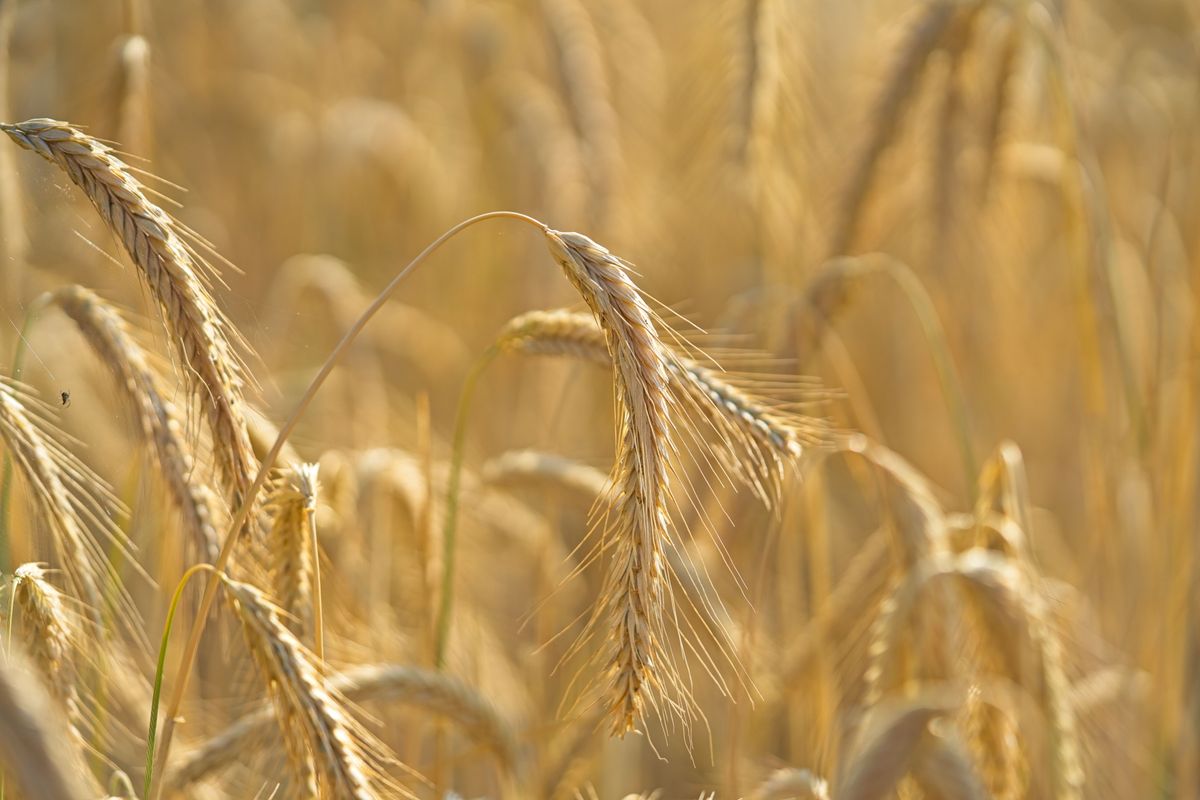
Triticum spelta is the botanical name for spelt, the hulled wheat that fills the Dinkel bins of German bakeries and, more recently, the artisan-bread shelves of the English-speaking world. The name tends to arrive with an assumption attached: that spelt is one of the truly ancient wheats, older and purer than the modern bread wheat it is sold as an alternative to. The genetics tell a more interesting, and slightly more humbling, story. In fact spelt is almost certainly younger than bread wheat, and carries the same genome. What sets it apart is not age. It is a quirk of hybridisation and a stubborn husk.
This is a botany piece rather than a recipe. If you want the practical side, our what is spelt overview and how to cook spelt guide handle the kitchen. Here I want to explain what Triticum spelta actually is as a plant, because the answer is more surprising than the health-food label suggests.
Quick answer: Triticum spelta is the botanical name for spelt, a hulled, hexaploid wheat that carries the same AABBDD genome as ordinary bread wheat. Despite its "ancient grain" image, the genetics suggest spelt is younger than bread wheat, most likely a hybrid of early bread wheat back-crossed with domesticated emmer. What sets it apart is not age but its tight husk, which protected the crop in cold, wet regions and kept it in cultivation.
What is Triticum spelta?
Spelt is a hexaploid wheat. Each cell carries six sets of chromosomes, 2n = 6x = 42, organised into three subgenomes that geneticists label A, B and D. Its genome formula is written AABBDD, and here is the first surprise: that is the exact same formula as ordinary bread wheat, Triticum aestivum. The two plants are so close that spelt is often not granted its own species name at all, but written as Triticum aestivum subsp. spelta. They cross and produce fertile offspring without difficulty.
Those three subgenomes came from three different wild grasses, stacked up over two separate hybridisation events. Triticum urartu contributed the A genome. A relative of the wild goatgrass Aegilops speltoides contributed the B. And a second, scrubbier goatgrass, Aegilops tauschii, contributed the D. Understanding that stack is the key to understanding where spelt sits.
| Wheat | Ploidy | Genome | Threshing habit |
|---|---|---|---|
| Einkorn (T. monococcum) | diploid, 2n = 14 | AA | hulled |
| Emmer (T. dicoccon) | tetraploid, 2n = 28 | AABB | hulled |
| Spelt (T. spelta) | hexaploid, 2n = 42 | AABBDD | hulled |
| Bread wheat (T. aestivum) | hexaploid, 2n = 42 | AABBDD | free-threshing |
Read down the genome column and the oddity jumps out. Spelt and bread wheat are genetically the same grade of wheat. The difference that everyone notices in the field, and in the mill, is the last column.
Where did Triticum spelta come from?
The deep history is well settled. The A and B genomes came together first, when wild grasses hybridised to produce wild emmer (AABB) around half a million years ago. Much later, domesticated emmer crossed with Aegilops tauschii to add the D genome, and that event, roughly 8,000 to 9,000 years ago in the region south of the Caspian Sea, produced the first hexaploid AABBDD wheat. Free-threshing bread wheat descends from there.
Spelt’s own place in that sequence is where the argument starts, and it is worth being honest that it remains contested. The prevailing view from recent genomic work is that spelt is not an ancestor of bread wheat at all, but a product of it. European spelt appears to have arisen from a second hybridisation, when early hexaploid wheat spread west and crossed with the domesticated emmer already growing there. The emmer acted as the maternal parent, and genomic regions introgressed from it carry exactly the traits that made botanists file spelt as a separate, primitive species in the first place: the tenacious glumes and the later flowering. This is the finding of a 2024 genome study in Plant Communications, and it echoes older work on the origin of spelt and free-threshing hexaploid wheat.
There is a complication worth flagging: Asian spelt and European spelt may not share a single origin, and some Asian material may sit closer to the primary hexaploidisation event. The short version for a Western shopper, though, is that the spelt in your bag is most likely a back-cross, not a relic.
Is Triticum spelta older than bread wheat?
Almost certainly not, and this is the myth most worth puncturing. Spelt and bread wheat carry the same AABBDD genome; if anything, the genetics point to spelt being derived from bread wheat by hybridisation with older emmer, which makes it a sibling or a cousin, not a grandparent. Its reputation for being especially “ancient” rests on two things. First, it looks primitive, because the emmer genes give it a hull. Second, it fell out of commercial favour when free-threshing wheat took over, so it survived in old-fashioned pockets and picked up an old-fashioned aura. Antiquity of reputation is not the same as antiquity of lineage. For a grain that genuinely is more ancient in the diploid sense, look at einkorn, which sits two whole hybridisation events below spelt on the table above.
Why is spelt a hulled wheat?
This is the trait that actually matters, in the field and at the mill. In a free-threshing wheat, threshing knocks the grain clean out of its protective glumes. In spelt, each grain stays fully encased in its husk even after threshing, so the crop has to go through an extra dehulling step before it can be milled. That sounds like a pure nuisance, and commercially it was one, which is why bread wheat displaced spelt wherever farmers had the choice.
But the husk is also why spelt persisted. The tight glumes protect the grain from damp, from fungal attack, and from the cold, which made spelt a dependable crop in exactly the high, wet, marginal country where bread wheat sulked. Like rye, spelt earned its keep in the cool and difficult places, and that ecological niche, as much as any nutritional virtue, is why it hung on in the Alps and the German uplands for so long.
When and where was Triticum spelta grown?
Spelt has been cultivated since roughly 5000 BCE. The earliest clear archaeological remains come from the north of Iraq and from Transcaucasia, north-east of the Black Sea, in the fifth millennium BCE. It reached Europe later: Neolithic finds dating from about 2500 to 1700 BCE turn up in Denmark, Germany and Poland, and by the Bronze Age spelt was widespread across central Europe. Through the Iron Age it was the major wheat of southern Germany and Switzerland, and by around 500 BCE it had reached the south of Britain. It became a major European crop in the ninth century CE and held its ground through the Middle Ages in Switzerland, the Tyrol, Germany, northern France and the Low Countries, which is where the German name Dinkel and the tradition of Dinkelbrot come from.
One footnote for the classically minded: the Roman grain called far in Latin, often loosely translated as spelt, was in fact emmer, not Triticum spelta. It is an easy conflation, and a very old one, but the two are different plants.
Is the Triticum spelta I can buy the same plant?
Yes. The spelt in a modern bag, whether you buy whole spelt berries or stone-ground spelt flour, is Triticum spelta, the same hexaploid, hulled wheat described above. The organic-farming movement revived it toward the end of the twentieth century, and since then it has become a common wheat substitute for artisan loaves, pasta and flakes. If you are deciding whether it suits you in practice, our is spelt gluten-free explainer and the einkorn vs spelt comparison are the logical next reads, and the spelt grain page collects the nutrition data and the brands worth buying.
The plant deserves better than its health-halo. It is not the oldest wheat, and it is not a different species from bread wheat in any strict sense. It is something more particular: a hexaploid that took a genetic detour through emmer, kept its husk, and rode that husk into the cold margins of Europe where it quietly outlasted the fashion that first pushed it aside.
Frequently asked questions
Does Triticum spelta contain gluten?
Yes. Spelt is a true wheat, so it contains gluten and is not safe for anyone with celiac disease or a wheat allergy, as our is spelt gluten-free explainer covers in full. Its gluten is weaker and more water-soluble than modern wheat’s, but it is still gluten.
Is Triticum spelta the same as Triticum aestivum?
They are extremely close. Both are hexaploid wheats with the identical AABBDD genome, and they cross to produce fertile offspring, so spelt is often written as Triticum aestivum subsp. spelta. The practical difference is the husk: bread wheat threshes free, spelt stays in its glumes.
Is spelt the same as Dinkel?
Yes. Dinkel is simply the German name for spelt, and Dinkelbrot is spelt bread. The grain in a German Dinkel bin and an English “spelt” bag is the same plant, Triticum spelta.
Try spelt for yourself
From whole spelt berries to stone-ground flour, see the spelt worth buying and the brands we trust.
Shop spelt →