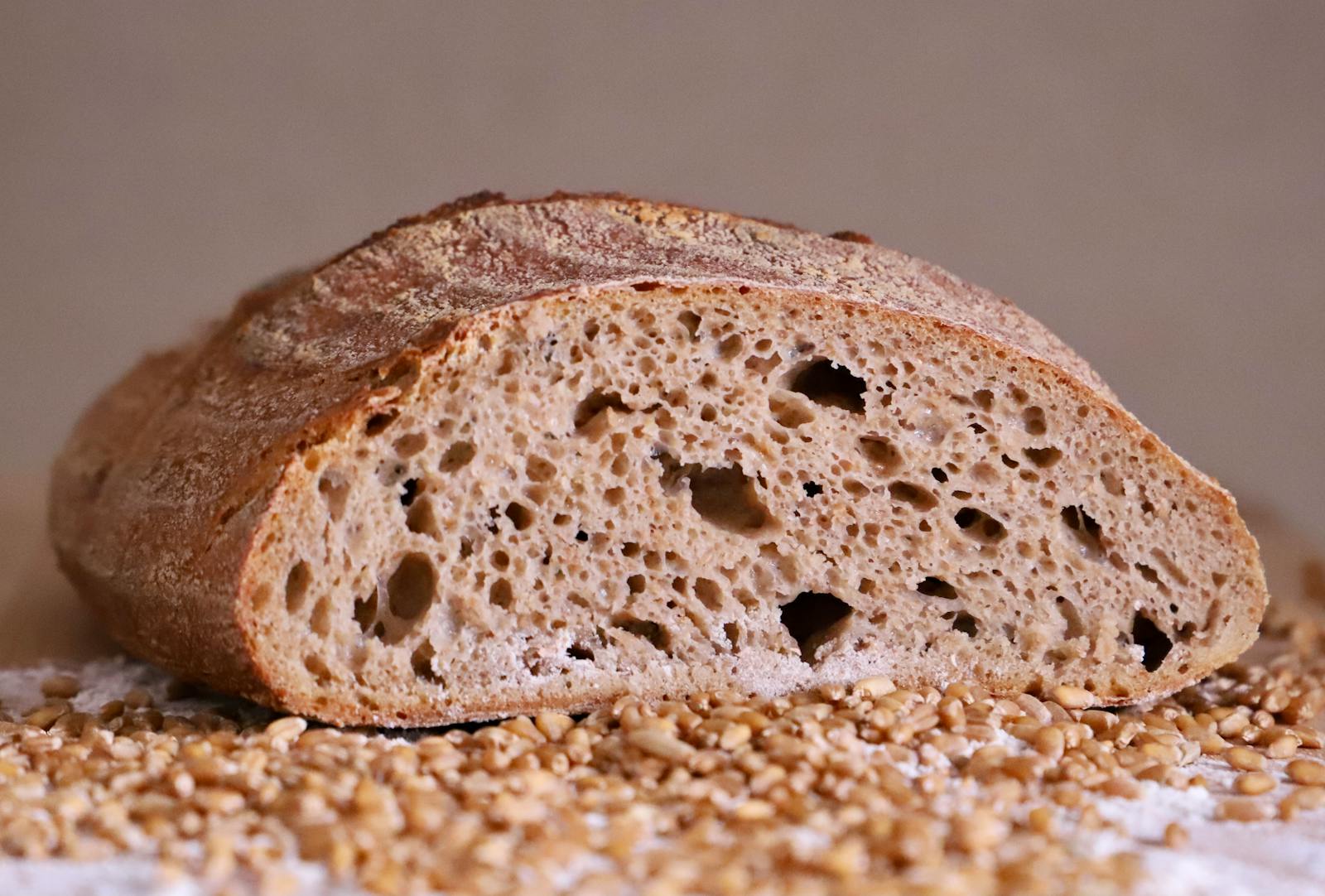
Whole grain sourdough bread has a reputation for coming out of the oven looking like a doorstop, and I understand why. Whole grain flour behaves differently from white, and if you treat it the same way you get a dense, tight loaf. The good news is that the fixes are simple once you know them: more water, a longer rest, and a little patience. Whole grain sourdough contains gluten, so this is a wheat-and-rye loaf, not a gluten-free one. Done right, it has a tender crumb, a deep nutty flavor, and the fuller nutrition of whole grains that refined white flour leaves behind.
I have baked this loaf weekly for years on my Cotswolds course, and the same handful of adjustments turn up every time someone’s whole grain bread disappoints them.
Quick answer: The trick to whole grain sourdough bread that is tender rather than a brick is more water, a longer rest, and a flour blend. Whole grain flour is thirsty and its bran cuts the gluten, so push hydration to 78 to 85%, give it a 1-hour autolyse and an overnight cold proof, and start with about 70% whole grain to 30% bread flour. Cool the loaf fully before slicing. It is a wheat-and-rye loaf, so it contains gluten and is not gluten-free.
Why is whole grain sourdough harder to make?
Two reasons, both to do with the bran. Whole grain flour keeps the bran and germ that white flour strips out, and the bran does two unhelpful things. First, it is thirsty, soaking up far more water, so a dough that looks right at white-flour hydration is actually too dry. Second, the sharp little flecks of bran physically cut through the gluten strands as they try to form, which is why a 100 percent whole grain loaf will never rise quite as airily as a white one. You are not doing anything wrong. The flour is just harder to work with.
What flour should you use for whole grain sourdough?
You have room to play here, and blending is the secret to a softer loaf.
- Whole wheat is the classic base, hearty and slightly sweet.
- Whole grain spelt flour makes a more tender, mellow loaf and is my favorite for anyone whose first whole grain bakes felt heavy. Spelt’s gluten is more delicate, so handle it gently.
- Rye flour adds tang and moisture but very little structure, so use it as a minority partner, 10 to 20 percent, not the whole loaf.
The friendliest starting blend is about 70 percent whole grain to 30 percent bread flour. It still tastes thoroughly whole grain but lifts and softens noticeably. Work up to 100 percent once you are comfortable.
The recipe
For one loaf, by weight:
- 350 g (scant 3 cups) whole grain flour (whole wheat, spelt, or a mix), plus extra for dusting
- 150 g (1 1/4 cups) bread flour
- 400 g (1 2/3 cups) water (80% hydration)
- 100 g (1/2 cup) active sourdough starter
- 10 g (2 tsp) fine salt
- Autolyse. Mix only the flours and water and let them sit, covered, for 1 hour. With whole grain this rest is not optional. It lets the bran fully hydrate and the gluten begin forming on its own.
- Mix. Add the starter and salt and work them in until smooth.
- Bulk ferment. Leave it 4 to 6 hours at room temperature, giving it a set of stretch-and-folds every 30 minutes for the first 2 hours. It should grow by about half and feel alive.
- Shape. Turn it out, shape it into a taut round, and settle it seam-up in a floured banneton.
- Proof. Cover and refrigerate overnight, 8 to 14 hours. The cold proof deepens flavor and makes the dough far easier to score.
- Bake. Bake at 240 C (475 F) in a covered Dutch oven for 20 minutes, then uncovered for 20 to 25 more, until deep brown.
Cool it completely before cutting. A warm whole grain loaf always seems gummy, and slicing it early is the most common way people convince themselves they failed.
How do you get a soft crumb instead of a brick?
Hydrate more, rest longer, and blend in some bread flour. Those are the three levers, in order of impact.
- Hydrate more. Whole grain wants 78 to 85 percent water where white bread is happy at 70. A wetter dough is harder to handle but bakes far softer. If your loaf is dense, add water before you change anything else.
- Rest longer. The 1-hour autolyse and the overnight cold proof both give the bran time to soften, which is what saves the crumb.
- Blend in some bread flour. Even 20 to 30 percent white flour adds the structure that lets the loaf hold gas and rise taller. There is no shame in it.
Can you make 100 percent whole grain sourdough?
You can, and it is worth doing once you have the technique. Push the hydration to the top of the range, extend the autolyse to 2 hours, and accept a slightly tighter crumb as the honest character of the bread rather than a fault. It will be denser than a blended loaf and far more flavorful, the kind of bread that needs nothing but butter.
Where to go from here
Whole grain sourdough rewards good flour more than almost any other bake, so it is worth buying well. See our spelt and rye profiles for the grains that do the most work in this loaf, and our guide to the best flour for a sourdough starter to keep that starter lively. For the wider world of heritage bread, the ancient grain bread guide is the natural next read, and the emmer versus einkorn comparison covers two more wheats worth baking with.
Frequently asked questions
Is whole grain sourdough bread gluten-free?
No. Whole grain sourdough is made from wheat, spelt, or rye flour, all of which contain gluten, so it is not safe for anyone with celiac disease. Sourdough fermentation breaks down a little gluten but nowhere near a safe level, as our is sourdough bread gluten free post explains.
Is whole grain sourdough healthier than white sourdough?
Yes, on balance. Whole grain flour keeps the bran and germ, so the loaf has more fibre, protein, and minerals than a white sourdough, and the slow ferment adds the usual sourdough benefits for digestibility and blood sugar. White sourdough is still a fine bread; whole grain simply carries more nutrition per slice.
How do you store whole grain sourdough bread?
Keep it cut-side down on a board or in a paper bag at room temperature for three to four days; the sourdough acids help it stay fresh a little longer than a yeasted loaf. For longer storage, slice and freeze it in a sealed bag for up to three months, and toast straight from frozen.
Stock up on whole grain flour
The right flour makes the loaf. See our hand-picked spelt and whole grain, with the brands worth buying.
Shop spelt →