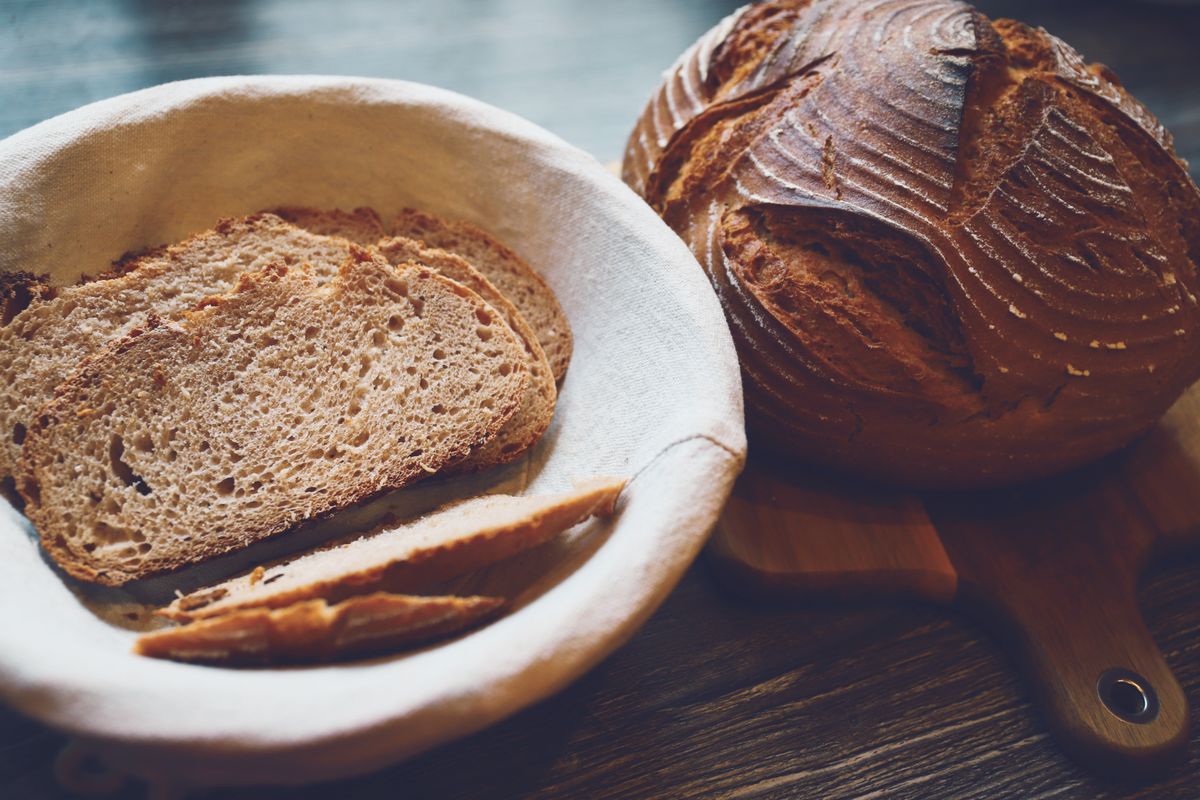
Let me save you some confusion before you spend anything: a banneton is just a proofing basket, the round or oval bowl-shaped basket that holds a shaped sourdough loaf while it does its final rise. It is the source of those handsome spiral rings on a bakery boule, and it is one of the few pieces of sourdough kit that genuinely earns a spot on the shelf. That said, you do not strictly need to buy one to start, and the rattan-versus-wood-pulp, round-versus-oval decisions are noisier than they need to be. Here is what a banneton actually does, how to use and care for one, and which to buy.
Quick answer: A banneton is a proofing basket that holds a shaped sourdough loaf during its final rise. It wicks moisture from the surface for a crisper crust and cleaner scoring, supports slack high-hydration dough so it rises up instead of spreading out, and leaves the signature spiral rings. The two materials are rattan cane and wood pulp: a rattan banneton basket wicks best and gives the crispest rings but needs seasoning, while wood pulp is smoother, cheaper, and needs almost no upkeep. A 9-inch round is the standard first basket for a boule; a 10-inch oval suits a batard. You do not strictly need one, since a bowl lined with a floured tea towel works, but it is the single tool that most improves a home loaf.
What is a banneton?
A banneton, also called a brotform or proofing basket, is a shaped basket, traditionally coiled cane or rattan, that cradles a loaf during its final proof. The dough rises inside it, takes on its round or oval shape, and picks up the spiral imprint of the coils. After proofing you tip the loaf out onto your baking surface, score it, and bake, so the basket itself never goes in the oven. The name is French, though nearly every baking culture has its own version, and the proofing step it serves is simply the dough’s last rest before it bakes.
What does a banneton do for your bread?
Three things, and only one of them is about looks. First, the porous basket wicks moisture from the dough’s surface as it proofs, which dries the skin just enough for a crisper crust and a cleaner score. Second, it supports a wet, slack dough so it rises upward instead of spreading into a puddle, which matters most for the high-hydration doughs that give an open crumb. Third, it leaves those spiral rings. A tea-towel-lined bowl covers the support job, but nothing improvises the moisture-wicking as well as a bare cane basket does.
Do you actually need a banneton?
No, and I want to be honest about that up front. A mixing bowl lined with a well-floured linen or tea towel proofs a loaf perfectly well, and plenty of good bakers never buy anything else. Where a banneton earns its ten to twenty dollars is the drier crust and the confidence it gives a slack dough to hold its shape, plus the rings if you like them. If you are still deciding whether sourdough is for you, proof in a bowl first; if you are baking most weeks, a basket is a small, durable upgrade. Our sourdough starter kit guide makes the same case about kits: buy the tool that removes friction, and skip the rest.
What size and shape banneton should you get?
Match the shape to the loaf and the size to your dough weight. Round bannetons make a boule, the classic round loaf; oval ones make a batard, the longer torpedo shape. For size, a 9-inch round or a 10-inch oval is the standard first basket, sized for a loaf made with about 500 g of flour, which is the typical home recipe. Go smaller only for petite loaves and larger only if you scale your recipes up. If you are unsure, start with the 9-inch round, since most beginner sourdough recipes are written for a boule.
| Loaf | Shape | Standard size | Dough (flour) |
|---|---|---|---|
| Boule | Round | 9 inch | ~500 g |
| Batard | Oval | 10 inch | ~500 g |
| Small boule | Round | 7 to 8 inch | ~350 g |
| Large loaf | Round or oval | 10 to 12 inch | ~700 to 1000 g |
What are bannetons made of?
Two materials cover almost everything on the market, and they behave differently. Cane or rattan is the traditional choice: it wicks moisture best and leaves the crispest ring definition, but it needs seasoning and a gentle hand. Wood pulp, sometimes sold as spruce pulp, is smoother, cheaper, and nearly maintenance-free, but the rings are fainter and it wicks a little less. Both usually come with an optional cloth liner that gives a smoother, ring-free crust when you want one.
| Material | Rings | Moisture wicking | Upkeep | Best for |
|---|---|---|---|---|
| Cane / rattan | Crisp, defined | Best | Season it, flour well | Traditionalists, defined rings |
| Wood pulp | Faint | Good | Almost none | Beginners, easy care |
| With cloth liner | None | Least | Wash the liner | A smooth, ring-free crust |
How do you use and care for a banneton?
The whole routine is dust, proof, tip out, and brush clean, and getting the flouring right is the only part people struggle with. Here is the full sequence.
- Season a new cane basket. Mist it lightly, dust heavily with rice flour, and let it dry before first use, which stops the raw cane from grabbing the dough.
- Flour before every proof. Dust the inside with rice flour or a rice-and-wheat mix; rice flour resists absorbing moisture, so it keeps dough from sticking better than plain flour.
- Proof smooth-side down. Place the shaped loaf in with its seam facing up, so that seam becomes the bottom when you turn it out.
- Cold-proof if you can. An overnight rest in the fridge firms the dough and makes it release far more cleanly.
- Tip out and bake. Invert onto parchment or a peel, lift the basket away, score, and bake. The basket stays out of the oven.
- Clean by drying, not washing. Let stray dough dry, then brush or knock it out. Skip soap and routine washing, which can warp cane and invite mildew, and air-dry the basket fully after each use.
Which banneton should you buy?
For most people one 9-inch round cane basket is all you need, plus a round-and-oval set if you want both shapes. My picks: a single round cane banneton with a liner is the honest budget entry, well under twenty dollars and enough to bake with tonight; a round-and-oval banneton set covers both the boule and the batard for not much more, and it is the one I would gift a new sourdough baker. If you are starting completely from scratch, the complete sourdough starter kit bundles a banneton with the jar and tools in one box, though nothing in it is mandatory. Whatever you buy, give it a loaf worth proofing: our best flour for a sourdough starter and how to feed a sourdough starter guides get the culture ready, and the whole grain sourdough bread recipe is the loaf to shape in it.
Where to go from here
A banneton is the easy upgrade; the flour you proof in it matters more. Whole rye builds the liveliest starter, and spelt makes a forgiving heritage loaf to shape in a new basket. The Real Bread Campaign is a good place to keep learning once your first boule comes out of the oven.
Frequently asked questions
What flour do you use to dust a banneton?
Rice flour is the baker’s secret here, because it does not absorb moisture the way wheat flour does, so it stays powdery and keeps the dough from sticking. A 50/50 mix of rice flour and wheat flour works too and browns a little. Dust generously and evenly before every proof, working it into the coils.
Why is my dough sticking to the banneton?
Usually too little flour, an unseasoned new cane basket, or dough left to over-proof. Dust more heavily with rice flour, season a new basket before first use, and turn the loaf out a touch sooner. A wetter dough sticks more, so a cold overnight proof, which firms it up, releases far more cleanly.
Can you put a banneton in the oven?
No. A banneton is only for the final proof; you tip the loaf out onto parchment, a peel, or a hot Dutch oven and bake it there. Cane and wood pulp will scorch or warp under oven heat, so the basket always stays out.
Get your banneton
Start with a budget round cane basket, or step up to a round-and-oval set for both loaf shapes.
Shop bannetons →Feed the loaf your banneton shapes
See our hand-picked rye and heritage flour, the feed that gets a sourdough loaf ready for the basket.
Shop rye →