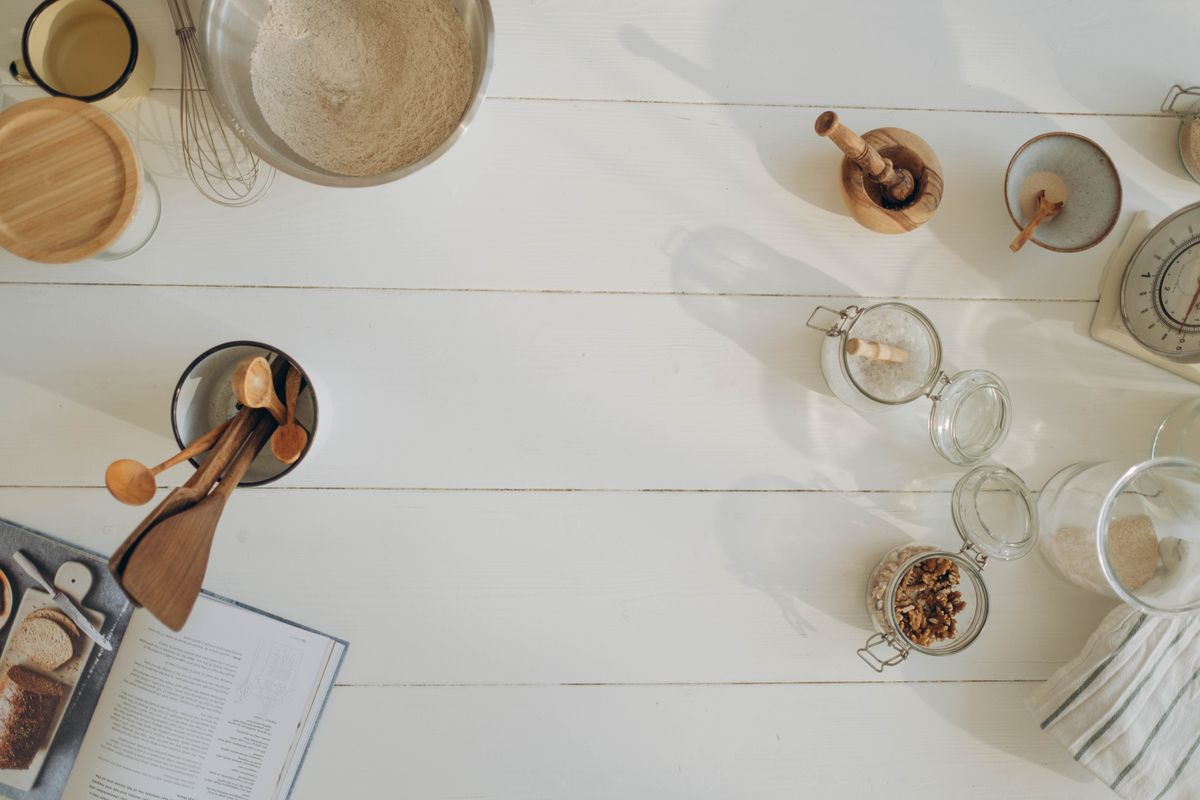
Let me save you some money before you spend any: you do not need a sourdough starter kit to make sourdough. A clean jar and a bag of flour will get you a living starter in a week, no purchase required. That said, a good kit is a genuinely nice thing, especially as a gift or a shortcut for someone who wants every tool in one box instead of hunting them down separately. The trick is knowing which parts of a kit are worth having and which are marketing filler, and after auditing a stack of them, I can tell you exactly where the line is.
Quick answer: A sourdough starter kit bundles the gear for your first loaf, typically a glass jar, a banneton proofing basket, a bench scraper, a lame, and sometimes a dried starter culture. You don't actually need one, since a clean jar, a bag of flour, and a tea-towel-lined bowl will do, but a good kit is a fine gift or a one-box shortcut. The parts genuinely worth buying are a real banneton, a metal bench scraper, and a dried culture if you want to skip the seven-day build; branded totes and tiny thermometers are filler.
What’s in a sourdough starter kit?
Most kits bundle the same core items: a glass jar for the starter, a banneton (the round proofing basket that gives a loaf its spiral rings), a bench scraper, a lame (the little blade for scoring), and often a dough thermometer, a linen liner, and a printed recipe or troubleshooting guide. The better kits add a dried starter culture so you can skip the week of building one from scratch. The weaker ones pad the box with a branded tote bag, a flimsy plastic scraper, and a thermometer too small to read, then charge you for the privilege.
Do you actually need a sourdough starter kit?
No, and I want to be honest about that up front. Every item in a kit has a cheaper stand-in you probably already own: any clean glass jar works for the starter, a mixing bowl lined with a floured tea towel replaces the banneton, and a sharp paring knife scores a loaf almost as well as a lame. Our 7-day starter method builds a bubbly starter from nothing but rye flour and water, no special gear involved. Where a kit earns its price is convenience and gifting: if you want to hand someone everything they need in one wrapped box, or you would rather not assemble the pieces yourself, a kit is a fair way to spend twenty dollars.
What should you look for in a good starter kit?
Focus on the few components that are genuinely better bought than improvised, and ignore the rest. A real rattan or cane banneton is worth having, because a proper proofing basket wicks moisture and shapes the loaf in a way a tea-towel-lined bowl only approximates. A sturdy metal bench scraper is the one tool I use every single bake and the one most people do not already own. Everything else is optional, and the table below sorts what is worth buying from what is filler.
| Item | Worth it? |
|---|---|
| Rattan banneton (proofing basket) | Yes, hard to improvise well |
| Metal bench scraper | Yes, used every bake |
| Dried starter culture | Yes, if you want to skip the 7-day build |
| Lame (scoring blade) | Nice, but a paring knife works |
| Glass jar | Skippable, any jar works |
| Branded tote, tiny thermometer | Filler |
A kit that nails the first three and keeps the filler to a minimum is worth buying. One that leads with a logo tote bag is selling you a gift box, not a tool set.
What’s the best sourdough starter kit to buy?
For most people the answer is a complete tools kit plus, optionally, a dried culture to skip the build week. The complete sourdough starter kit we recommend covers the parts that matter, a proper banneton, a jar, and a scraper, in one box without the usual filler, which makes it a solid gift or a clean shortcut to your first loaf. If your real goal is skipping the seven-day starter build, a dried heirloom sourdough culture rehydrates into an active starter in a few days, and you can pair it with whatever jar and basket you already have. Between the two, you have covered both buyer paths: the person who wants the whole toolkit, and the person who just wants a live culture faster. A third path worth knowing: the Brooklyn Brew Shop sourdough bread making kit bundles the tools AND the ingredients for a first loaf in one giftable box. It costs more than the Amazon toolkit, so pick it when the whole point is a present that bakes.
Can you make a sourdough starter without a kit?
Yes, and it is genuinely easy. Combine equal weights of whole rye or whole wheat flour and water in a clean jar, feed it once a day, and in five to seven days you have an active starter, no purchase involved. The flour matters more than any tool here: our best flour for sourdough starter guide explains why whole rye gets a new culture bubbling fastest, and our rye flour guide covers the grain itself. Heritage bakers sometimes build their starter on spelt or einkorn for a milder, sweeter culture. A kit does not include flour anyway, so this step is on you regardless of what you buy.
Where to go from here
Kit or no kit, the destination is the same: a jar of living starter and something delicious to bake with it. Once yours is active, our sourdough focaccia is the most forgiving first bake, a dutch oven bread is the crackly classic, and the whole grain sourdough guide takes you further. The Real Bread Campaign’s sourdough guidance is a good independent reference, and the microbiology behind the whole thing has its own long story on Wikipedia’s sourdough entry. Buy the kit if you want the convenience; skip it with a clear conscience if you do not.
Frequently asked questions
How much does a sourdough starter kit cost?
Most kits run about $20 to $40, depending on whether they include a dried culture and how good the banneton and scraper are. Premium kits with a real cane banneton and a heirloom culture reach $50 or so, while the cheapest boxes are padded with filler. You can assemble the genuinely useful pieces yourself for less if you shop around.
Is a dried sourdough starter as good as making your own?
Yes, once it is active. A dried heirloom culture is simply a real starter that was dehydrated; rehydrate and feed it for a few days and it performs like any mature starter, often with a well-developed flavour. Its advantage is speed, since it skips most of the seven-day build from scratch.
Do sourdough starter kits include flour?
Usually not. Kits supply the tools and sometimes a dried culture, but you buy flour separately, which is fine because feeding flour is where the real difference lies. Whole rye gets a new starter bubbling fastest, as our best flour for sourdough starter guide explains.
Want it all in one box?
A complete starter kit bundles the jar, banneton, and tools; a dried heirloom culture skips the seven-day build.
Shop starter kits →Feed your starter with real rye
See our hand-picked stone-ground rye, the flour that gets a new sourdough starter bubbling fastest.
Shop rye →