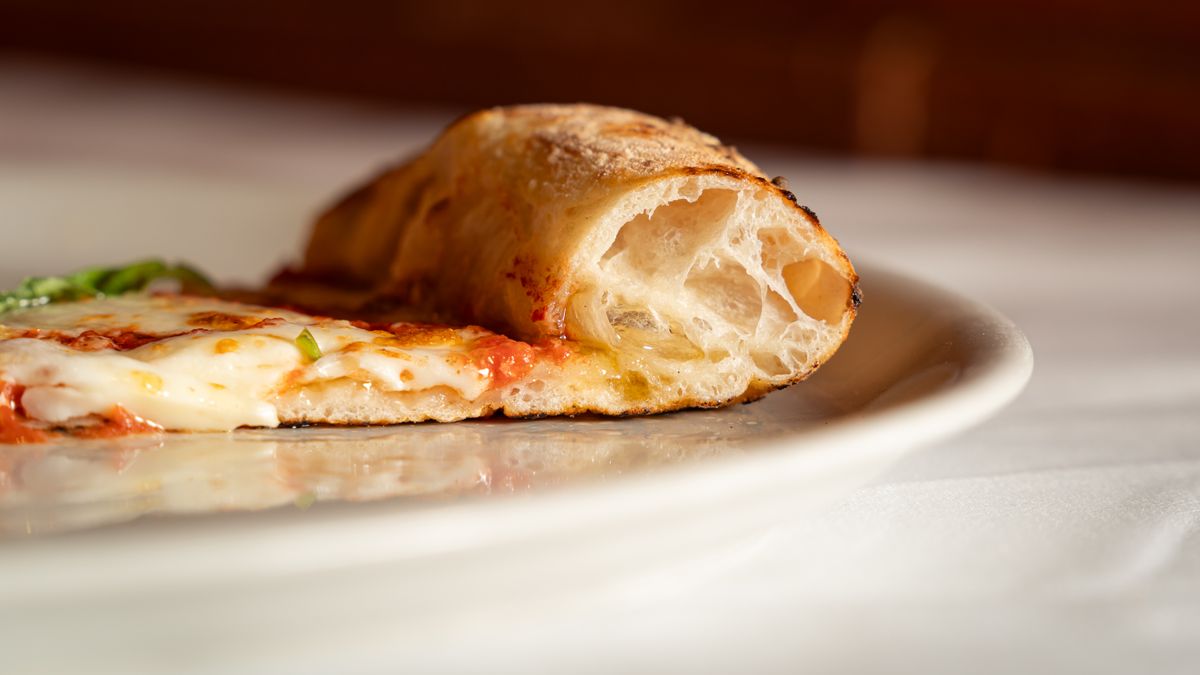
Most gluten-free pizza fails in the same two ways: it cracks when you fold it, or it turns to wet cardboard under the toppings. As a dietitian who has spent years helping clients rebuild a gluten-free kitchen, I can tell you both problems come down to two fixable things, a binder and a par-bake. This gluten-free pizza crust recipe uses psyllium husk to give the dough real stretch and a two-stage bake to keep it crisp, so you get a crust that actually holds a slice. No gum, no sogginess, no sad flatbread.
Quick answer: To make gluten-free pizza crust, whisk a rice-flour-based gluten-free flour blend with psyllium husk, yeast, salt, and sugar, then mix in warm water and olive oil to form a sticky dough. The psyllium hydrates into a gel that replaces gluten's stretch, so the crust bends instead of cracking. Shape it, par-bake the naked crust at 450°F for about 13 minutes, then top and bake again. Psyllium and the par-bake are the two things that separate a good gluten-free crust from a crumbly one.
How do you make gluten-free pizza crust?
The method is closer to bread than to a quick flatbread, because the dough needs time for the psyllium to set and the yeast to work. Here is the full recipe for one 12-inch crust.
- 250 g (2 cups) gluten-free all-purpose flour blend (rice-flour based)
- 15 g (2 tbsp) psyllium husk powder
- 7 g (2 1/4 tsp) instant yeast
- 6 g (1 tsp) fine salt
- 5 g (1 tsp) sugar
- 300 ml (1 1/4 cups) warm water
- 20 g (2 tbsp) olive oil, plus more for shaping
- Whisk the dry ingredients. Combine the gluten-free flour, psyllium husk, yeast, salt, and sugar in a large bowl. Mixing the psyllium in dry keeps it from clumping later.
- Mix and hydrate, about 10 minutes. Add the warm water and olive oil and stir to a thick, sticky dough. Let it sit 10 minutes: the psyllium absorbs the water and forms a gel, and the dough firms from batter-like to handleable.
- Rest and proof, 30 minutes. Cover the bowl and leave it somewhere warm until the dough looks puffy and relaxed. Gluten-free dough will not double like wheat dough; a visible rise is enough.
- Shape on parchment. With wet or oiled hands, press the dough onto a parchment-lined tray into a 12-inch round, building a slightly thicker rim. Wet hands are the trick; the dough is sticky and will fight a dry surface.
- Par-bake naked, about 13 minutes. Bake the plain crust at 450°F until it is set, dry on top, and lightly golden at the edges. This step is what stops a gummy center.
- Top and finish, about 10 minutes. Add your sauce, cheese, and toppings, then return the pizza to the oven until the cheese bubbles and the rim is deep golden. Cool a few minutes before slicing.
Why does gluten-free pizza crust need psyllium husk?
Because gluten is what makes wheat dough stretchy and foldable, and gluten-free flours have none of it. Psyllium husk is the single best replacement: it absorbs water and forms a gel that traps gas and gives the dough elasticity, so the baked crust bends instead of shattering. It does the job that xanthan gum only half-does, and it is why this crust folds like real pizza. Our psyllium husk baking guide covers the ratios in depth; for pizza, psyllium husk powder made for baking is the form you want, milled fine so it disappears into the crumb.
If you only have xanthan gum, you can use it, but expect a more fragile, crackery crust. Psyllium is the upgrade that makes gluten-free pizza taste like an intentional choice rather than a compromise.
What flour is best for gluten-free pizza crust?
A rice-flour-based gluten-free all-purpose blend, which is what most bags labeled “gluten-free 1-to-1 flour” already are. Rice flour gives a neutral, sturdy base, and a good blend rounds it out with starches for lift and often a little sorghum for flavor. You can buy a blend or build your own; our gluten-free flour guide walks through the ratios, and the rice flour guide explains why white rice flour anchors the mix. A bag of white rice flour is the cornerstone if you blend your own.
Adding a portion of sorghum or buckwheat flour deepens the flavor toward something more like whole wheat, but keep it under about a quarter of the total or the crust turns dense. Rice needs to stay the majority.
Why do you par-bake gluten-free pizza crust?
Because gluten-free dough is wetter than wheat dough, and wet dough under wet toppings never crisps. Par-baking the naked crust first drives off moisture and sets the structure, so when you add sauce and cheese the base is already firm enough to stay crisp. Skip this step and you get the classic gummy gluten-free center, cooked on the edges but raw and dense in the middle. It adds ten minutes and it is the difference between a crust you fold and one you eat with a fork. The par-bake is non-negotiable for gluten-free, even though wheat pizza usually skips it.
Why is my gluten-free pizza crust gummy or crumbly?
The two failures have opposite causes, and both are easy to fix. Gummy means underbaked or overtopped: par-bake longer until the crust is truly dry, and go light on the sauce, since gluten-free crust absorbs moisture faster than wheat. Crumbly means not enough binder or not enough rest: measure the psyllium by weight, and give the dough its full ten-minute hydrate so the gel can form before you shape it. Rushing the hydrate is the most common reason a crust falls apart.
Where to go from here
A good crust unlocks the whole gluten-free bread world, and it all runs on the same two levers, the right flour and a real binder. Our gluten-free flour guide and psyllium husk guide are the two to read next, and the gluten-free grains guide maps the wider pantry of naturally safe grains like quinoa if you are building a kitchen from scratch. Rice is naturally gluten-free, as our is rice gluten-free explainer confirms via the Celiac Disease Foundation, so a rice-flour crust is safe ground. The same dough logic scales down to smaller rounds in our gluten-free naan and pita guide, where psyllium does the stretching instead of gluten. Nail the psyllium and the par-bake and you will never buy a frozen gluten-free crust again.
Frequently asked questions
Can I make this gluten-free pizza crust dairy-free or vegan?
Yes, the crust itself is already vegan and dairy-free; it is just flour, psyllium, yeast, water, salt, sugar, and oil. Only your toppings determine whether the finished pizza is, so choose dairy-free cheese and you are set.
Can I make the dough ahead of time?
Yes. Refrigerate the mixed dough for up to two days; the flavor improves. Let it come to room temperature for about 30 minutes before shaping, since cold gluten-free dough is stiff and hard to press out.
Can I freeze gluten-free pizza crust?
Yes, and par-baked is the way. Par-bake the naked crusts, cool them fully, then freeze wrapped. Top and finish-bake straight from frozen, adding a couple of minutes.
Is store-bought gluten-free pizza crust as good as homemade?
Rarely. Most frozen gluten-free crusts are thin and crackery because they skip the psyllium-and-par-bake approach that gives homemade its chew. Homemade costs more effort but folds like real pizza, which the boxed versions almost never do.
Get the binder that makes it work
Psyllium husk is the one ingredient standing between crumbly and foldable. A fine-milled baking psyllium is what this crust needs.
Shop psyllium husk →Build your gluten-free pantry
Rice flour, sorghum, and the rest of the naturally gluten-free grains and flours we trust for baking.
Browse all grains →