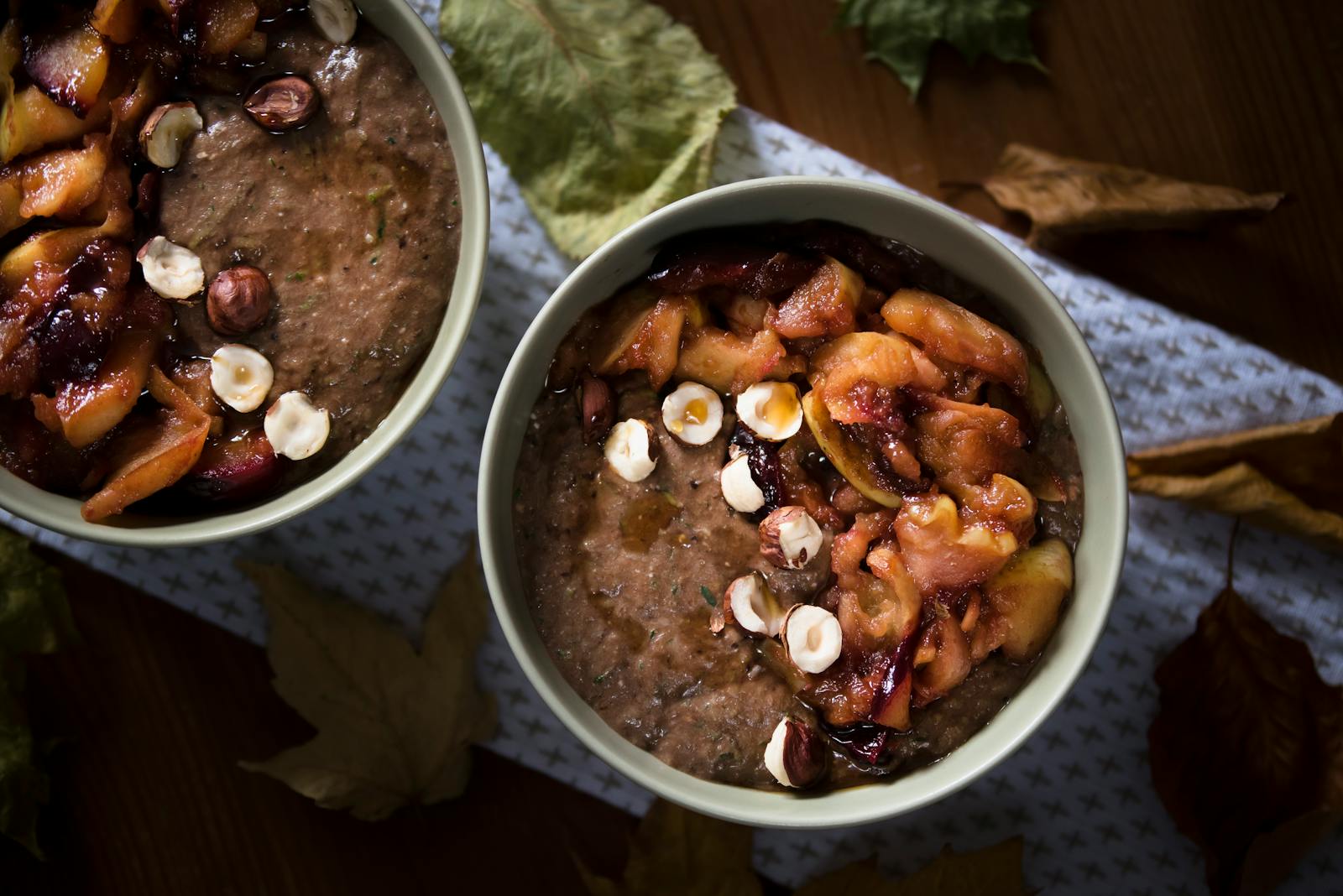
Teff is the smallest grain in the world, and that one fact explains almost everything about how to cook teff. Because the seeds are barely larger than a grain of sand, they cook fast, they thicken like nothing else, and they turn into a creamy porridge or a firm polenta depending on how much water you use. You do not need any special equipment, just a saucepan and about 20 minutes. Teff is also naturally gluten-free, which makes it a genuinely useful staple for a celiac or gluten-free kitchen.
If you have only ever met teff as the flour in Ethiopian injera, cooking the whole grain teff is a revelation. It tastes mildly sweet and malty, a little like cocoa and hazelnut, and it is one of the most nutrient-dense grains you can put in a bowl.
Quick answer: Teff, the world's smallest grain, cooks fast, in about 15 to 20 minutes, and the water ratio sets the texture. Use 1 part teff to 4 parts water for a creamy breakfast porridge, or 1 to 2.5 for a firm polenta that sets and slices. Toast the dry grain first for a nuttier flavour, stir near the end so it does not stick, and rest it briefly. Teff needs no soaking and is naturally gluten-free, high in iron and calcium.
What is the teff to water ratio?
The ratio decides the texture, so this is the first thing to get right. More water gives you a loose breakfast porridge; less gives you a sliceable polenta.
| Result | Teff to water | Notes |
|---|---|---|
| Creamy porridge | 1 : 4 | Breakfast texture, pourable |
| Soft side dish | 1 : 3 | Like soft polenta |
| Firm polenta | 1 : 2.5 | Sets when cooled, can be sliced and pan-fried |
Start with 1 part teff to 3 parts water if you are unsure. You can always loosen it with a splash more liquid at the end.
How do you cook teff porridge?
Simmer 1 part teff in 4 parts liquid for 15 to 20 minutes, stirring near the end, then rest it 5 minutes off the heat; the card and steps below give the full method.
- 1 cup (180 g) whole teff
- 4 cups (960 ml) water or milk (the creamy-porridge ratio from the table; use 1:3 for a soft side)
- Pinch of salt
- Toast the dry teff (optional but worth it): stir it in a dry saucepan over medium heat for 2 to 3 minutes until it smells nutty.
- Add your water or milk at a 1 to 3 or 1 to 4 ratio, plus a pinch of salt.
- Bring to a gentle boil, then drop to a low simmer.
- Cook 15 to 20 minutes, stirring often near the end, until the grains burst and the mixture thickens. Teff likes to settle and stick, so do not wander off.
- Pull it off the heat, cover, and let it rest 5 minutes. It will keep thickening as it cools.
Sweeten porridge with honey, dates, or banana, or keep it savory with olive oil and an egg on top.
How long does teff take to cook?
About 15 to 20 minutes on the stovetop, faster than almost any other whole grain because the seeds are so small. There is no need to soak teff first, and rinsing is impractical (the grains would slip through a normal sieve), so it goes straight into the pot dry.
Is teff good for you?
Teff earns its reputation. A cooked cup is a strong source of fiber and plant protein, and it is unusually high in iron and calcium for a grain, which is part of why it has been a dietary backbone in Ethiopia and Eritrea for centuries. You can check the specifics through USDA FoodData Central. Because you eat the whole tiny grain, bran and germ included, you get the full fiber and mineral package rather than a stripped-down version, which is exactly the benefit the Harvard T.H. Chan School of Public Health attributes to intact whole grains.
The honest caveats: teff is still calorie- and carbohydrate-dense, so portion size matters, and its very high fiber content can feel heavy if you are not used to it. Introduce it gradually.
Is teff better than oats?
For most breakfast purposes they are close, and both are excellent. Teff pulls ahead on iron and calcium and brings a more interesting malty flavor. Oats edge it on cost, availability, and that specific cholesterol-lowering soluble fiber called beta-glucan. If you want variety in a gluten-free rotation, alternating teff porridge with overnight oats covers more nutritional ground than leaning on either one alone. Both beat a bowl of refined cereal comfortably.
Does teff spike blood sugar?
Less than you might expect for a grain. Teff has a moderate glycemic impact thanks to its high fiber content, which slows digestion, and pairing it with protein or fat (nuts, yogurt, eggs) flattens the curve further. It is not a free food for blood-sugar management, but as a swap for instant oatmeal or sugary cereal it is a clear step in the right direction.
What do you do with cooked teff?
Beyond porridge, cooked teff is genuinely versatile. Pour the firm version into a dish, chill it, then slice and pan-fry it like polenta. Stir a few spoonfuls into soups and stews as a thickener. Fold it into baked goods for moisture. And if you want to go to the source, teff flour is what makes the spongy Ethiopian flatbread injera, which we cover in our teff flour recipes roundup.
For more on the grain itself, see the teff profile, and if you like teff’s mineral density you will appreciate sorghum, another resilient African grain worth keeping in the pantry. Curious how these younger-to-the-West grains compare with the truly old wheats? Our history of quinoa and the emmer versus einkorn guide trace where the ancient-grain story began, though note those two wheats, unlike teff, do contain gluten.
Frequently asked questions
Is teff gluten-free?
Yes. Teff is a naturally gluten-free grain, which is why Ethiopian injera made from teff works for so many people who cannot eat wheat. Celiacs should choose a certified gluten-free teff to rule out cross-contamination during milling.
Do you need to rinse or soak teff?
No to both. Teff needs no soaking, and the grains are far too small to rinse in an ordinary sieve, so it goes straight into the pot dry. Toasting it in a dry pan first is optional but deepens the flavour.
How do you store cooked teff?
Cooked teff keeps in the fridge for about five days. It firms up as it cools, which is handy if you want to slice and pan-fry it like polenta; to bring back a porridge texture, reheat it with a splash of water or milk and stir.
Stock up on Teff
See our hand-picked Teff, from flour to whole grain, with the brands worth buying.
Shop Teff →