When I first started cooking with oat flour recipes in a Mexico City apartment fifteen years ago, the flour itself was almost impossible to find. I made it in the blender from rolled oats and called it good. That feels distant now, with stocked shelves in every supermarket from Singapore to Buenos Aires. The question has shifted from “where do I get oat flour” to “what do I actually do with it once it is in my pantry.” This post is a tour through the recipes I still come back to, organised from breakfast through dinner, with notes on what oat flour does differently in each.
A quick orientation. Oat flour is finely ground whole oats. It is naturally gluten-free, though the cross-contamination caveat from the buckwheat post applies here too: only certified gluten-free oat flour is celiac-safe. The flavour is mild, slightly sweet, faintly hay-like. The texture in baked goods is tender, denser than wheat, more forgiving than rice flour. When I want more structure in a gluten-free bake, I cut it with sorghum flour. Substitution rules vary by recipe, so I have grouped these by category rather than giving you a fungible list.
Quick answer: Oat flour, finely ground whole oats, is a mild, tender, naturally gluten-free flour (buy certified for celiacs). It shines in pancakes, banana bread, muffins, cookies, brownies, flatbread, oatcakes, porridge, and as a soup thickener. It substitutes 1:1 by weight for wheat in most quick breads, cookies, and pancakes, but it has no gluten, so keep it to 25 to 30 percent in yeasted bread and skip it for laminated pastry and pasta.
Sweet breakfast and brunch
1. Oat flour pancakes
The recipe that probably brought you here. A 1:1 ratio of oat flour to milk, plus an egg and baking powder, makes the most reliable gluten-free pancake I have ever cooked. The 10-minute batter rest is non-negotiable. For the full recipe with technique notes and three variations, see our dedicated oat flour pancakes post.
2. Oat flour banana bread
A loaf to start with if you have never baked with oat flour. The mashed banana adds moisture, which compensates for oat flour’s tendency to dry out. Use a standard banana bread recipe and substitute oat flour 1:1 by weight (not volume; oat flour is lighter). Bake at 350°F for 50-55 minutes, 5 minutes longer than your wheat-flour version. The crumb is denser, slightly more cake-like, and the banana flavour comes through more cleanly.
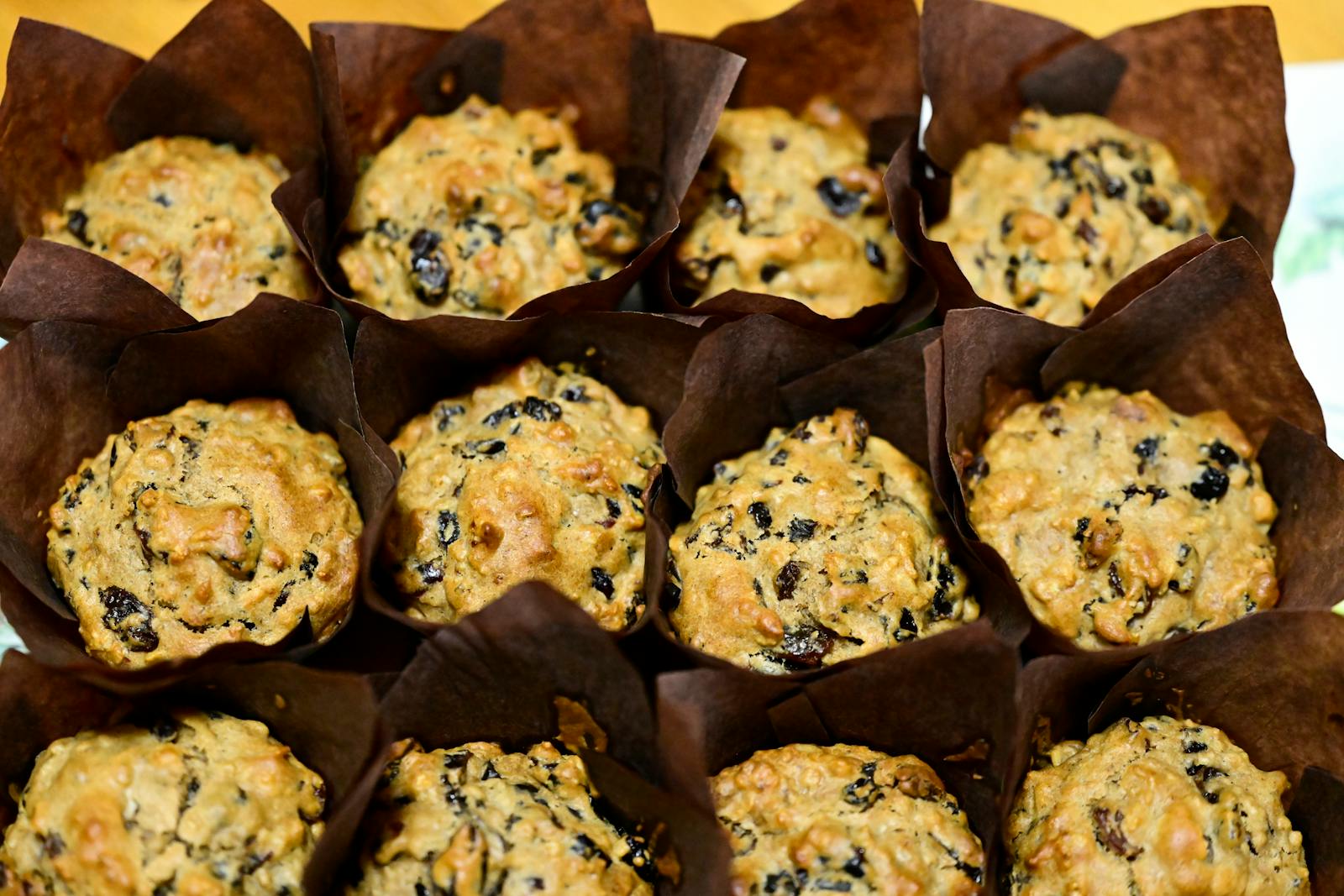
3. Oat flour muffins (banana-walnut, blueberry, or banana-oat)
The same logic as banana bread but in muffin form. Oat flour muffins hold moisture exceptionally well and stay fresh for 4-5 days at room temperature. Bake at 375°F for 18-22 minutes.
- 2 cups (190 g) oat flour
- 1 cup (240 ml) milk
- 2 eggs
- 1/3 cup (80 ml) neutral oil
- 1/2 cup (100 g) sugar
- 2 tsp baking powder
- 1 tsp baking soda
- 1 cup add-ins (blueberries, walnuts, or raisins)
Sweet desserts
4. Oat flour chocolate chip cookies
The recipe I am asked about most. Oat flour cookies bake up flatter and chewier than wheat-flour ones, with a chewy edge and a tender centre that holds shape for days. Substitute 1:1 by weight in your favourite chocolate-chip cookie recipe, chill the dough 30 minutes before baking, and reduce oven temperature by 25°F. The lower heat prevents over-spreading.
5. Oat flour brownies
A surprisingly good substitution. The fudgy, dense texture of a proper brownie hides the textural quirks of oat flour, and the result is genuinely indistinguishable from a wheat-flour brownie for most palates. Use a standard recipe with 1 cup oat flour for every 1 cup wheat flour, no other adjustments, or start from our gluten-free brownie recipe, which is built around oat flour from the outset.
Savoury baking
6. Savoury oat flour pancakes (cheddar and chive)
Skip the sugar and vanilla. Add 1/2 cup sharp cheddar, 1 tablespoon chives, 1/2 teaspoon black pepper to the basic pancake batter. Serve with poached eggs, smoked salmon, or alongside soup. This is the version I make most often at home and the one nobody expects from “oat flour pancakes.”
7. Oat flour flatbread
A simple, forgiving flatbread for wrapping curries, scooping dips, or serving with grilled vegetables. Mix to a shaggy dough, rest 15 minutes, divide into 6 balls, roll thin, and cook on a hot dry pan 1-2 minutes per side. Slightly chewy, gently nutty, and unlike anything you would get from wheat-flour flatbread.
- 2 cups (190 g) oat flour
- 3/4 cup (180 ml) warm water
- 1 tsp salt
- 2 tbsp olive oil
8. Traditional oatcakes (Scottish/British)
The original purpose of oat flour, predating the gluten-free trend by centuries. Mix the oat flour, boiling water, melted butter, and salt to a stiff dough, then roll thin, cut into wedges, and bake until crisp. Serve with cheese (especially aged cheddar or Stilton) and butter. The Highland tradition our oat grain page covers in more historical detail.
- 1 cup (95 g) oat flour
- 1/4 cup (60 ml) boiling water
- 1 tbsp melted butter
- 1/4 tsp salt
Quick and savoury
9. Oat flour porridge bowls
Oat flour cooks faster than rolled oats and produces a creamier porridge. Whisk everything together in a saucepan over medium-low heat for 4-5 minutes until thickened. Top with fruit, nuts, honey, or a savoury combination of soft-boiled egg, hot sauce, and scallions. The texture sits between traditional porridge and grits.
- 1/3 cup (30 g) oat flour
- 1 cup (240 ml) milk
- Pinch of salt
- Fruit, nuts, and honey (or egg, hot sauce, and scallions), to top
10. Oat flour as a soup thickener
Whisk 2 tablespoons of oat flour into 1/4 cup cold water until smooth, then stir into a simmering soup or stew. The oat starch thickens like roux but without the wheat-flour aftertaste, and it is gluten-free out of the gate. Works particularly well in creamy vegetable soups, chowders, and split pea.
How do oat flour recipes substitute for wheat flour?
The short answer most cooking blogs do not give you: oat flour does NOT substitute 1:1 for wheat flour in everything. The table below is a rough guide for when each ratio works.
| Recipe type | Oat flour : wheat flour |
|---|---|
| Pancakes, muffins, quick breads | 1:1 by weight |
| Cookies, brownies | 1:1 by weight |
| Cake | 3:4 oat to wheat (use 3/4 cup oat for every 1 cup wheat); a wheat blend often works better |
| Pie crust | 1:1 with 1 tbsp extra fat per cup |
| Yeasted bread | Not directly. Use 25-30% maximum, blend the rest with wheat or another binding flour |
The reason yeasted bread is the limit: oat flour has no gluten, so a 100% oat flour loaf does not rise or hold shape. The same constraint that makes our gluten-free sourdough bread recipe lean on brown rice, sorghum, and psyllium for structure applies to oat flour. A small percentage of oat flour added to a wheat-bread recipe gives flavour and moisture without disrupting structure.
Can I substitute oat flour in any recipe?
Almost any recipe, with three exceptions: yeasted bread (above), structural pastries like puff or laminated dough (you need wheat gluten), and gluten-developed pasta dough (same reason). Within those limits, oat flour is one of the most forgiving gluten-free flours available.
For more on the gluten-free flour landscape generally, USDA FoodData Central provides nutritional comparisons across flours. For a deeper look at when oats specifically are or aren’t safe for celiacs, the Celiac Disease Foundation covers cross-contamination thoroughly.
Start with pancakes or banana bread. Both are forgiving, both surface what oat flour does well, and both teach you the rest-the-batter, lower-temperature, denser-crumb rules that carry across the rest of the recipes here.
Frequently asked questions
How do you make oat flour at home?
Blend rolled or old-fashioned oats in a dry blender or food processor until fine and powdery, about 30 to 60 seconds, then sift out any coarse bits and blend those again. One cup of oats makes a little under a cup of flour, and homemade is far cheaper than store-bought.
Is oat flour gluten-free?
The oat plant is gluten-free, but ordinary oats are cross-contaminated with wheat, so for celiacs only certified gluten-free oat flour is safe. Our is oatmeal gluten free post covers the supply-chain reasons in full.
Do oat flour recipes need xanthan gum?
Usually not. In pancakes, muffins, cookies, and quick breads, eggs and the oat starch provide enough binding, which is what makes oat flour so forgiving. You only need a binder like xanthan gum or psyllium when you push oat flour into yeasted bread.
Ready to start baking with oat?
See our hand-picked oat flour and whole grain, with quality brands ready to ship.
Shop oat →