I get the quinoa flour question more often than almost any other gluten-free flour, and most of the time the question is really “I bought this expensive flour and my pancakes taste like grass.” Quinoa flour is the priciest of the common gluten-free flours, and it is also the most misused. Most home bakers expect it to swap one-for-one with wheat or oat flour, and most home bakers are disappointed when it doesn’t. There is a genuinely good reason to keep it in your pantry, but the case for using it neat is thin.
This guide is the honest version. What quinoa flour does well, where to skip it, and how to grind your own for half the price of the bag at the natural-food store. For context on the grain itself, see our quinoa page and the quinoa history post.
Quick answer: Quinoa flour is finely milled quinoa, a naturally gluten-free pseudocereal flour and the priciest of the common gluten-free flours. It is high in protein (a complete protein) and fibre, but it has no gluten and a distinctive grassy, faintly bitter flavour, so it works best as 20 to 35 percent of a blend rather than a solo swap for wheat. It shines in savoury fritters and dark, strongly flavoured bakes, and you can grind your own for half the price.
What is quinoa flour?
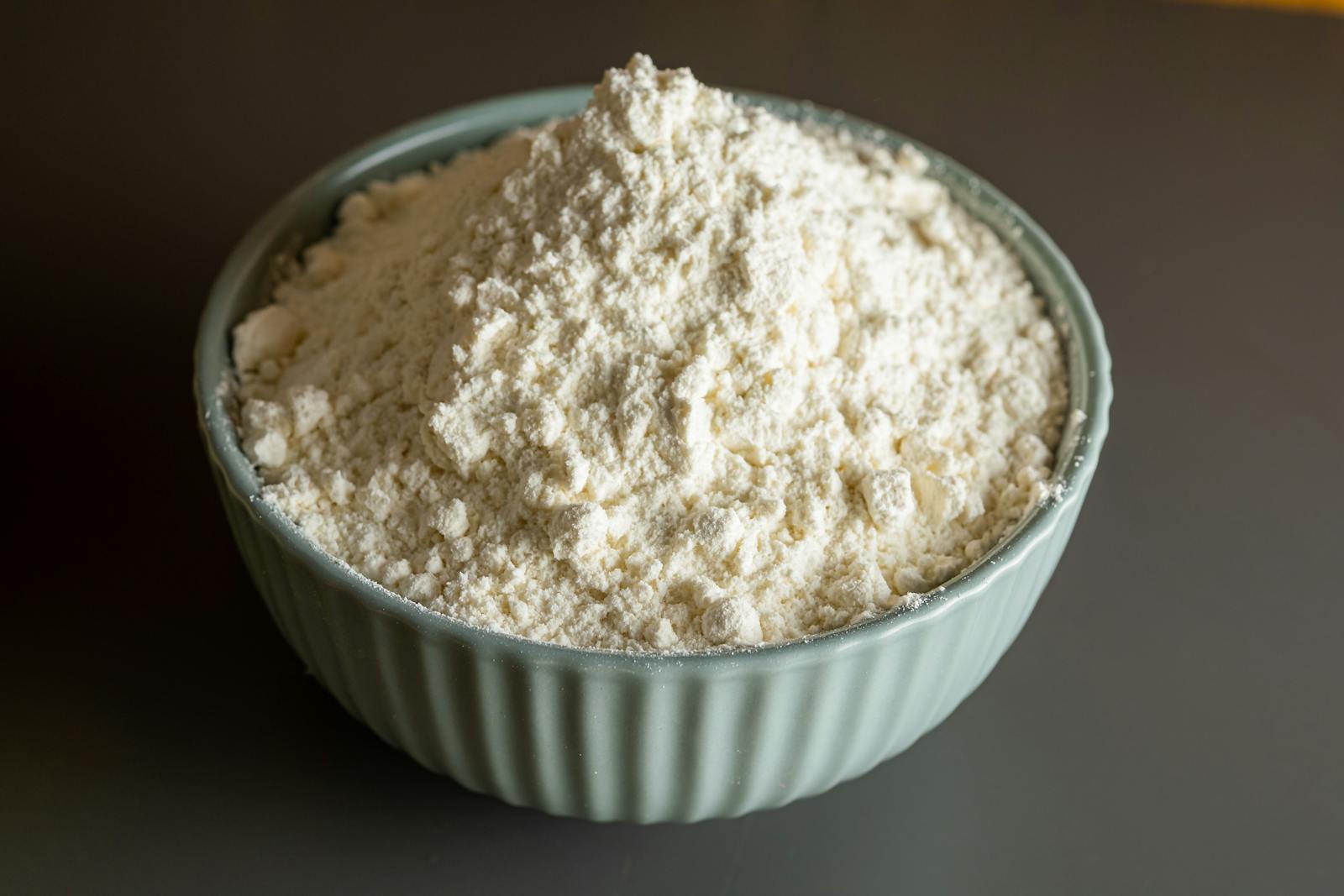
Quinoa flour is finely milled whole quinoa seed (Chenopodium quinoa, technically not a true cereal grain but a pseudocereal, like amaranth). Properly processed, it is pale cream coloured with a fine, slightly powdery texture, and its make-up is what sets it apart.
- About 14 grams of protein per 100 grams, complete with all nine essential amino acids
- More fibre than most refined gluten-free flours (about 7 grams per 100 grams)
- A distinctive bitter or “grassy” undertone from residual saponins on the seed coat
- Zero gluten, which is the structural problem to plan around
The complete-protein point is real. According to USDA FoodData Central, quinoa is one of very few plant foods that provides all essential amino acids in usable proportions. That matters more for nutrition than for baking, but it is the genuine reason many gluten-free blends include it.
Why does quinoa flour taste bitter?
The bitter taste is residual saponins, soap-like compounds that coat the seed naturally to deter birds and insects. Commercial quinoa is typically washed and polished to remove saponins before milling, but residual amounts persist. A 2017 review in Foods summarises the chemistry and notes that residual saponin levels vary by processing method, which is why brands and batches differ widely. Some quinoa flour tastes clean and faintly nutty; some tastes assertively bitter and grassy.
If you find your quinoa flour bitter:
- Toast it before using. Spread on a baking sheet and bake at 250°F for 10-15 minutes. This drives off some of the bitter volatile compounds and adds a mild toasted flavour. I do this routinely.
- Use it in a blend rather than alone. Bitterness from quinoa flour is much less noticeable at 25-35% of a flour mix.
- Pair with strong flavours. Banana, chocolate, brown sugar, and toasted nuts mask quinoa bitterness effectively.
Can I substitute quinoa flour 1:1 for wheat flour?
Not really, and this is the most important practical point. Quinoa flour is denser, more assertive in flavour, and structurally weaker than wheat flour because it has no gluten. Used at 100% in a wheat recipe, you typically get a heavy, bitter, slightly gummy result.
The substitution rules that actually work:
| Recipe type | Quinoa flour share | Notes |
|---|---|---|
| Pancakes, waffles | 25-35% of total flour | Blend with oat or brown rice flour |
| Quick breads, muffins | 25-30% | Banana or pumpkin breads hide the flavour well |
| Cookies | 20-30% | Pair with strong flavours (chocolate, peanut butter) |
| Cakes | 15-25% | Most subtle baked goods, lowest tolerance for quinoa |
| Yeasted bread | 10-15% maximum | No structural gluten contribution |
| Fritters, savoury batters | Up to 100% | Where quinoa flour is a hero, not a problem |
For the broader landscape of gluten-free flour substitutions, our oat flour recipes post covers similar logic.
Where does quinoa flour actually shine?
Once you accept that quinoa flour belongs in a blend, or in savoury contexts, the use cases that justify its price come into focus.
- Savoury fritters and batters. Quinoa’s grassy flavour disappears in zucchini fritters, scallion pancakes, or chickpea-style fried batters. The high protein content gives the batter remarkable crispness.
- Smoothie thickener and protein booster. A tablespoon of toasted quinoa flour added to a smoothie adds 1.5 grams of complete protein and a slight nuttiness. Better than most pea-protein additives.
- Banana bread. Banana hides quinoa’s bitterness more effectively than any other ingredient I have tested. Use 1/4 cup quinoa flour replacing 1/4 cup wheat flour, no other adjustments.
- Gluten-free pancake blends. A standard blend is 50% brown rice flour, 30% oat flour, 20% quinoa flour. The quinoa contributes protein and tender texture without dominating flavour.
- As the protein component of gluten-free sourdough bread. Many baker blends use 15-20% quinoa flour for amino acid balance and crumb tenderness.
What I do NOT recommend, in case it isn’t clear: pure quinoa flour pancakes (gummy and bitter), quinoa flour pie crust (no structure), or quinoa flour cake (too dense, flavour fights the cake’s sweetness).
How do you make quinoa flour at home?
This is one of the most worthwhile DIY moves in gluten-free baking, both for cost and for freshness. A store-bought bag of quinoa flour runs $8-12 per pound; raw quinoa is $4-6 per pound. The math is straightforward.
Method:
- Rinse 1 cup of quinoa in a fine-mesh sieve under cold water for 30 seconds (removes residual saponins).
- Dry thoroughly on a clean towel, then on a baking sheet at 200°F for 20-30 minutes until completely dry. Cool.
- Optional but recommended: toast. Increase oven to 300°F and bake another 8-10 minutes, stirring once, until light gold and aromatic.
- Grind in a high-powered blender or coffee grinder, 30 seconds at a time, until very fine. Sift through a fine-mesh sieve. Regrind the coarse bits.
- Yield: roughly 1 cup of flour from 1 cup of quinoa.
Stored in the fridge in an airtight container, homemade quinoa flour keeps 3 months. The oils oxidize fast at room temperature, so do not store at room temperature.
How does quinoa flour compare nutritionally to other gluten-free flours?
Quinoa flour’s edge is not raw protein but protein quality, as the table below shows.
| Flour (per 100g) | Protein | Fibre | Complete protein? |
|---|---|---|---|
| Quinoa flour | 14g | 7g | Yes |
| Oat flour | 13g | 7g | No |
| Brown rice flour | 7g | 4g | No |
| Almond flour | 21g | 11g | No |
| Buckwheat flour | 13g | 10g | No |
| Sorghum flour | 8g | 6g | No |
Quinoa’s nutritional standout is the complete-protein profile, not the absolute protein number. Almond flour is higher in protein and fibre but is not a grain and behaves entirely differently. For most baking blends, the right pick depends on what role you need the flour to play.
Is quinoa flour worth the price?
Honest answer: in a blend, yes, for the protein contribution and tender crumb. As a standalone flour, not for most home bakers. If your budget is tight and you bake mostly sweet things, oat flour and brown rice flour together will get you about 80% of what quinoa flour offers at half the price. If you bake savoury fritters often, or you want a complete-protein contribution in a gluten-free blend, the bag is worth keeping.
For the broader cooking-method context on quinoa as a whole grain, our how to cook quinoa in a rice cooker post covers the unmilled side. And if you have not seen the history of quinoa, it is worth the read for context on why Andean farmers care so much about how their grain is processed.
In the kitchen, quinoa flour rewards modest use. Toast it, blend it, do not expect it to be wheat. That is the entire practical guide in one sentence.
Frequently asked questions
Is quinoa flour gluten-free?
Yes. Quinoa is a pseudocereal, the seed of a broadleaf plant rather than a grass, so quinoa flour contains no gluten and is safe for celiacs, as our is quinoa gluten free explainer covers. Choose a certified bag if cross-contamination during milling is a concern.
Is quinoa flour healthy?
It is one of the more nutritious gluten-free flours. Quinoa flour is high in fibre and is one of the few plant flours that provides complete protein, with all nine essential amino acids, plus useful iron and magnesium.
Do you have to toast quinoa flour?
You do not have to, but toasting it helps a lot. Spreading the flour on a tray and baking it at around 250°F for 10 to 15 minutes drives off much of the grassy, bitter flavour and adds a mild nuttiness, which makes it far more pleasant in sweet bakes.
Ready to start baking with quinoa?
See our hand-picked quinoa flour and whole grain, with quality brands ready to ship.
Shop quinoa →