 By Eli Stanton · Published · 1325 words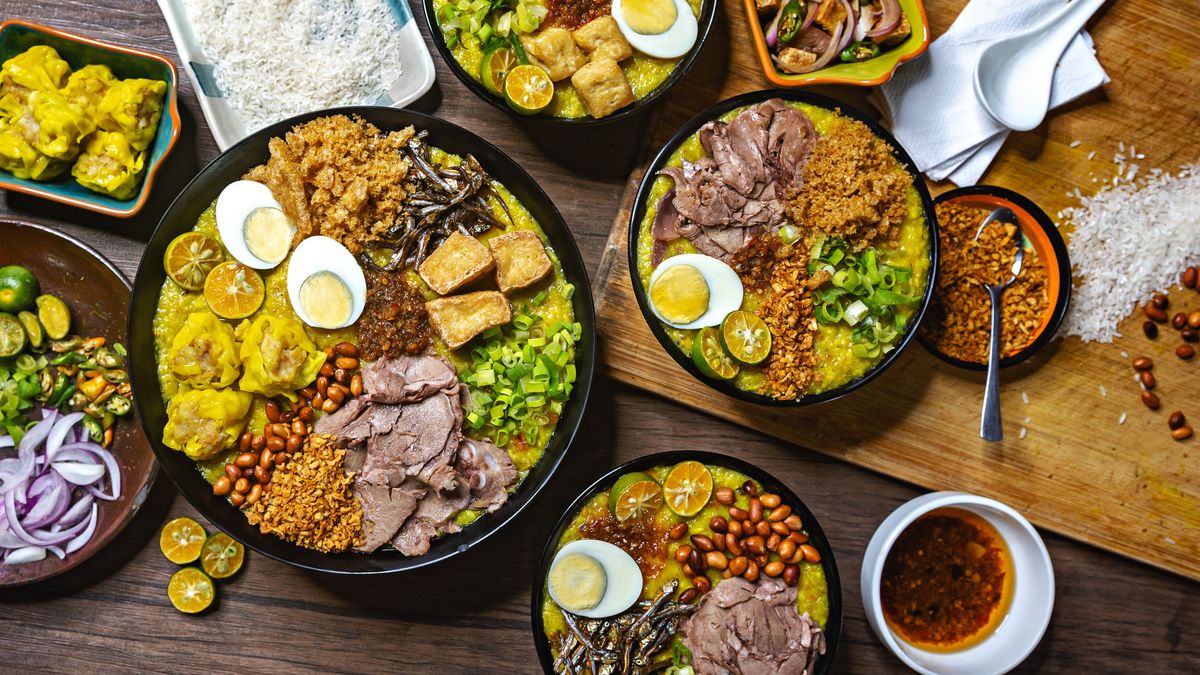
Half the world eats rice porridge and almost none of it calls the dish that. In Guangzhou it is congee, in Cantonese homes jook, in Manila arroz caldo, in Seoul juk, in Kerala kanji, and in Oslo a Christmas risgrøt with cinnamon sugar. Having eaten my way through more versions than I can count, I can tell you the miracle of rice porridge is that every one of them is the same move: too much liquid, low heat, and enough time for the rice to let go of its shape. One ratio and one technique unlock all of it, and your toppings decide which country dinner lands in.
Quick answer: Rice porridge is rice simmered in six to ten times its volume of water or stock until the grains burst and thicken the liquid into a silky, spoonable consistency. The everyday ratio is 1 cup rice to 8 cups liquid, simmered gently for 60 to 75 minutes, stirring now and then. Congee, jook, juk, arroz caldo, and kanji are all regional names for this same dish, and made with plain rice it is naturally gluten-free.
How do you make rice porridge?
One pot, three ingredients, and time. This is the neutral congee-style base; the traditions section below dresses it up.
- 200 g (1 cup) jasmine or other long-grain white rice
- 2 L (8 cups) water or chicken stock
- 1 tsp fine salt
- 4 slices fresh ginger (optional but classic)
- to serve: sliced scallions, soy sauce, toasted sesame oil, a soft-boiled egg
- Rinse the rice in a couple of changes of water until it runs mostly clear; this washes off surface starch that would make the porridge gluey rather than silky.
- Combine rice, liquid, ginger, and salt in a heavy pot and bring to a boil over high heat.
- Drop to a bare simmer for 60 to 75 minutes, lid ajar, stirring every 10 minutes or so, and more often near the end as it thickens. The porridge is done when the grains have burst into soft petals and the liquid has turned creamy.
- Adjust the texture with hot water if it tightens past what you like; rice porridge keeps drinking liquid as it sits.
- Season and top. Taste for salt, then finish each bowl with scallions, a few drops of soy sauce and sesame oil, and the egg.
What is the difference between rice porridge and congee?
None, at the level of the pot: congee is simply the most widely traveled English name for rice porridge, borrowed from the Tamil kanji, and the dish itself belongs to nearly every rice-eating culture. The differences live in the details of liquid, thickness, and toppings.
| Name | Where | Character |
|---|---|---|
| Congee / jook | China, Cantonese diaspora | Silky, savory; century egg, pork, youtiao |
| Juk | Korea | Often thicker; abalone, pumpkin, sesame |
| Arroz caldo | Philippines | Golden with ginger and safflower; chicken, calamansi, garlic |
| Kanji | South India, Sri Lanka | Thin and soothing; often the water is drunk too |
| Risgrøt | Norway | Milk-based, sweet; butter, cinnamon sugar |
| Cornmeal porridge | Caribbean | The same idea traded to another grain entirely |
The history of congee stretches back well over two thousand years, which makes this one of the oldest continuously cooked dishes on earth.
What rice makes the best porridge?
Plain white rice, and cheaper is honestly fine: jasmine brings fragrance, short-grain breaks down creamiest, and broken rice, sold inexpensively in Asian markets, collapses fastest of all because the grains are already fractured. Brown rice works with an extra 30 minutes and more liquid, trading silkiness for nuttiness. A small handful of hand-harvested wild rice simmered in with the white rice adds a chewy, tea-like note, though wild rice alone never fully breaks down since it is technically a grass seed with a sturdy hull. Per USDA FoodData Central, white rice brings mostly gentle starch to the pot, which is exactly the point of this dish.
How do you make chicken congee?
Poach the chicken in the same pot, and the porridge makes its own stock. Nestle two bone-in chicken thighs into the pot at step 2, using water as the liquid, and simmer as written; around the one-hour mark, lift them out, shred the meat, discard the bones, and stir the chicken back in with an extra pinch of salt. Finish with scallions, fried garlic if you have it, and a squeeze of lime and you have drifted from Guangzhou to Manila, where arroz caldo runs on exactly this move plus ginger in quantity. It is the single best upgrade the basic pot offers.
Why is rice porridge good for an upset stomach?
Because it is warm hydration carrying soft, fully cooked starch, with nothing for a struggling gut to fight. The long simmer does most of the digestive work in the pot, which is why nearly every rice culture reaches for the same bowl during illness, from kanji water in Kerala to plain jook in Hong Kong. It is gentle, salty enough to replace what a fever sweats out, and endlessly adjustable in thickness. None of that is a medical claim; it is just several thousand years of parents across two hemispheres arriving at the same answer.
Where to go from here
Rice porridge is the far end of a spectrum our what is porridge guide maps in full, and the technique transfers to nearly any grain: amaranth cooks into a porridge so naturally that our how to cook amaranth guide is half porridge already, and teff does the same trick in Ethiopia. On the rice side of the pantry, is rice gluten-free settles the safety question, and the rice flour guide covers what happens when the same grain is milled instead of simmered. One cheap bag of rice, most of a cuisine.
Frequently asked questions
Is rice porridge gluten-free?
Yes, made with plain rice and water or stock it is naturally gluten-free, as our is rice gluten-free explainer covers. The only watch-items are toppings: regular soy sauce contains wheat, so celiac households should finish with tamari.
Can I make rice porridge in a rice cooker?
Yes, most rice cookers have a porridge or congee setting that handles the long simmer unattended; use the same 1-to-8 ratio and let the machine run its cycle. A mid-priced COMFEE’ fuzzy-logic cooker covers it well, the Zojirushi Neuro Fuzzy is the buy-once classic, and ours gets a workout on grains beyond rice too, as the rice cooker quinoa guide and our wider rice cooker recipes roundup both show.
Can I use leftover cooked rice?
Yes, and it is the great weeknight shortcut: simmer cooked rice with about four times its volume of liquid for 15 to 20 minutes, mashing a little against the pot. The texture is slightly less silky than starting raw, and no one at the table will mind.
What toppings go on congee?
The classics are sliced scallions, white pepper, soy sauce or tamari, sesame oil, roasted peanuts, fried garlic or shallots, a jammy or century egg, and strips of fried dough (youtiao) for dunking. Treat the porridge as the quiet backdrop and let two or three loud toppings do the talking.
Add wild rice to the porridge pot
A handful of hand-harvested wild rice simmered into congee adds a chewy, smoky depth the plain pot cannot make alone.
Shop wild rice →Meet the other porridge grains
Amaranth, teff, millet, and the rest of the grains that turn to comfort in a pot, profiled with ratios and recipes.
Browse all grains →