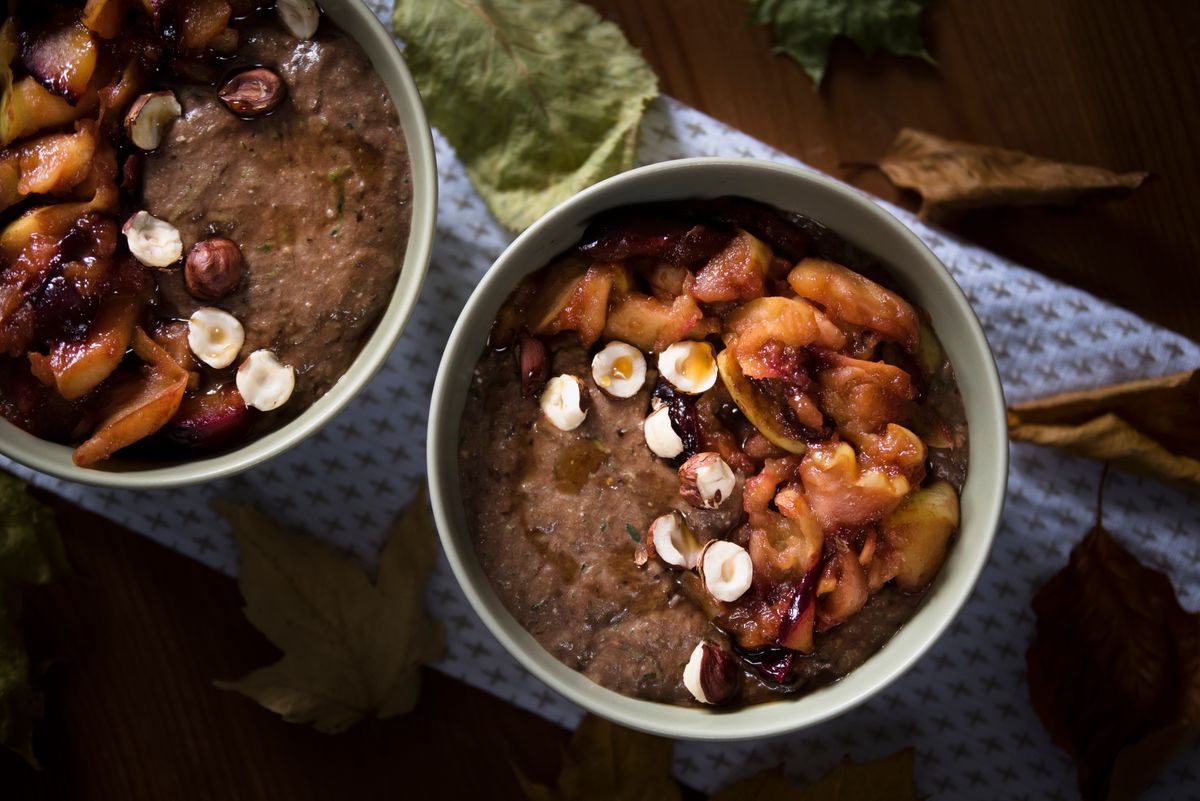
At its plainest, porridge is a hot dish made by simmering a grain in water or milk until it softens, breaks down, and turns thick and creamy. That is the whole idea, and it is roughly ten thousand years old. Where I grew up, porridge meant one thing, oats and water and a good pinch of salt, stirred in a pot before the sun was properly up. But that is only the Scottish corner of a much bigger story: nearly every grain-eating culture on earth has its own porridge, and once you understand the simple ratio underneath all of them, you can make any of them.
Quick answer: Porridge is a hot dish made by simmering a grain in water or milk until it softens and turns thick and creamy. Oats are the most familiar grain, but rice (congee), cornmeal (polenta), millet, and buckwheat all make porridge too. For a basic oat bowl, simmer 1 part rolled oats in 2.5 parts liquid with a pinch of salt for about 8 minutes, stirring often. It is one of the oldest cooked foods, roughly ten thousand years old.
How do you make a basic porridge?
The classic is oat porridge, and it is genuinely a ten-minute job once you stop overthinking it. Combine oats, liquid, and salt in a pan, bring it to a gentle simmer, and stir it low until it thickens. This is the everyday version I make most mornings.
- 1 cup (90 g) rolled oats
- 2 1/2 cups (600 ml) water, milk, or a half-and-half mix
- 1/4 tsp fine salt
- Toppings to serve: fruit, nuts, honey, or a splash of cream
- Combine. Tip the oats, liquid, and salt into a small saucepan and stir once.
- Simmer. Bring to a gentle simmer over medium heat, stirring so nothing catches on the bottom.
- Cook low. Turn the heat down and cook for 5 to 8 minutes, stirring often, until the porridge is thick and creamy and the oats have lost their raw edge.
- Rest and serve. Take it off the heat and let it sit for a couple of minutes; it thickens as it rests. Spoon into bowls and add your toppings.
Rolled oats are the reliable everyday choice. If you want the nuttier, chewier bowl the Scots argue about, use pinhead (steel-cut) oats instead and give them the longer, slower cook in our steel-cut oats guide. Whichever you use, a bag of proper rolled oats is the one thing worth having in the pantry, because it also becomes overnight oats, pancakes, and half a dozen other breakfasts.
What is porridge made of?
Two things, at heart: a starchy grain and a liquid. The grain is broken down in some way, rolled, cracked, ground, or simply whole and soft, so it can drink up the liquid and release its starch, which is what gives porridge its creamy body. Oats are the grain most of the English-speaking world pictures, but the definition is deliberately wide. Rice, cornmeal, millet, barley, buckwheat, semolina, and sorghum all make porridge, and the liquid can be water, milk, stock, or coconut milk depending on whether the dish leans sweet or savoury. Salt goes in either way; it is the one seasoning that makes porridge taste like something rather than paste.
What grains can you make porridge from?
Almost any of them, which is exactly why porridge shows up on every continent under a different name. The grain sets the texture and the culture sets the toppings, but the method is always the same simmer-until-thick. The short tour below runs through the family.
| Grain | Porridge dish | Where it’s eaten |
|---|---|---|
| Oats | Porridge / oatmeal | Scotland, Ireland, USA |
| Rice | Congee / jook | China and East Asia |
| Cornmeal | Polenta / grits | Italy, American South |
| Millet | Millet porridge | West Africa, India, China |
| Buckwheat | Kasha | Eastern Europe |
| Sorghum | Sorghum porridge | Sub-Saharan Africa |
| Semolina | Cream of wheat / upma | Global |
If you want to wander off the oat path, our guides to cooking millet, cooking sorghum, cooking teff, and cooking buckwheat groats (the kasha of the table above) each make a naturally gluten-free porridge, and the millet and teff grain pages explain what you are working with. On the wheat side of the table, cream of wheat is the farina porridge many Americans grew up on.
What is the difference between porridge and oatmeal?
Oatmeal is a porridge; porridge is the whole category. In Britain and Ireland, “porridge” almost always means the oat version, so the two words are used interchangeably there. In America, that same bowl of cooked oats is usually called “oatmeal,” and “porridge” sounds old-fashioned or foreign. Neither is wrong. The honest answer is that oatmeal is simply the American name for oat porridge, and porridge is the older, broader word that also covers rice, corn, and every other grain in the table above. If someone hands you a bowl of hot, creamy cooked oats, you may call it whichever you grew up calling it.
What is the best oats-to-water ratio for porridge?
For rolled oats, one part oats to roughly two-and-a-half or three parts liquid is the sweet spot. My recipe above uses 1 cup of oats to 2 1/2 cups of liquid, which gives a thick, spoon-standing bowl; nudge it to 3 cups if you like it looser and pourable. Steel-cut oats drink more and need about one part oats to four parts liquid, plus a longer cook. The ratio matters more than any brand or gadget, so measure it once, taste the result, and adjust by a splash next time. Porridge is forgiving: too thick is fixed with a spoonful of hot milk, too thin with another minute on the heat.
How do you make porridge creamy, not gluey?
Low heat, steady stirring, and salt, in that order. Creaminess comes from coaxing the starch out of the grain slowly, so keep the pan at a gentle simmer rather than a hard boil that blows the oats apart and turns them pasty. Stir often enough to keep the bottom from catching, but do not beat it to death, because over-stirring is its own route to glue. Salt the pot at the start, not the bowl at the end; it seasons from the inside and is the single thing most home cooks leave out. Finish by resting the porridge off the heat for a minute or two, which lets it set into that silky, cohesive texture instead of a watery one.
Is porridge good for you?
Yes, and oat porridge in particular earns its reputation. Whole-grain oats are high in fibre, including a soluble fibre called beta-glucan that is linked to lower cholesterol and a slower, steadier release of energy, which is why a bowl keeps you full past mid-morning; Harvard’s Nutrition Source lays out the evidence well. The health of the bowl depends on what you add, though. Porridge itself is wholesome; a heaped drift of brown sugar and cream is a pudding wearing a breakfast costume. Lean on fruit, a spoon of nuts or seeds, and a modest drizzle of honey, and you keep the good part. For anyone eating gluten-free, oats need a certified label to be safe, which our is oatmeal gluten free explainer covers in full.
Where to go from here
Once the basic bowl is second nature, porridge becomes a whole shelf of breakfasts rather than one. Swap the grain for the naturally gluten-free options above, or go the other way and slow things down with the chewy, nutty steel-cut oats method. The wheat version has its own repertoire once you vary the ratio, which our cream of wheat recipes roundup works through from savoury bowls to fried slices. For the no-cook, warm-weather version, overnight oats use the same grain with none of the stirring. And if you simply want to know more about the grain at the heart of it all, the oat profile covers everything from milling to nutrition. The long global history, if you like that sort of thing, is well told in Wikipedia’s porridge entry.
Frequently asked questions
Is porridge gluten-free?
It depends on the grain. Porridge made from rice, millet, buckwheat, cornmeal, or sorghum is naturally gluten-free, while any porridge made from wheat or barley is not. Oat porridge is gluten-free only if the oats carry a certified label, because ordinary oats are cross-contaminated with wheat, as our is oatmeal gluten free post explains.
Can you make porridge in the microwave?
Yes. Combine 1/2 cup rolled oats with 1 to 1.25 cups of water or milk and a pinch of salt in a large, deep bowl, and microwave on high for 2 to 3 minutes, pausing to stir once. Use a bowl far bigger than you think you need, since porridge foams up and boils over easily.
Should you make porridge with milk or water?
Either works, and it comes down to taste. Water gives the lighter, cleaner bowl of the traditional Scottish style, while milk (or a half-and-half mix) makes it richer and creamier. Plant milks such as oat or coconut work too, and you can always start in water and stir in a splash of milk at the end.
Start with proper oats
See our hand-picked oats, from rolled to whole groats, with the brands worth buying.
Shop oats →