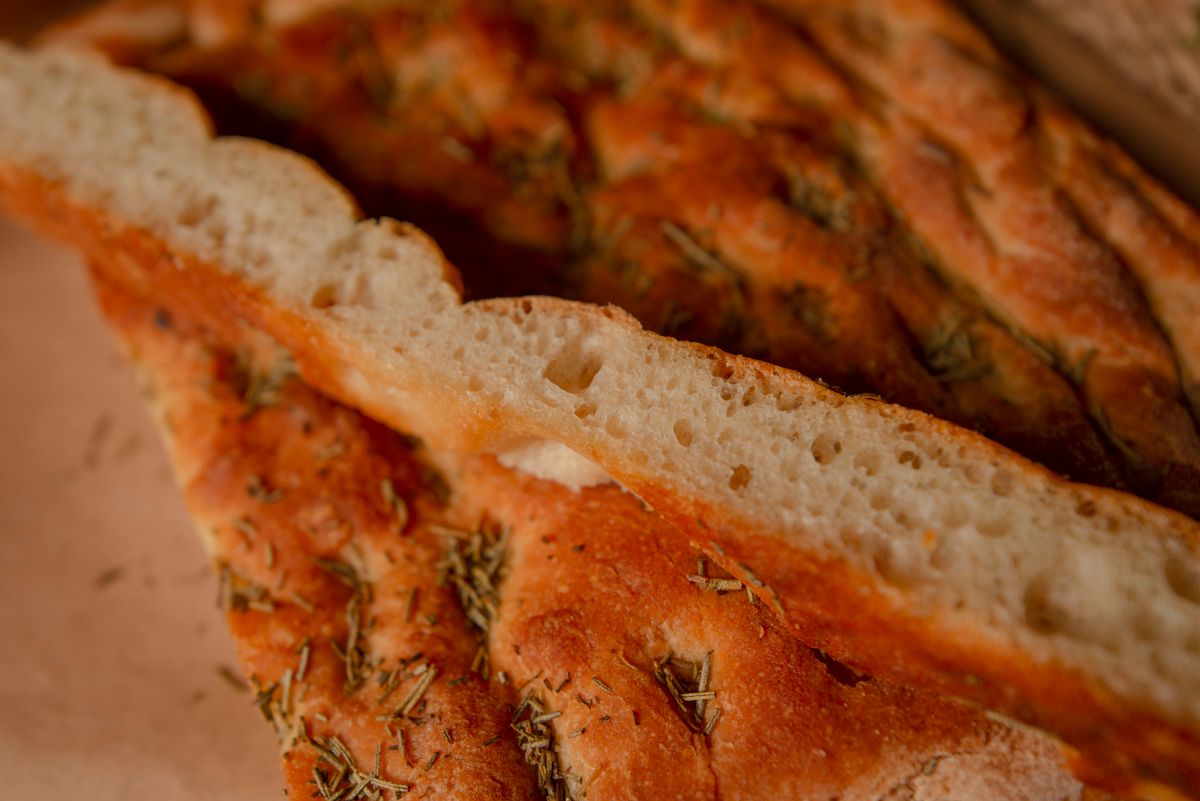
If you have a starter and you have been too intimidated to bake with it, sourdough focaccia is where I tell every one of my students to begin. There is no shaping, no scoring, no dutch oven, and no fear of a loaf that will not hold its shape, because focaccia is supposed to be a flat, dimpled, olive-oil-soaked slab. You pour it into a pan, you poke it full of holes, and the wild yeast does the rest overnight. It is the most forgiving thing your starter will ever make, y’all, and it happens to be the most crowd-pleasing.
The one trade you make for that ease is time. A good sourdough focaccia ferments slowly, mostly in the fridge while you sleep, which is exactly what gives it that tangy flavor and the big, glossy holes. Focaccia is one of Italy’s oldest breads, and giving the classic the sourdough treatment only makes it better. Here is the method I have taught for a decade.
Quick answer: Sourdough focaccia is the most forgiving bake a starter can do: no shaping, no scoring, no dutch oven, just a wet dough poured into an oiled pan and dimpled. Mix a high-hydration dough (about 80%) with active starter, bulk ferment with a few folds, cold-proof it overnight in the fridge, then dimple, top with oil, salt, and rosemary, and bake at 425°F for 20 to 25 minutes. The long cold rise gives the tang and the big holes. It is a wheat bread, so it contains gluten.
How do you make sourdough focaccia?
Mix a high-hydration dough with active starter, bulk ferment it with a few folds, then let it cold-proof overnight in an oiled pan before dimpling and baking. The long, cold rise is where the flavor and the airy crumb come from.
- 500 g (about 4 cups) bread flour
- 400 g (1 2/3 cups) cool water (about 80% hydration)
- 100 g active sourdough starter, recently fed and bubbly
- 10 g (1 3/4 tsp) fine salt
- 50 g (about 3 2/3 tbsp) extra-virgin olive oil, divided (dough, pan, and top)
- Flaky salt and a few sprigs fresh rosemary, to top
- Variant: swap 100 g of the bread flour for whole spelt or einkorn (20%) for a heritage focaccia
- Mix. Stir the starter into the water with 1 tablespoon of the olive oil until dispersed. Add the flour and salt and mix with a sturdy spatula or wet hands until no dry flour remains. It will be a wet, shaggy dough; that is correct. Cover.
- Bulk ferment with folds. Leave at room temperature about 4 hours, giving the dough three sets of stretch-and-folds in the first 2 hours (wet your hand, lift one side, fold it over the middle, rotate the bowl, repeat). By the end it should be smoother, puffier, and jiggly.
- Pan and cold proof. Pour a generous 2 tablespoons of olive oil into a 9x13 inch pan and spread it up the sides. Tip the dough in, turn it once to coat, and cover. Refrigerate 12 to 18 hours. This overnight cold rise is where the sourdough tang develops.
- Final proof. Pull the pan out and let it sit at room temperature 2 to 3 hours, until the dough has relaxed to fill the pan and looks bubbly and alive.
- Dimple and top. Drizzle the remaining olive oil over the top. With oiled fingers, press straight down all over the dough to make deep dimples, right to the bottom of the pan. Scatter with rosemary and flaky salt.
- Bake. Bake at 425F (220C) for 20 to 25 minutes, until deep golden and crisp at the edges. Once it comes out, slide it straight from the pan onto a rack so the bottom stays crisp, and eat it warm.
Do you need an active starter, or will discard work?
For a focaccia that rises tall and airy, use an active, bubbly starter at its peak, not cold discard. The whole lift of this bread comes from the wild yeast, and discard has very little left in it. If you only have discard, you can still make a thinner, denser focaccia by adding a pinch of commercial yeast to help it along, but the real thing wants a lively starter. If yours is not there yet, our 5-to-7-day starter method builds one from scratch, and the best flour for sourdough starter guide keeps it strong.
What flour is best for sourdough focaccia?
Bread flour, for the chew and the structure that holds those big holes open. The extra protein in bread flour gives the high-hydration dough enough gluten to trap gas through a long ferment, which is exactly what you want here. All-purpose works and makes a slightly softer, flatter focaccia; our bread flour vs all-purpose flour comparison covers the trade in full. Italian bakers reach for finely milled 00 flour for an especially tender crumb, and it is lovely if you have it. For a nuttier, more characterful slab, swap a fifth of the flour for a heritage spelt flour or einkorn; just expect it to rise a touch less, since ancient wheats like spelt have gentler gluten.
How do you get the big holes in focaccia?
Three things, and none of them is luck: high hydration, a long cold ferment, and a gentle hand. The 80 percent hydration dough is wet enough to blister with gas; the overnight fridge proof gives the wild yeast and lactic acid bacteria time to build those bubbles slowly; and dimpling instead of pressing flat preserves the pockets rather than knocking them out. The single biggest mistake I see is degassing the dough right before baking, which flattens all that beautiful structure. Dimple firmly but do not fold or punch it down after the final proof.
Can you make sourdough focaccia same day?
You can, though you trade some flavor for speed. Skip the fridge and let the dough bulk ferment at warm room temperature (75 to 78F) for 5 to 7 hours until doubled and bubbly, then proof in the oiled pan another 2 to 3 hours before dimpling and baking. It will be a fine focaccia, just milder and a little less complex than the overnight version, because the tang and the deepest holes both come from that slow cold rise. If you want it for dinner tonight, start it before breakfast.
What toppings work best?
Rosemary and flaky salt is the classic for a reason, but focaccia is a canvas. Halved cherry tomatoes pressed into the dimples, thin-sliced red onion, olives, roasted garlic, or a scatter of hard cheese all work beautifully; just add anything that might burn (garlic, cheese) in the last 10 minutes rather than the start. Whatever you use, do not skimp on the olive oil, because focaccia is as much a fried bread as a baked one, and that pool of oil in the pan is what crisps the bottom.
Where to go from here
Prefer a boxed head start while your starter matures? The garlic herb focaccia baking mix delivers the same pan-dimpling satisfaction with the measuring done for you.
Once focaccia is in your hands, the same starter opens up everything: a proper whole grain sourdough loaf, a crackly dutch oven bread, and the whole sourdough discard recipes collection for the starter you pour off along the way. Focaccia was the door in for most of my students, and once it swings open, the rest of sourdough stops looking so scary.
Frequently asked questions
Is sourdough focaccia gluten-free?
No. Focaccia is made from wheat flour, which contains gluten, and sourdough fermentation does not make it safe for celiacs. If you need a gluten-free bake from your starter, our gluten-free sourdough bread recipe uses a gluten-free flour blend and psyllium instead.
How do you store sourdough focaccia?
Focaccia is best the day it is baked, while the crust is crisp and the crumb soft. Keep leftovers in a paper bag or loosely wrapped at room temperature for a day or two, and revive them with a few minutes in a hot oven rather than a microwave. For longer storage, freeze cut pieces and reheat straight from frozen.
Why is my sourdough focaccia dense or flat?
Usually a weak starter, an under-proofed dough, or knocking the air out before baking. Use an active, bubbly starter at its peak, give the dough its full cold and final proofs so it looks alive and jiggly, and dimple gently instead of pressing or folding it flat, since degassing right before the oven collapses the big holes.
Bake it with heritage flour
See our hand-picked spelt and einkorn, from flour to whole grain, with the brands worth buying.
Shop spelt →