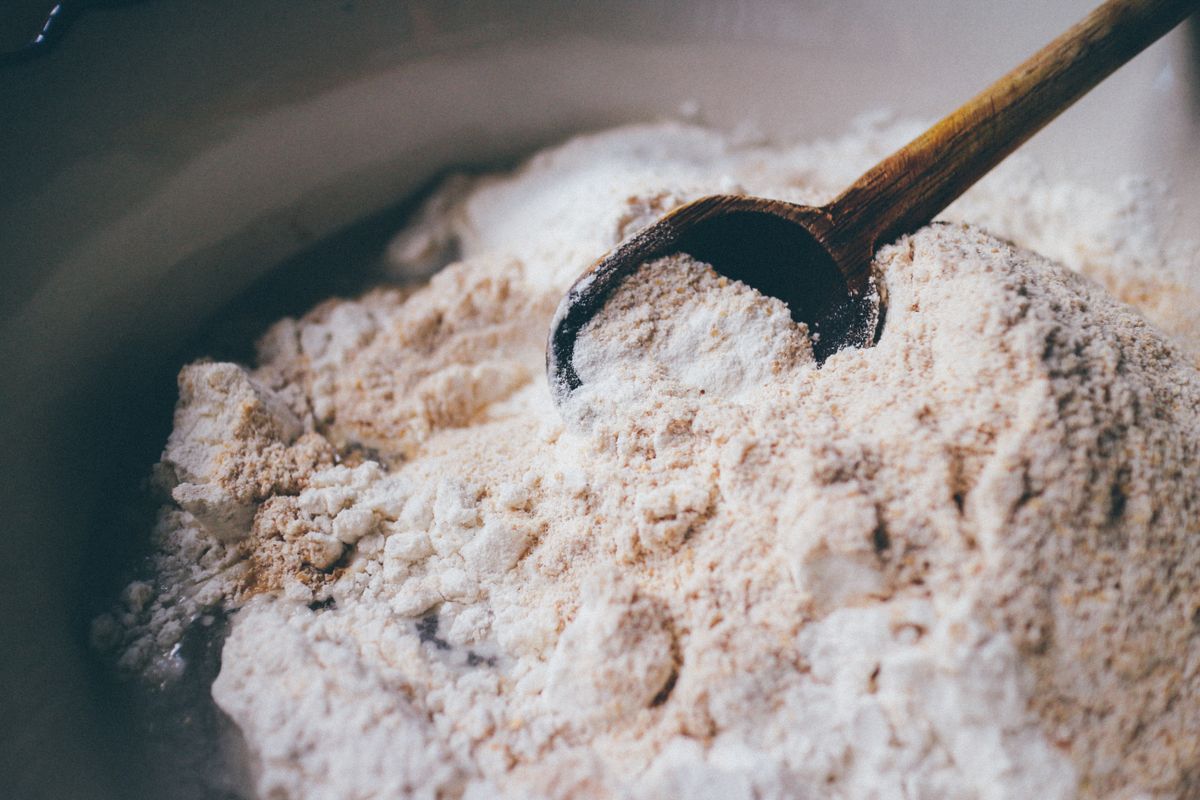
The whole of the bread flour vs all-purpose flour question comes down to one number on the side of the bag: protein. Bread flour runs 12 to 14 percent protein, all-purpose sits around 10 to 12, and that gap of a few percentage points is the difference between a chewy, high-rising loaf and a tender crumb. After two decades of teaching sourdough in a Cotswolds kitchen, I can tell you that most home baking disappointments trace back to reaching for the wrong one of these two bags. Here is exactly when each wins, and when it genuinely does not matter.
Quick answer: The difference is protein. Bread flour has more (12 to 14 percent), so it builds a stronger gluten network for chewy, high-rising breads, pizza, and bagels. All-purpose has less (10 to 12 percent), for tender cakes, cookies, and everyday baking. You can substitute one for the other in a pinch and accept a slightly different texture. For sourdough, bread flour is the safer default, but a high-protein all-purpose works too.
What is the difference between bread flour and all-purpose flour?
Protein content, and everything that follows from it. The protein in wheat flour is what forms gluten when you add water and work the dough, and gluten is the stretchy web that traps gas and gives bread its chew and structure. More protein means more gluten potential, so bread flour builds a stronger, springier dough, while all-purpose makes a softer, more tender one.
| Flour | Protein | Gluten strength | Best character |
|---|---|---|---|
| Cake flour | 7 to 9% | Weak | Tender, fine, delicate |
| All-purpose (US) / plain (UK) | 10 to 12% | Medium | Versatile, soft |
| Bread flour (US) / strong (UK) | 12 to 14% | Strong | Chewy, high-rising |
A note on names, since I bake on both sides of the Atlantic in my classes: British bags do not say “bread flour,” they say strong flour or strong white bread flour, and “plain flour” is what Americans call all-purpose. Same protein logic, different labels; the Wikipedia entry on flour lays out the full range of milling grades if you want the technical version.
When should you use bread flour?
Whenever you want chew, structure, and a tall rise. Bread flour is built for anything leavened and yeasted where the dough needs to hold gas and stand up: crusty artisan loaves, sandwich bread, pizza dough, bagels, pretzels, and dinner rolls all reward the extra protein with a better crumb and a proper spring in the oven. The strong gluten network is exactly what a bagel’s dense chew and a pizza’s blistered, stretchy edge are made of. If a recipe’s whole appeal is texture you can pull and tear, bread flour is the right bag.
When should you use all-purpose flour?
For nearly everything that is not a yeasted bread. All-purpose earns its name: cookies, cakes, muffins, pancakes, quick breads, pie crust, and sauces thickened on the stove all turn out better with its lower protein, because you do not want a chewy cake or a toughened biscuit. It also makes perfectly good everyday bread, just with a slightly softer crumb and a little less height than bread flour would give. If you keep only one flour in the house, all-purpose is the sensible choice, which is the entire reason it exists.
Can you substitute bread flour for all-purpose flour?
Yes, in both directions, as long as you know what shifts. Swapping one for the other is rarely a disaster; it just nudges the texture, and here is how it shifts each way.
- All-purpose in place of bread flour: your loaf will rise a touch less and chew a little softer, which is completely fine for most home breads. Knead a minute or two longer to coax out what gluten there is.
- Bread flour in place of all-purpose: cookies spread less and turn chewier, cakes toughen, and pastry gets less tender. Grand for a rustic loaf, less so for a delicate sponge.
- The vital wheat gluten trick: to turn all-purpose into a close bread-flour stand-in, add about 1 teaspoon of vital wheat gluten per cup of all-purpose. It bumps the effective protein without changing anything else.
The one place I would not casually substitute is a recipe whose entire identity is texture, a bagel or a proper baguette, where the protein difference is the point rather than a detail. That is also why a gluten-free bagel cannot simply swap the flour: with no gluten to strengthen, the chew has to be rebuilt from psyllium instead.
Bread flour vs all-purpose flour for sourdough: which is better?
Bread flour is the safer default, but a strong all-purpose works, and this trips people up more than any other flour question in my classes. Sourdough benefits from bread flour’s structure because a long fermentation is gentle on gluten and needs a robust network to hold that open, airy crumb. That said, plenty of bakers make excellent sourdough on all-purpose alone; a high-protein American all-purpose like King Arthur (11.7 percent) sits right at the bottom edge of bread-flour territory and behaves accordingly. If your all-purpose is a softer 10 percent supermarket brand, lean toward bread flour for sourdough. Either way, the flour you build the starter with is a separate question, covered in our best flour for sourdough starter guide and our 7-day starter method, where whole rye does the heavy lifting regardless of which flour you bake with. And when it comes to baking the loaf, our dutch oven bread method works with either flour.
Where do heritage and whole-grain flours fit in?
They sit outside this protein scale, and assuming they behave like strong bread flour is the classic mistake. Ancient wheats have gluten, but a different, weaker kind: spelt, einkorn, and emmer all form a more fragile, extensible network than modern strong flour, so they act more like all-purpose (or softer) even when their raw protein number looks high. A heritage spelt flour makes a lovely tender loaf, but it will not give you a bagel’s chew no matter how you knead it. Whole-grain flours add another wrinkle: the bran cuts through gluten strands like tiny blades, so a whole wheat or rye flour loaf is always denser than a white one at the same protein. Our whole grain bread flour guide covers how to handle that, and the wheat flour alternatives piece maps the gluten-free side, where the protein-equals-structure rule breaks down entirely.
The short version
Reach for bread flour when you want chew and rise, reach for all-purpose for tenderness and everyday versatility, and do not lose sleep substituting one for the other in a pinch. The number on the bag tells you almost everything you need to know: higher protein for structure, lower for softness. Everything else is just knowing which one your recipe is really asking for.
Frequently asked questions
Is bread flour healthier than all-purpose flour?
Not meaningfully. Both are refined white wheat flours with nearly identical calories and nutrients; bread flour just has a little more protein. For a real nutrition difference you want a whole-grain flour, which keeps the bran and germ that both white flours remove.
Can I use all-purpose flour to make pizza?
Yes, and it makes a fine softer, more tender crust. If you want the chewy, blistered, stretchy edge of a pizzeria pie, bread flour’s stronger gluten does it better, but all-purpose is perfectly good for a home pizza night.
Does bread flour need more water than all-purpose?
Slightly, yes. The extra protein absorbs more water, so a dough made with bread flour can feel stiffer at the same hydration. Add water a teaspoon at a time until the dough feels right rather than changing the recipe all at once.
Bake with heritage flour
See our hand-picked spelt and rye, from flour to whole grain, with the brands worth buying.
Shop spelt →