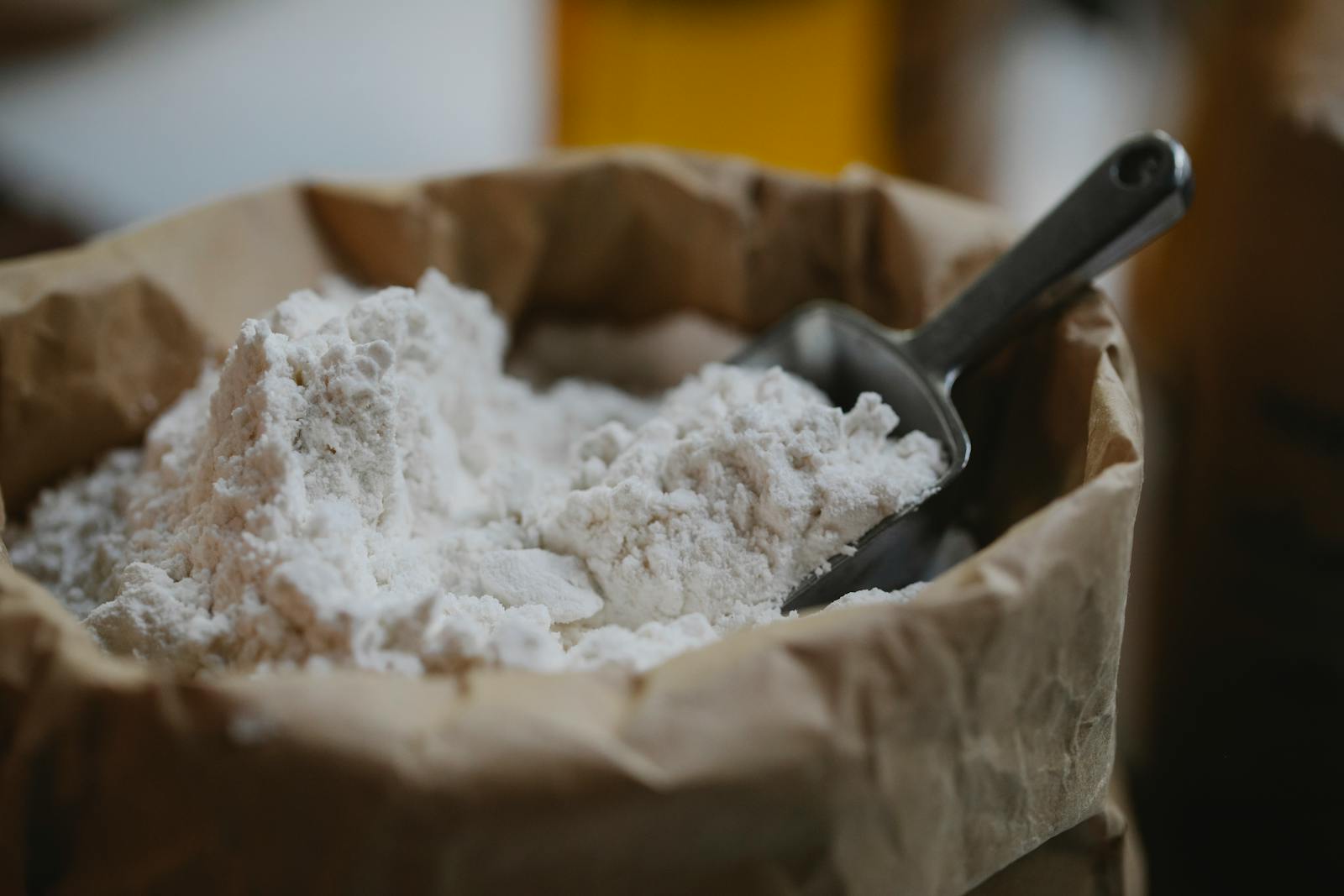
Y’all, every time a new student walks into one of my sourdough classes asking what whole grain bread flour to buy, I have to back up and answer a different question first: whole grain bread flour is not one thing. It is a category. Walking into a grocery store and grabbing the bag that says “whole grain” can land you with whole hard red winter wheat (great for sandwich bread), whole spelt (lovely but slack), whole rye (a different animal entirely), or whole einkorn (the most flavorful and the trickiest). Each of those flours wants to be baked differently, and most home bakers find out the hard way.
Mind you, the principle is the same across all of them: whole grain bread flour means flour that contains the entire kernel (germ, bran, and endosperm) rather than just the starchy endosperm that white bread flour gives you. The differences below are which grain the kernel came from, and how that grain behaves in the bowl.
Quick answer: "Whole grain bread flour" is a category, not one product; it means flour milled from the entire kernel (bran, germ, and endosperm) rather than just the starchy endosperm. It could be whole wheat, spelt, rye, einkorn, or emmer, and each bakes differently. Whichever grain, whole-grain flour absorbs more water (add 5 to 10 percent), rewards a longer autolyse and gentle kneading, and gives a denser, more flavourful loaf than white flour.
What counts as whole grain bread flour?
In American grocery vocabulary, “whole grain bread flour” usually refers to one of a handful of flours.
| Type | Grain | Best for | Notes |
|---|---|---|---|
| Whole wheat bread flour | Modern bread wheat | Sandwich loaves, pan breads | High protein (12-14%), familiar behavior |
| Whole spelt | Triticum spelta | Tender sourdough, pancakes | Lower elasticity, ferments fast |
| Whole rye | Secale cereale | Dense Nordic bread, sourdough starters | Behaves like clay, not dough |
| Whole einkorn | Triticum monococcum | Heritage loaves, flavor-forward bread | Trickiest, most rewarding |
| Whole emmer | Triticum dicoccum | Farrotto-style breads, salads | Sits between einkorn and modern wheat |
In an Italian or French shop, the same flours show up labeled by extraction rate (Type 80, Type 110, Type 150, integrale) rather than as “whole grain.” But the category overlap is the same.
Which whole grain bread flour should I use?
It depends entirely on the loaf you have in mind. After teaching this in classes for years, this is the cheat sheet I give.
- Sandwich loaves for slicing: whole wheat bread flour. Highest gluten quality, holds shape, predictable.
- Sourdough boules with an open crumb: whole wheat bread flour, OR a blend of whole wheat (70%) and bread flour (30%) for a more open structure.
- Tender, slightly sweet loaves with character: whole spelt or a 50/50 blend with whole wheat. See our how to cook spelt post for the grain context.
- Dense Nordic-style bread (rugbrød, vollkornbrot): whole or dark rye. The technique is meaningfully different. Our dedicated rye flour guide covers the 5 rye flour types and why bakers feed sourdough starters with whole rye for the first 3-5 days.
- Flavor-forward heritage loaves: whole einkorn-bread flour, which is what I cover in my dedicated einkorn post. Be ready for the lower-hydration adjustment (65-68% instead of 75%+).
If you are just starting and want one bag of whole grain bread flour that will not surprise you, get a stone-ground whole wheat from a regional mill (King Arthur Flour, Hayden Flour Mills, Janie’s Mill, Maine Grains). You can bake nearly any whole grain loaf with that and adjust hydration as you learn.
What about whole grain flour for sourdough starter?
This is one of the most common questions in my classes, and the answer is genuinely important. Whole grain flour will jumpstart a sourdough starter dramatically faster than white bread flour. The reason is that the bran on whole grain flour carries the wild yeasts and lactic-acid bacteria that you actually need. Refined white flour has had the bran scoured off, taking most of the microbes with it.
Of the whole grains, whole rye flour is the gold standard for starter creation. The bran population on rye is denser than on wheat, and a starter fed rye flour for the first 3-5 days will become active 24-48 hours faster than one fed wheat. After day 5 or 6, you can switch to whatever flour you intend to bake with.
If you cannot get rye, whole wheat is a fine substitute. Avoid white bread flour for the first week.
For a complete starter-friendly method, our gluten-free sourdough guide uses the same logic with brown rice and sorghum flours as the starter base for celiac-safe bread.
Why does whole grain bread flour need more water than white flour?
The bran and germ in whole grain flour absorb significantly more water than refined endosperm does. A standard sandwich loaf recipe written for bread flour at 70% hydration will produce a tight, dry crumb if you swap straight into whole grain flour. The fix is simple but non-negotiable: add 5-10% more water when substituting whole grain bread flour for refined.
A 2018 review in Foods explains why: bran particles have an absorption capacity roughly twice that of refined flour, and the absorption is slower, meaning the dough also benefits from a longer autolyse (resting period before kneading) of 30-60 minutes.
What are the most common whole grain baking mistakes?
Five mistakes show up repeatedly in classes.
- Not adjusting hydration. As above, add 5-10% more water.
- Over-kneading. Whole grain flours have more bran particles that physically cut the gluten network. Mix until just combined, then use stretch-and-folds during bulk ferment instead of long kneads.
- Skipping the autolyse. The bran needs 30-60 minutes to fully hydrate. A 15-minute rest after the initial mix transforms how the dough handles.
- Using stale flour. Whole grain flours contain natural oils that oxidize. Buy from a mill with a high turnover, store in the fridge, use within 3 months.
- Expecting a wheat-bread crumb. Whole grain bread is denser than refined bread. That is not a flaw. A properly fermented whole grain loaf should have a tight, even crumb with audible chew.
How do I store whole grain bread flour?
In the refrigerator, in an airtight container. The germ in whole grain flour contains polyunsaturated fats that go rancid faster than the rest of the kernel. Refrigerated whole grain flour keeps for 6 months. Room-temperature whole grain flour starts to taste bitter after 8-12 weeks. If your flour smells dusty-sweet, it is fine. If it smells faintly oily or sour, it has turned.
For freezer storage, double-wrap in a zip-top bag inside an airtight container, up to 12 months. Let it come to room temperature before using.
Anything else worth knowing?
Two practical notes. First, USDA FoodData Central confirms what the marketing claims about whole grain flour suggest: meaningfully higher fiber, more iron, more magnesium, more selenium, and a notably lower glycemic load than refined wheat. The nutritional case for whole grain bread is real.
Second, if you are baking for the first time with whole grain bread flour, do not start with a fancy artisan boule. Start with a 100% whole wheat sandwich loaf in a pan. Get comfortable with how the dough handles before moving to free-form shapes. For a broader overview of whole grain breads alongside heritage wheats, our ancient grain bread guide is the right next read.
The label confuses people because it covers too much ground. Once you know which grain is in the bag, the rest is technique, and technique is just practice.
Frequently asked questions
Is whole grain bread flour the same as whole wheat flour?
Whole wheat flour is one kind of whole grain bread flour, but the category is broader: it also covers whole spelt, whole rye, whole einkorn, and whole emmer. If a recipe just says “whole grain bread flour,” whole wheat is the usual assumption, but the others behave differently.
Is whole grain bread flour gluten-free?
No. The flours in this category, whole wheat, spelt, rye, einkorn, and emmer, are all grains that contain gluten, so none is safe for celiacs. For celiac-safe loaves, see our gluten-free bread flour guide instead.
Is whole grain bread healthier than white bread?
Yes, for most measures. Keeping the bran and germ gives whole grain flour more fibre, iron, magnesium, and selenium, and a notably lower glycemic load than refined white flour. It is denser and more filling, which is a feature, not a fault.
Build your ancient-grain pantry
Stock up from our full lineup of heritage and gluten-free grains, flours, and whole grains.
Browse all grains →