I teach sourdough classes in the Cotswolds and I keep a bag of einkorn flour open on the worktop most weeks. It is the most flavourful flour I bake with, full stop. It also sinks the most loaves of any flour in my pantry when students treat it like modern bread flour. The bag will not save you from the dough’s particular habits.
This is the flour-focused companion to our einkorn bread guide. That one walks through a finished loaf. This one is about the bag of flour itself: what it is, how it behaves, and where you should put it back on the shelf and reach for something else. If you would rather skip the theory and just bake, our einkorn flour recipes roundup lists eight dishes ordered from most forgiving to least.
Quick answer: Einkorn flour is milled from einkorn, the oldest cultivated wheat, and it is the most flavourful heritage flour but the trickiest to bake with. Its gluten is weak, so it absorbs less water (60 to 68 percent hydration), ferments fast, and must not be over-kneaded, which tears the fragile network rather than strengthening it. It shines in pancakes, fresh pasta, pie crust, cookies, and sourdough at a 30 percent blend, but fails at pizza and laminated pastry. Being wheat, it contains gluten and is not gluten-free.
What is einkorn flour?
Einkorn flour is finely milled einkorn wheat (Triticum monococcum), the oldest cultivated wheat species, domesticated in southeastern Türkiye around 10,500 BCE. It comes in a few forms in modern shops, set out below.
| Form | What it is | Best for |
|---|---|---|
| Whole einkorn flour | Entire kernel, stone-ground | Pancakes, quick breads, pie crust, pasta |
| Sifted einkorn (light) | Bran removed, finer | Cakes, cookies, hybrid yeasted breads |
| All-purpose einkorn | Standard supermarket cut, mid-extraction | General baking, the easiest to substitute in |
Most American shops carry Jovial whole or all-purpose einkorn. Smaller regional mills (Hayden, Janie’s, Maine Grains) sell stone-ground whole einkorn that is closer to what European bakers use. Italian shops list it as farina di farro piccolo, the smallest of the three farros.
The grain itself is diploid (2n = 14), where modern bread wheat is hexaploid (2n = 42), per the Wikipedia einkorn wheat entry. That ploidy difference is the whole story of why einkorn flour behaves the way it does, which is the subject of our emmer vs einkorn deep dive.
How does einkorn flour behave differently from regular flour?
This is the part where most home bakers get tripped up. Einkorn has a smaller, weaker set of gluten-forming proteins than modern wheat. The flour absorbs less water, ferments faster, and produces a tender crumb that does not stretch like modern wheat dough does.
Three practical consequences:
- Use less water. Most einkorn dough recipes work at 60-68% hydration, where you might use 75-80% for a regular sourdough. Pour the same volume of water in as a modern wheat recipe and you will get batter, not dough.
- Ferment shorter. Einkorn yeast activity moves fast. Bulk fermentation that takes 4-5 hours with bread flour may finish in 2.5-3 hours with einkorn at the same temperature. Watch the dough, not the clock.
- Resist the urge to over-knead. Stretching the dough too much breaks the fragile gluten network and produces a leaden loaf. A short knead or a few sets of stretch-and-folds is plenty.
The USDA FoodData Central einkorn entry lists einkorn at roughly 18% protein, higher than most modern wheats. People sometimes assume high protein equals strong gluten, but that is a confusion of total protein content with gluten quality. Einkorn has plenty of protein. The protein just does not form an elastic gas-trapping network the way modern bread-wheat gluten does. Mind you, that is not a fault. It is a feature of an older grain.
What does einkorn flour taste like?
Sweeter, nuttier, and noticeably more golden than modern wheat. Einkorn carries more carotenoids (the same pigments that make egg yolks yellow) than any other cultivated wheat, which gives pasta dough, pancakes, and pastry crusts a pale honey colour that looks almost saffron-tinted. The flavour reads as faintly custardy with a clean nutty finish. It is the most distinctive heritage-wheat flavour in our kitchen, more distinct than spelt or even emmer wheat; the full einkorn vs spelt comparison scores the two head-to-head, flour bag against flour bag.
Can you substitute einkorn flour 1:1 for regular flour?
Sometimes. The table below is the one I give my students, drawn from years of substitution trials and a few memorable failures.
| Recipe type | Einkorn substitution | Adjustments needed |
|---|---|---|
| Pancakes | 1:1 by weight | Reduce liquid 10% |
| Quick breads, muffins | 1:1 by weight | Reduce liquid 10%, bake 5 min longer |
| Cookies | 1:1 by weight | Chill dough 30 min before baking; lower oven 25°F |
| Pie crust | 1:1 by weight | Add 1 tbsp extra fat per cup of flour |
| Pasta dough | 1:1 by weight (whole or sifted) | Slightly less water; the dough handles like silk |
| Cakes | 3:4 (use 3/4 cup einkorn per 1 cup regular) | Often blend with AP flour for structure |
| Yeasted sandwich loaf | 50/50 with bread flour | Watch fermentation; einkorn portion ferments fast |
| Sourdough boule | 30/70 with bread flour | Easiest ratio; 100% works at lower hydration |
| Pizza dough | 10-20% maximum | Pizza needs strong gluten; einkorn cannot carry the load |
| Croissants, laminated pastry | Skip einkorn | Laminated dough demands strong, stretchy gluten |
The pattern: anything where you want a tender, flavour-forward crumb works well. Anything where you need structural elasticity (pizza, croissants, baguettes with an open ear) does not.
Where does einkorn flour really shine?
Five uses beat modern wheat flour, in my experience.
Pancakes and waffles. The sweetness comes through, the colour is beautiful, the texture is tender. A 1:1 substitution into your favourite buttermilk pancake recipe is the easiest entry point to einkorn baking.
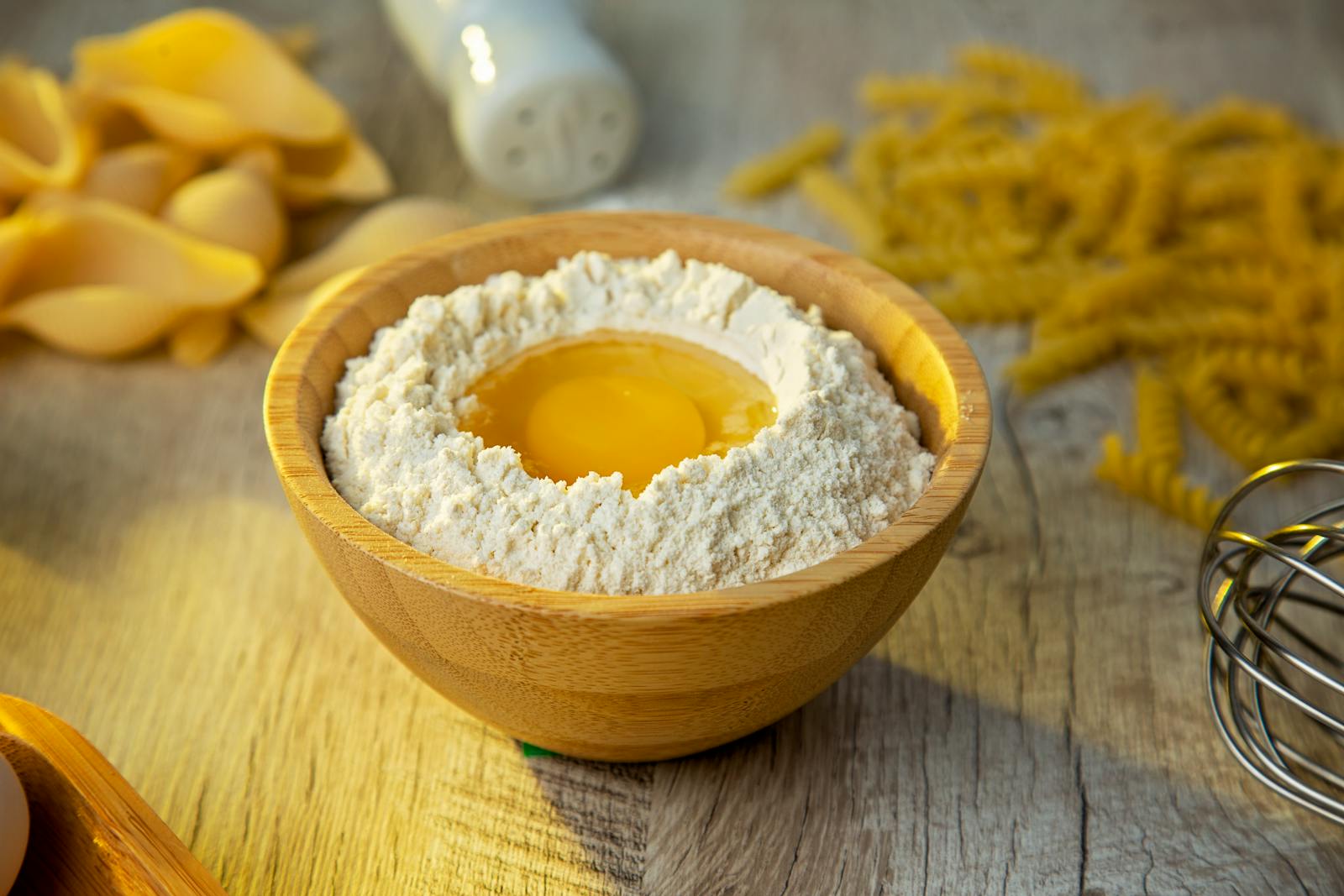
Fresh pasta. This is the use that converts the most students. Whole einkorn flour plus egg yolk makes a deeply golden, silky pasta dough with a flavour that store-bought dry pasta cannot match. The dough handles beautifully under a hand-cranked roller.
Pie crust. The lower gluten produces a tender, flaky crust that is almost impossible to overwork. I use 100% einkorn for fruit pies and switch to a blend only when the crust needs to hold a structural lattice.
Cookies and quick breads. Banana bread, zucchini bread, oatmeal cookies: anywhere the flour is along for the ride rather than carrying structure. Einkorn brings flavour and moisture; the recipe forgives the lack of gluten.
Sourdough at 30% blend. A 30% einkorn / 70% bread flour sourdough is one of the best heritage-flour loaves you can bake. The einkorn gives the loaf colour, sweetness, and a tender crumb without slacking the structure. Cora covers the pure-einkorn version of this in our einkorn bread post; a 30% blend is the gentler entry point. A 100 percent einkorn sourdough is entirely possible, and our einkorn sourdough bread recipe does it by dropping the hydration to 65 percent and replacing kneading with two gentle folds. The 30 percent blend is the easier loaf, not the only one.
Where does einkorn flour disappoint?
Anywhere you need strong gluten to do structural work. Pizza dough wants to be stretched thin without tearing, and einkorn tears. Croissants and other laminated doughs need elasticity for the butter layers, and einkorn flakes apart. Baguettes with an open ear want a high-hydration dough with strong gluten, and einkorn slumps. A New York-style chewy bagel: same problem.
There is no shame in reaching for bread flour for these and saving the einkorn for tomorrow’s pancakes.
How do I source good einkorn flour?
In the United States, a few practical options stand out.
- Jovial, the dominant brand in natural-food stores. Reliable quality in both whole einkorn and all-purpose einkorn forms. Slightly more expensive per pound than bulk wheat flour but readily available.
- Hayden Mills, Janie’s Mill, Maine Grains, Cairnspring: regional stone-ground options. Better flavour than national brands. Usually whole grain only.
- Italian imports sold as farina di farro piccolo: sometimes more expensive but worth a try for pasta specifically.
Store einkorn flour in the fridge or freezer. The germ contains polyunsaturated oils that oxidize within 2-3 months at room temperature and turn the flour faintly bitter. Refrigerated, the flour keeps 6 months. Frozen, a year.
For the broader heritage-flour context, our whole grain bread flour post covers when to reach for whole-wheat vs whole-rye vs whole-einkorn for different bread types. If you’re curious about how einkorn fits historically alongside other pre-modern grains, our quinoa history piece on the Andean parallel is a worthwhile read on how cultures preserve and rediscover their original cereals.
The bag is worth keeping. The dough is worth learning. A flatbread is the gentlest place to start, since the short bake suits einkorn’s weak gluten: our whole wheat pita bread takes it at about a third of the flour. Einkorn rewards bakers who treat it on its own terms rather than fighting to make it behave like modern wheat. The first three bakes are about adjusting hydration and fermentation; everything after that is just baking.
Frequently asked questions
Is einkorn flour gluten-free?
No. Einkorn is a true wheat, so its flour contains gluten and is not safe for anyone with celiac disease or a wheat allergy. Its gluten is weaker and structured differently from modern wheat, and some people find it easier to digest, but that is not the same as being gluten-free.
Is einkorn flour healthier than regular flour?
Whole einkorn is more nutritious than refined white flour, with more protein, minerals, and the golden carotenoid pigments, and it lacks modern wheat’s most reactive gluten fragment. It is still a gluten-containing wheat, though, so the advantage is nutritional, not a matter of safety.
Why did my einkorn loaf turn out dense or flat?
Almost always because einkorn’s weak gluten was pushed too hard. Too much water, too much kneading, or too long a rise all collapse the fragile structure. Lower the hydration to around 60 to 68 percent, knead only briefly, and watch the dough rather than the clock.
Stock up on Einkorn
See our hand-picked Einkorn, from flour to whole grain, with the brands worth buying.
Shop Einkorn →