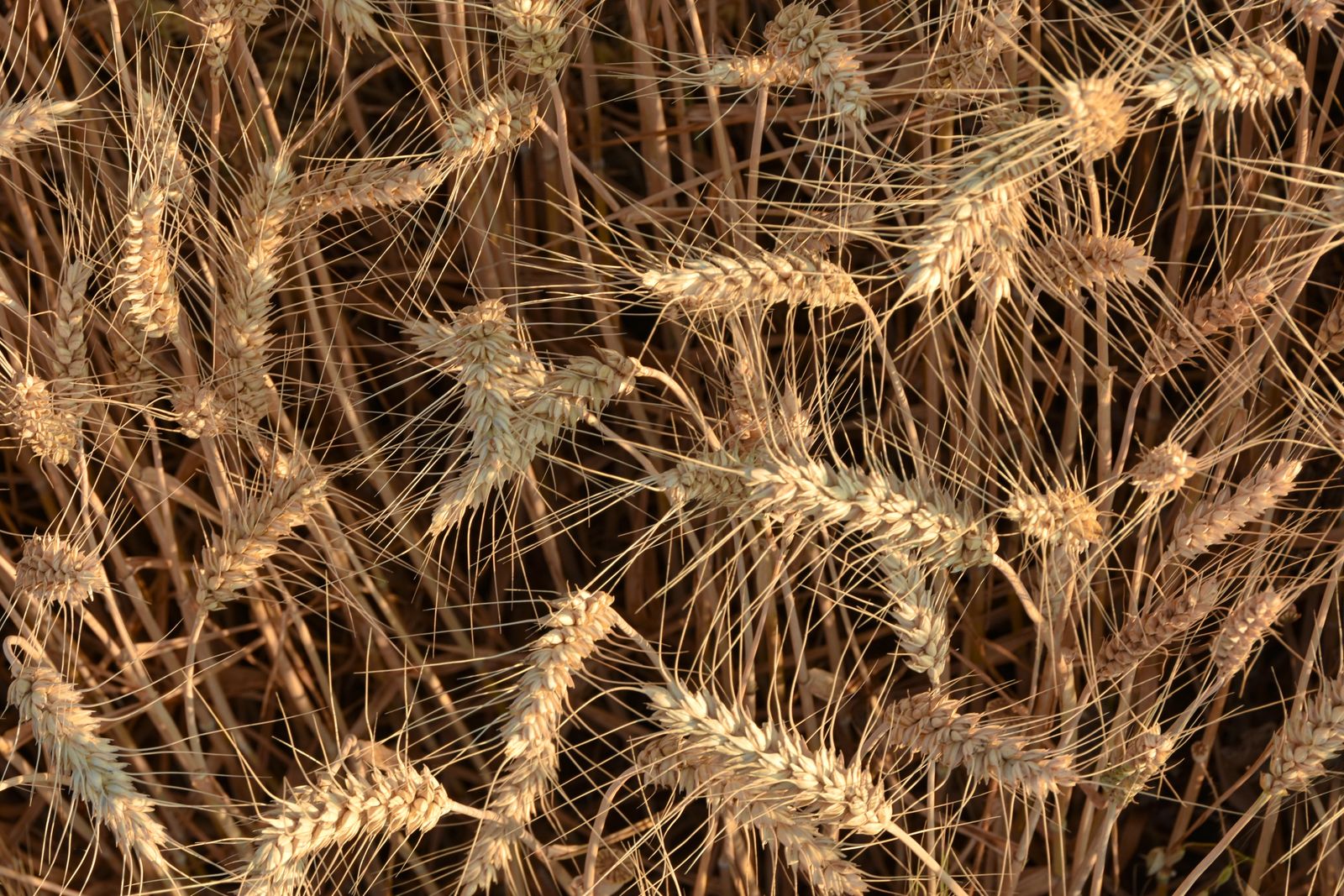
Walk into any natural-foods store and you can buy bags of einkorn and spelt flour shelved within arm’s reach of each other, both marketed as ancient, both marketed as easier to digest, often both at premium prices. Most shoppers buy one or the other on roughly the same logic, and most of the marketing copy lets them. The two flours are genuinely different grains with very different baking behaviour, and the einkorn vs spelt decision matters more than the labels suggest.
Quick answer: Einkorn is the older, smaller-genome wheat with softer flour, best for pancakes, pasta, and pastry. Spelt is the larger-genome, stretchier wheat that behaves closer to modern wheat, best for bread. Neither is gluten-free; both contain gluten and are unsafe for celiacs. They are genuinely different grains, not the same grain relabeled, and the rest of this guide is where the useful differences live.
What is the actual genetic difference between einkorn and spelt?
This is the fact that drives almost everything else. Einkorn (Triticum monococcum) is a diploid wheat, meaning each cell carries two sets of seven chromosomes (2n = 14). Spelt (Triticum spelta) is a hexaploid wheat, with six sets (2n = 42), exactly the same ploidy as modern bread wheat. In genetic terms, spelt is much closer to the modern wheat you grew up with than einkorn is.
| Trait | Einkorn | Spelt |
|---|---|---|
| Latin name | Triticum monococcum | Triticum spelta |
| Ploidy | Diploid (2n = 14) | Hexaploid (2n = 42) |
| Domesticated | ~10,500 BCE, southeastern Türkiye | ~5,000 BCE, central Europe and Iran |
| Gluten content | Yes (contains gluten, lower glutenin) | Yes (contains gluten, gluten profile close to modern wheat) |
| Flour color | Pale golden, carotenoid-rich | Pale tan, similar to standard wheat |
| Dough behavior | Slack, weak gluten network, sticky | Stretchy, closer to modern bread wheat, slightly weaker structure |
| Best for | Pancakes, pasta, pie crust, cookies | Bread, sandwich loaves, pizza in a blend |
| Approximate price | $$$ (2x modern wheat or more) | $$ (1.3-1.5x modern wheat) |
The practical consequence: einkorn dough handles like a fragile, slack pastry dough; spelt dough handles much more like a modern bread dough, just slightly weaker. This is the single most useful thing to know before you bake with either flour. Our deeper einkorn flour post and the emmer vs einkorn comparison (which covers the third heritage wheat) go further on einkorn’s specific quirks.
Is einkorn or spelt easier to digest?
This question shows up in marketing copy more than in peer-reviewed literature, and the honest answer is: probably yes for some non-celiac people, definitely not enough to matter for celiacs. Both grains contain gluten; our dedicated is spelt gluten-free answer gives the spelt half its full treatment. The Coeliac UK guidance is explicit that all heritage wheats, einkorn and spelt included, are off-limits for celiac patients.
For non-celiac wheat sensitivity (NCGS), the picture is murkier. The gluten composition of einkorn differs from modern wheat: less of the high-molecular-weight glutenin, a different gliadin profile. Some readers report tolerating einkorn better than modern wheat, and a few small studies support this. Spelt is closer in gluten profile to modern wheat, so any digestibility advantage is smaller. The cleanest summary I can offer after reading the literature: einkorn may be easier on some sensitive guts, spelt probably is not meaningfully different from modern wheat, and neither is celiac-safe.
For the deeper science on what fermentation actually does to gluten (including in heritage wheats), see our is sourdough bread gluten free post.
How do einkorn and spelt taste?
The two are different enough that side-by-side bakes are easy to tell apart.
- A good einkorn flour is sweeter, faintly custardy, and produces noticeably golden bakes from the carotenoid pigments in the grain. It tastes the way you wish a really good buttery pancake tasted.
- A stone-ground spelt flour is mildly nutty, slightly sweeter than modern wheat but much less distinctive than einkorn. If you’ve ever eaten a particularly good whole-wheat sandwich bread, you’ve tasted something close to spelt.
Put spelt vs einkorn head-to-head and the split is clean: for pasta, einkorn wins on flavour every time; for bread, spelt wins on structure and bake-ability, and the flavour difference matters less in a salted, fermented loaf.
How do einkorn and spelt compare nutritionally?
Both are higher in protein than modern wheat, and both carry more minerals because they are typically sold as whole-grain flours. The differences between the two are small, as the table below shows.
| Per 100g whole flour | Einkorn | Spelt |
|---|---|---|
| Calories | ~360 | ~338 |
| Protein | ~18g | ~15g |
| Fibre | ~8g | ~10g |
| Iron | ~3.7mg | ~4.4mg |
| Zinc | ~3.3mg | ~3.3mg |
The USDA FoodData Central einkorn and spelt profiles are the underlying source. Einkorn edges spelt on protein and carotenoids; spelt edges einkorn on fibre. Neither difference is large enough to drive the decision on its own.
When should I pick einkorn over spelt (and vice versa)?
Here is the use-case-driven version, which is how I actually decide at the shop, bake by bake.
| Bake | Pick | Why |
|---|---|---|
| Pancakes, waffles | Einkorn | Sweetness and golden colour shine; weak gluten doesn’t matter |
| Fresh pasta | Einkorn | Silky dough, golden colour, deep flavour |
| Pie crust, shortbread | Einkorn | Tender, less prone to overwork |
| Cookies | Either | Both work; einkorn for flavour, spelt for ease |
| Quick breads, muffins | Either | Roughly interchangeable in a 1:1 sub |
| Sandwich loaf | Spelt | Better structure, more reliable rise |
| Sourdough boule | Spelt as bulk + einkorn 20-30% | Spelt carries the loaf; einkorn adds flavour |
| Pizza dough | Spelt (with bread flour) | Needs stretch; einkorn tears |
| Croissants, laminated pastry | Neither | Both lack the elasticity laminated dough needs; use bread flour |
The sourdough-blend logic above is covered in more depth in our best flour for sourdough starter post, which is the practical companion to this comparison if you bake bread.
Is einkorn worth the price?
Einkorn flour typically costs 2 to 3 times what supermarket whole-wheat flour costs, and noticeably more than spelt. After years of comparison testing for the magazine, here is my honest verdict, broken into three cases.
- For pancakes and pasta, yes. The flavour and colour upgrade is real and you genuinely cannot reproduce it with other flours. Worth the price.
- For everyday bread, no. Spelt gets you 80% of the heritage-grain experience at half the price, with better baking behaviour. The remaining 20% of einkorn-specific character only shows up in select preparations.
- For a 30% blend in a sourdough boule, sometimes. A bag of einkorn lasts a long time at that ratio. Worth the splurge if you bake regularly.
One investigative-journalism note on brands. I’ve audited a number of “heritage wheat” labels over the years. Look for the Latin name on the bag (Triticum monococcum for einkorn, Triticum spelta for spelt), not just marketing words like “ancient grain.” Several brands have, at various points, sold what they called einkorn that lab-tested as a different species. The clearest sourcing for North America remains Jovial (the dominant einkorn brand, transparent about cultivation) and Bluebird Grain Farms; for spelt, Hayden, Cairnspring, and Bob’s Red Mill all sell reliable product. Italian farro piccolo is einkorn; Italian farro grande is spelt; farro medio is emmer (a third heritage wheat covered in our emmer vs einkorn comparison).
For a broader look at how heritage and pre-modern grains compare across cultures, our quinoa history covers the parallel Andean story, and the quinoa flour post covers a fully gluten-free heritage alternative for readers who need to avoid wheat entirely. The honest takeaway on einkorn vs spelt: they are not interchangeable, they are not the same grain in different clothes, and choosing well between them is a small but real upgrade to whatever you are baking.
Frequently asked questions
Which is older, einkorn or spelt?
Einkorn is far older. It is one of the first domesticated wheats, cultivated around 10,500 BCE in southeastern Türkiye, while spelt appeared later, roughly 5,000 BCE. Einkorn is essentially the oldest wheat humans farmed.
Can I substitute einkorn for spelt one-to-one?
Not reliably in bread. Einkorn’s gluten is much weaker, so a straight swap into a bread recipe gives a denser, flatter loaf; reduce the liquid and expect a softer crumb. In pancakes, cookies, and pastry the two are much closer to interchangeable.
Spelt flour vs einkorn flour: which should I buy?
For bread and pizza, buy spelt flour: its stretchier gluten behaves closest to modern bread wheat. For pancakes, pasta, pie crust, and cookies, buy einkorn flour: sweeter, more golden, and tender where structure matters less. If you only want one bag, spelt flour is the versatile all-rounder; einkorn flour is the flavour upgrade. Our spelt flour recipes roundup ranks the bakes that all-rounder handles best.
Is spelt the same as farro?
Spelt is one of the three wheats sold as farro (Italian farro grande); the others are emmer and einkorn. So spelt is a kind of farro, but “farro” on a label could be any of the three.
Spelt vs einkorn: which is better for beginners?
Spelt, comfortably. It handles more like modern bread flour, costs roughly half as much, and forgives a heavy hand with the mixer, while einkorn’s fragile gluten and thirsty dough punish anyone still learning the feel of a loaf. Start with spelt bread, then graduate to einkorn bread once you can read a dough by touch.
Stock up on Einkorn
See our hand-picked Einkorn, from flour to whole grain, with the brands worth buying.
Shop Einkorn →