 By Naomi Caldwell · Published · 1260 words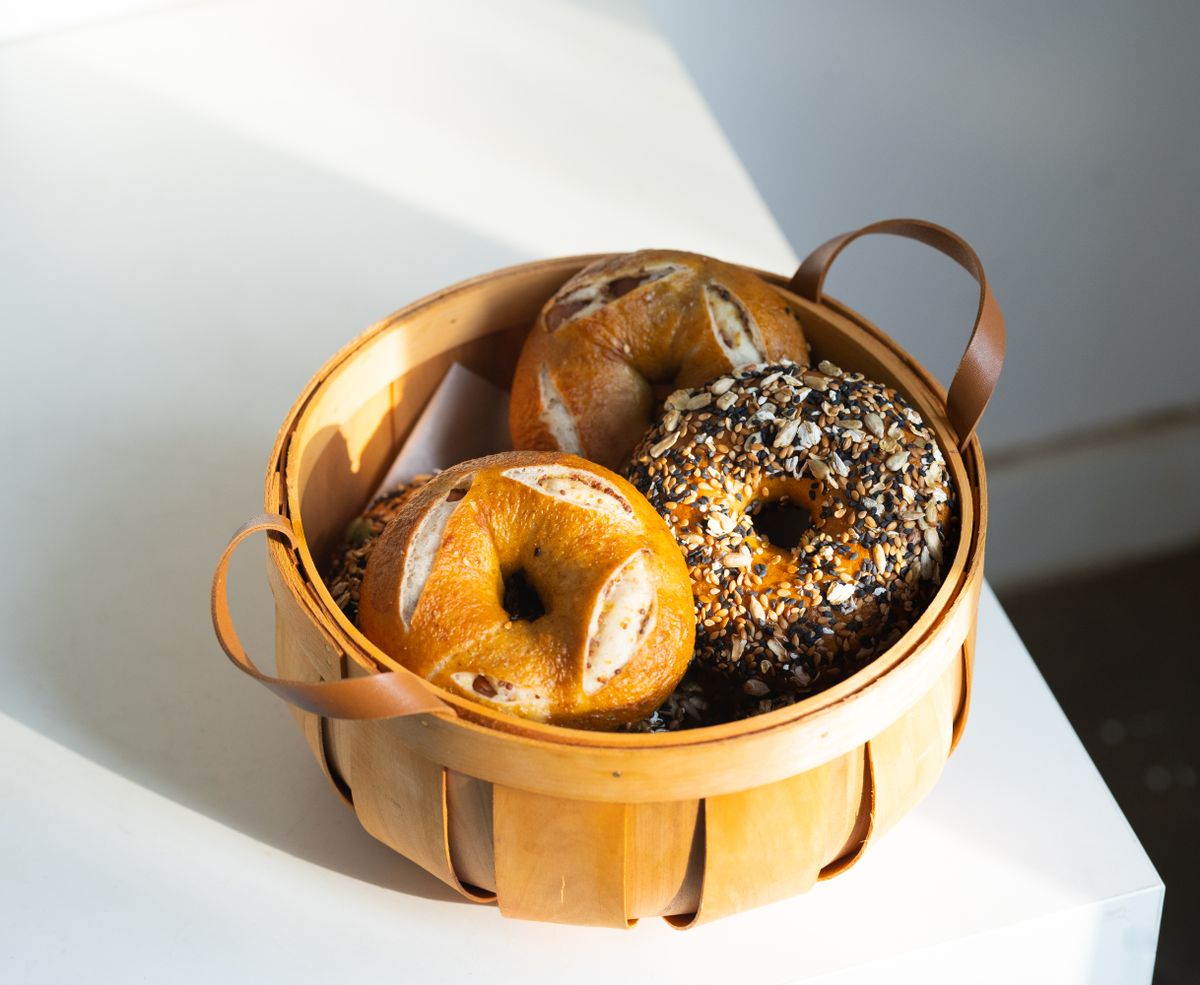
A bagel is the hardest thing in the bread world to fake, because everything that makes it a bagel, the shine, the dense chew, the crust that fights back a little, comes from high-gluten flour and a pot of boiling water. That is exactly why most gluten-free bagels are round bread with commitment issues. But the same psyllium dough that carries our gluten-free sandwich loaf takes the boil surprisingly well, and with a couple of adjustments you get a bagel that toasts, shines, and actually chews. This is the method, plus the store-bought shortlist for mornings when nobody is boiling anything.
Quick answer: To make gluten-free bagels, mix a rice-flour blend with psyllium husk, yeast, salt, and sugar into a shapeable dough, form rings, proof for an hour, boil them briefly in honey-sweetened water, and bake at 425°F until deep golden. Psyllium supplies the chew that gluten normally would, and the short boil sets the shiny skin. For store-bought, Canyon Bakehouse, O'Doughs, and Trader Joe's all sell dedicated gluten-free bagels.
How do you make gluten-free bagels?
The dough is a stiffer cousin of our gluten-free bread recipe: less water, so the rings hold their shape through the boil. Makes six.
- 400 g (3 1/4 cups) gluten-free all-purpose flour blend (rice-flour based)
- 20 g (2 1/2 tbsp) psyllium husk powder
- 9 g (2 3/4 tsp) instant yeast
- 8 g (1 1/2 tsp) fine salt
- 15 g (1 tbsp) sugar
- 420 ml (1 3/4 cups) warm water
- 15 g (1 tbsp) olive oil
- 1 tbsp honey, for the boiling water
- sesame seeds or everything seasoning, for topping
- Whisk the dry ingredients. Combine the gluten-free flour, psyllium, yeast, salt, and sugar so the psyllium disperses before it meets water.
- Mix and hydrate for 10 minutes. Stir in the warm water and olive oil, then let the dough rest until it firms from sticky batter into a shapeable dough.
- Shape six rings. Divide the dough, roll each piece into a ball with wet hands, and poke a generous hole through the center; the hole shrinks as they proof and bake.
- Proof for 60 minutes. Cover loosely somewhere warm until the rings look puffed. They will not double; a visible rise is enough.
- Boil briefly, about 5 minutes for the batch. Bring a wide pot of water to a gentle boil with the honey, and boil the bagels 30 to 45 seconds per side, no longer. The boil sets the shiny skin.
- Top and bake for about 25 minutes at 425°F. Scatter the seeds on while wet, then bake until deep golden brown. Cool at least 20 minutes before slicing.
Why do you boil bagels before baking?
The boil is what separates a bagel from a roll with a hole: it gelatinizes the starch on the surface, which bakes into the glossy, chewy skin, and it sets the shape so the crumb inside stays dense rather than puffy. The tradition goes back centuries in bagel history, and it matters even more for gluten-free dough, with one adjustment: keep it short. Wheat dough can survive a two-minute boil because gluten holds it together; a psyllium dough starts to soften and blur at the edges past about 45 seconds per side, so set a timer and work in batches of two or three.
What makes gluten-free bagels chewy?
Psyllium husk, doing its best impression of high-gluten flour. Bagels are traditionally made with the strongest wheat flour there is, so the gap to bridge is bigger than for sandwich bread, and psyllium’s dense, elastic gel is the only gluten-free binder that gets close. Use a fine psyllium husk powder, weigh it rather than scooping, and keep the dough on the stiff side, since extra water is the enemy of chew. The flour half matters too: a rice-based blend, mixed yourself from white rice flour per our gluten-free flour guide or bought as a 1-to-1, gives the tight crumb a bagel wants. Our psyllium baking guide covers the science in depth.
Which store-bought gluten-free bagels are good?
Three brands consistently earn their shelf space, and all three are dedicated gluten-free lines rather than shared-equipment gambles. Toast whichever you buy; every gluten-free bagel is better toasted.
| Brand | Style | Worth knowing |
|---|---|---|
| Canyon Bakehouse | Plain, everything, blueberry | Certified GF; the closest to a deli-texture bagel |
| O’Doughs | Thins and full-size | Certified GF; softer, sandwich-friendly |
| Trader Joe’s Gluten Free | Plain and everything | Cheapest per bagel; dense, best toasted hard |
The Celiac Disease Foundation keeps the broader safe-list current if your store stocks a different label; the rule as always is the certification mark, not the marketing.
Why did my gluten-free bagels come out dense or flat?
Dense is usually water, flat is usually the boil. A too-wet dough cannot hold a proofed ring, so it relaxes into a disc before the bake, and a too-long boil dissolves the psyllium skin that holds everything in. Weigh the flour and psyllium, keep the boil under 45 seconds a side, and proof until just puffed rather than doubled, since an overproofed ring collapses in the pot. If the crumb is gummy in the middle, it needed longer in the oven; the same internal-temperature trick from our gluten-free bread guide applies here, 205°F at the center.
Where to go from here
Bagels complete the gluten-free bread shelf on this site: the sandwich loaf for weekdays, the pizza crust for Fridays, and now the weekend boil-and-bake. All three run on the same two levers, a rice-based blend and real psyllium, so the pantry stays small. The gluten-free breakfast guide has the rest of the morning table, and the gluten-free grains guide maps the flours behind it all, from sorghum to buckwheat.
Frequently asked questions
Are regular bagels gluten-free?
No, the opposite: bagels are made from the highest-gluten wheat flour in the bakery, which is where the chew comes from. Wheat-family variants like spelt are not safe either, as our is spelt gluten-free explainer covers, and pumpernickel bagels add rye, another gluten grain.
Can I make gluten-free bagels without yeast?
Yes, with the yogurt shortcut: mix a self-rising gluten-free flour blend with Greek yogurt into a dough, shape, and bake. They skip the boil and land closer to a soft pretzel roll than a true bagel, but they are ready in 40 minutes.
How do you store gluten-free bagels?
Slice and freeze them the day they are made, then toast straight from frozen. Gluten-free bread stales faster than wheat, and the freezer-to-toaster path keeps the chew; a countertop bag turns them to foam in two days.
Can I use this dough for soft pretzels?
Yes. Shape ropes instead of rings, boil in water with a tablespoon of baking soda instead of honey for the classic pretzel tang and deep brown color, and salt heavily before the same bake.
Get the binder that makes the chew
Fine-milled psyllium husk powder is what stands between round bread and a real gluten-free bagel.
Shop psyllium husk →Stock the gluten-free bread pantry
Rice flour, sorghum, buckwheat, and the rest of the naturally gluten-free grains behind every loaf, crust, and bagel here.
Browse all grains →