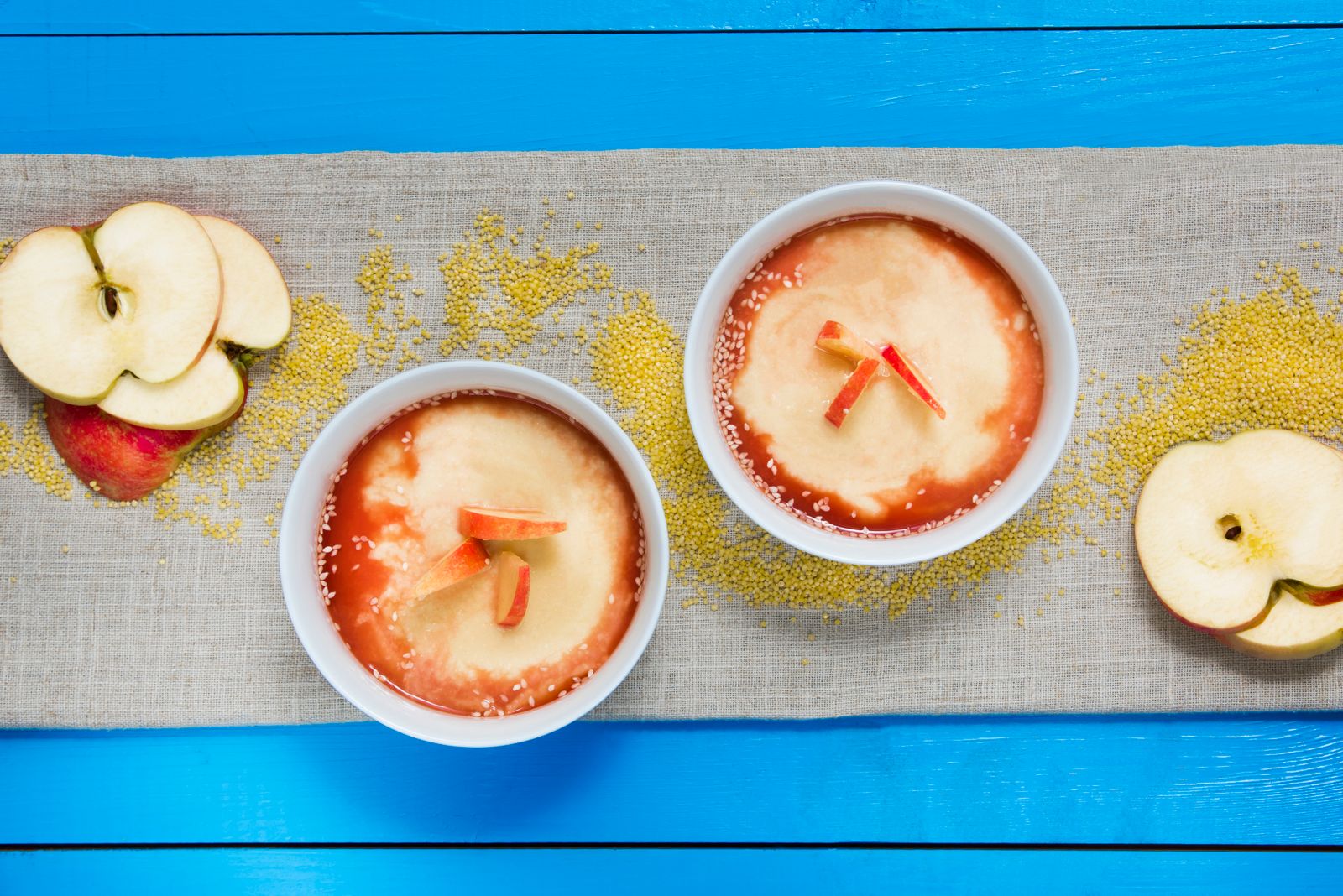
The trick to how to cook millet is realizing it can go two completely different directions, and the water ratio decides which. Use less water and leave it alone, and you get fluffy, separate grains like couscous. Use more water and stir, and it turns into a creamy porridge. Same grain, same pot, two dishes. Millet is naturally gluten-free and cooks in about 20 minutes, which makes it one of the easiest ancient grains to fold into a weeknight. I cooked a lot of it living in Beijing, where millet congee starts the day for millions of people.
If you want the rundown on the different kinds of millet first, our types of millet guide covers pearl, finger, foxtail, and the rest. This is the how-to.
Quick answer: Millet cooks two ways, and the water ratio decides which. For fluffy, separate grains like couscous, use 1 part millet to 2 parts water, simmered covered without stirring for 15 to 20 minutes, then rested. For creamy porridge, use 1 to 3 or 1 to 4 water and stir often. Toasting the rinsed grain first is the trick that makes it taste nutty rather than bland. Millet is naturally gluten-free and needs no soaking.
What is the millet to water ratio?
Use 1 part millet to 2 parts water for fluffy grains, or 1 to 3 or 4 for porridge. This is the only decision that really matters; everything else follows from it.
| Result | Millet to water | Method |
|---|---|---|
| Fluffy, separate grains | 1 : 2 | Simmer covered, do not stir |
| Soft side dish | 1 : 2.5 | Simmer, fluff at the end |
| Creamy porridge | 1 : 3 to 1 : 4 | Simmer and stir often |
Start with 1 to 2 if you want a rice substitute, or 1 to 3 for breakfast porridge. A bag of whole grain millet is all you need for either.
How do you cook fluffy millet?
Toast the grain, simmer it covered at a 1 to 2 ratio without stirring, then rest it off the heat, about 35 minutes start to finish.
- 1 cup (200 g) millet, rinsed and well drained
- 2 cups (480 ml) water (see the table for porridge ratios)
- 1/2 tsp fine salt
- Toast the rinsed, drained millet in a dry pan over medium heat for 3 to 4 minutes (it dries as it toasts), until it smells nutty and a few grains start to pop. This single step is what separates good millet from bland millet.
- Add water at a 1 to 2 ratio, plus 1/2 teaspoon of salt, and bring to a boil.
- Drop to a low simmer, cover, and cook 15 to 20 minutes without stirring (start checking at 18). Stirring fluffy millet is how you accidentally make porridge.
- Pull it off the heat and let it sit, covered, for 10 minutes.
- Fluff with a fork. The grains should be tender and separate.
How do you make creamy millet porridge?
Same grain, more water, and the opposite technique. Use a 1 to 3 or 1 to 4 ratio, skip the lid, and stir often as it simmers for about 20 minutes. The stirring knocks the starch loose and turns it silky. Cook it in milk instead of water for breakfast, and sweeten with honey, fruit, and nuts. This is millet congee territory, and it is deeply comforting.
How long does millet take to cook?
About 20 minutes on the stovetop, plus a 10-minute rest for the fluffy version. There is no need to soak millet first. A quick rinse in a fine sieve is worth doing, though, because it washes away the faint bitterness some millet carries on its surface.
Why is my millet mushy or bitter?
Mushiness comes from too much water or from stirring, and bitterness comes from the natural hull coating, which rinsing and toasting remove. The common complaints are all easy to fix.
- Mushy when you wanted fluffy. Too much water, or you stirred it. For separate grains, stick to 1 to 2 and leave the lid on without touching it.
- Bitter or soapy taste. That is the natural coating on the hull. Rinse the millet before cooking and toast it, and the bitterness disappears.
- Crunchy center. Not enough time or liquid. Add a splash of water and give it five more minutes covered.
What do you eat with millet?
Fluffy millet works anywhere you would use rice or couscous: under a curry, in a grain bowl, tossed cold into a salad. Creamy millet is breakfast, or a savory polenta-style base under stewed vegetables. Across West Africa it becomes fufu and porridge, and across Asia it becomes congee, so there is a whole world of pairings once you have the basic pot down.
For the grain itself, see the common millet and foxtail millet profiles, and our millet recipes roundup for specific dishes. Nutritionally millet is a solid source of fiber and minerals, with the details available through USDA FoodData Central, and the broader case for whole grains from Harvard is worth a read. If you are exploring ancient grains generally, the history of quinoa is a good next stop.
Frequently asked questions
Is millet gluten-free?
Yes. Millet is a naturally gluten-free grain from a different plant family than wheat, so it is safe on a gluten-free diet. If you have celiac disease, choose a certified gluten-free millet to rule out cross-contamination during milling.
Can you cook millet in a rice cooker or Instant Pot?
Yes to both. In a rice cooker, use the same 1:2 ratio and let it run a full cycle; our rice cooker recipes roundup has ratios for other grains too. In an Instant Pot, cook fluffy millet for about 10 minutes at high pressure with a natural release, using a little less water since the sealed pot loses none.
Is millet the same as couscous?
No. They cook up similarly fluffy, but millet is a whole gluten-free grain, while couscous is tiny beads of wheat pasta that contain gluten. Millet is the safe swap for couscous on a gluten-free diet.
Stock up on millet
See our hand-picked millet, from whole grain to flour, with the brands worth buying.
Shop millet →