Millet is the grain I most wish more Western kitchens knew what to do with. Across the years I have spent tracing food traditions, millet recipes have shown up on nearly every continent: as the morning porridge of northern China, the dosa batter of South India, the thick tô of the West African Sahel, the bajra flatbread of Rajasthan. Millet fed more of the ancient world than wheat did. It is naturally gluten-free, it cooks in twenty minutes, and it costs very little. The only thing standing between most cooks and good millet is knowing the handful of techniques that keep it from turning to mush.
This is a roundup of seven ways to cook millet, drawn from the global traditions where the grain never fell out of fashion. If you want the grain in its broader context, our gluten-free grains guide places millet among its pseudocereal and true-cereal cousins.
Quick answer: Millet is a naturally gluten-free grain that cooks in about 20 minutes and works as both a fluffy side and a creamy porridge. For fluffy pilaf-style millet, toast it and simmer 1 part grain to 2 parts water without stirring; for creamy porridge, use 1 to 3 or 1 to 4 and stir often. The same grain makes tabbouleh, polenta-style mash, South Indian dosa and upma, and more. Toasting first and not overcooking are the keys to avoiding mush.
How do you cook millet (the basic method)?
Fluffy pilaf-style millet uses a 1:2 millet-to-water ratio with no stirring; creamy porridge-style uses 1:3 or 1:4 with frequent stirring. Everything below starts from one of these two base methods, and the recipes are just seasoning.
Fluffy millet (pilaf-style): Use a 1:2 ratio of millet to water by volume. Toast 1 cup of dry millet in a dry pan for 3-4 minutes until it smells nutty and a few grains pop. Add 2 cups of water or broth and 1/2 teaspoon salt. Bring to a boil, drop to a low simmer, cover, and cook 18-20 minutes. Do not stir. Rest off heat, covered, for 10 minutes, then fluff with a fork.
Creamy millet (porridge-style): Use a 1:3 or 1:4 ratio. Skip the toasting. Stir frequently as it cooks, which knocks starch off the grains and turns the dish creamy, the same principle as risotto.
The single most useful fact about millet: the only difference between fluffy pilaf and creamy porridge is the water ratio and whether you stir. Same grain, two completely different dishes.
Why does my millet turn out mushy?
Too much water, stirring when you wanted fluffy, or overcooking. There are three reasons, all fixable.
- Too much water. If you wanted fluffy and used a porridge ratio, you get mush. Measure.
- Stirring fluffy millet. Stirring releases starch. For pilaf, leave it alone.
- Overcooking. Millet goes from done to mushy fast. Start checking at 18 minutes. The grains should be tender with the faintest bite left.
Toasting the dry grain first is the other trick worth the four minutes. It deepens the flavour from bland to genuinely nutty, and it helps the cooked grains stay separate. The USDA FoodData Central millet entry puts cooked millet at roughly 119 kcal, 3.5g protein, and a useful magnesium dose per 100g, so it earns its place nutritionally as well.
1. Fluffy millet pilaf
The everyday preparation. Make fluffy millet as above, but sweat a diced onion and a clove of garlic in oil before adding the toasted grain. Cook in broth instead of water. In the last five minutes, stir in a handful of frozen peas or chopped herbs. This is the dish that replaces rice at dinner, and most people who say they dislike millet have only ever had it boiled plain and unsalted.
- 1 cup (200 g) millet
- 2 tbsp olive oil
- 1 small onion, diced, and 1 garlic clove, minced
- 2 cups (480 ml) broth
- 1/2 tsp fine salt
- 1 handful frozen peas or chopped herbs
2. Creamy millet breakfast porridge
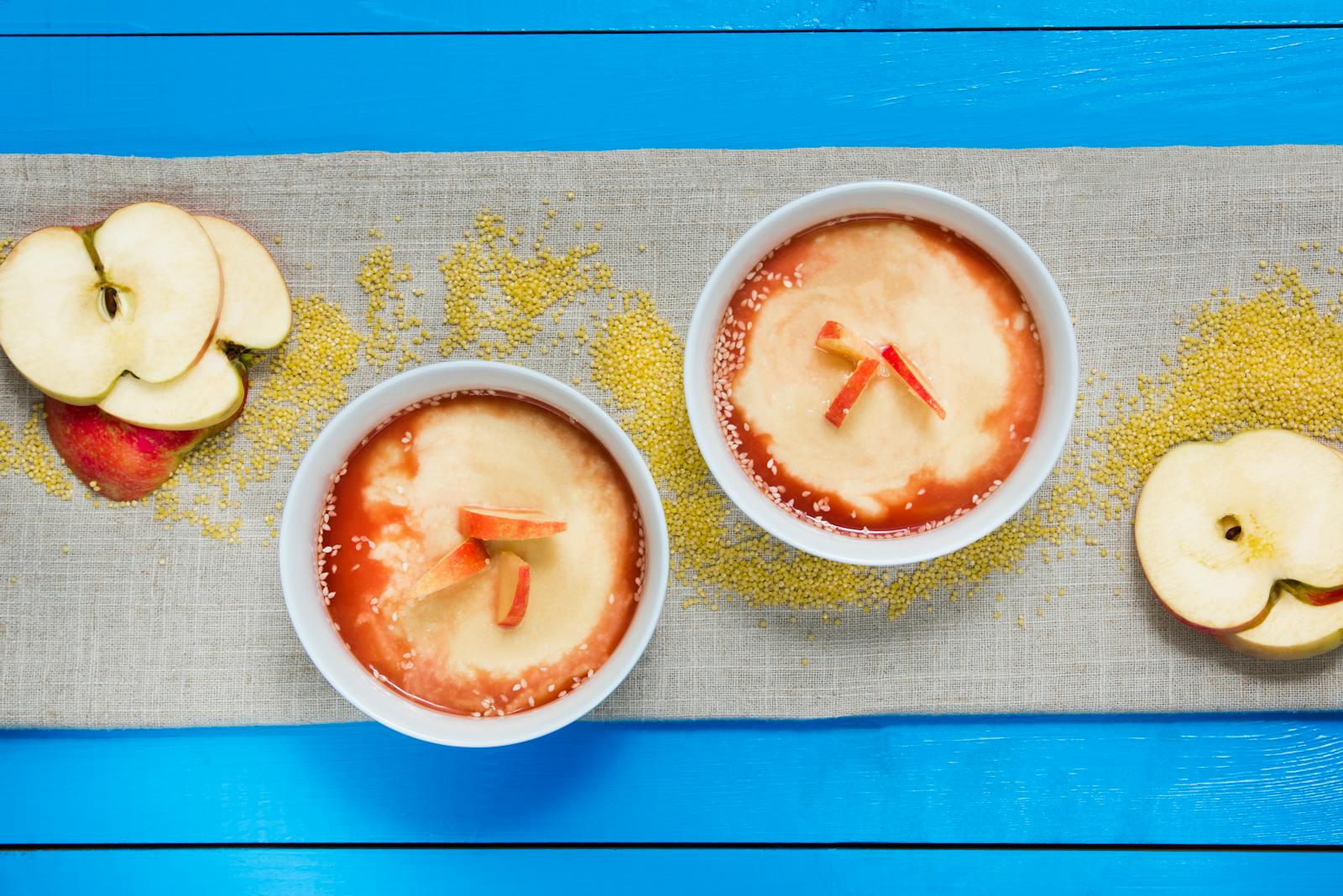
The northern Chinese and Eastern European morning staple. Cook the millet in the milk with a pinch of salt, stirring often, for about 25 minutes until thick and creamy. Sweeten with honey or maple, and top with fruit. Apple and cinnamon is the classic; sliced pear with toasted walnuts is my own preference. This is a direct cousin of the porridge habits we cover in our oat-based breakfast writing, but with a sweeter, gentler grain.
- 1/2 cup (100 g) millet
- 2 cups (480 ml) milk, dairy or oat
- Pinch of salt
- Honey or maple syrup, to sweeten
- Fruit and toasted nuts, to top
3. Millet “polenta” or mash
Cook millet very soft in a 1:4 ratio, then beat in butter, olive oil, or grated cheese until it turns into a soft golden mash. It behaves almost exactly like polenta and makes a superb bed for braised vegetables or a stew. Leftovers set firm in the fridge, and you can slice and pan-fry them the next day, again just like polenta.
- 1 cup (200 g) millet
- 4 cups (960 ml) water
- 1/2 tsp fine salt
- 2 tbsp butter or olive oil
- 1/3 cup (30 g) grated cheese (optional)
4. Millet salad, tabbouleh-style
Cooled fluffy millet takes the place of bulgur in a tabbouleh-style salad. Toss it with masses of chopped parsley and mint, diced tomato and cucumber, lemon juice, and good olive oil. Because millet is gluten-free, this is the version of tabbouleh that coeliac guests can actually eat. The grain’s mildness lets the herbs and lemon lead.
- 2 cups cooked fluffy millet, cooled
- 1 cup (60 g) chopped flat-leaf parsley
- 1/4 cup (10 g) chopped fresh mint
- 2 tomatoes and 1/2 cucumber, diced
- 3 tbsp lemon juice
- 3 tbsp olive oil
- Salt, to taste
5. South Indian millet dosa
Millet dosa is one of the great gluten-free breakfasts of the world. Soak the millet and urad dal (split black gram) separately for 6 hours, then grind each to a batter, combine, and ferment overnight. Cook thin, crisp pancakes on a hot griddle. The overnight ferment gives the dosa its characteristic tang and makes the grain more digestible. Millet dosa has carried South Indian breakfasts for centuries and deserves to be far better known elsewhere.
- 1 cup (200 g) millet
- 1/4 cup (50 g) urad dal (split black gram)
- 1/2 tsp fine salt
- Neutral oil, for the griddle
6. Millet bread (in a blend)
Millet flour cannot make a loaf alone, since it has no gluten, but at 20-30% of a gluten-free flour blend it adds a sweet, tender, faintly corn-like character to bread; our millet flour guide covers the blending rules. The same blending logic applies as in our sorghum flour baking, where a single gluten-free flour always works best as part of a team rather than solo. Whole millet seeds also make a lovely crunchy addition scattered on top of any loaf before baking.
7. Millet upma
Upma is the South Indian savoury breakfast that uses millet in place of the usual semolina. Toast the millet, then cook it with a tempering of mustard seeds, curry leaves, green chilli, ginger, and diced vegetables. Note it takes a touch more water than pilaf, about 2 1/2 cups per cup of grain, for its soft, semolina-like texture. The result is a quick, warm, savoury bowl that comes together in about half an hour. Upma is the dish I point people to when they say they only know millet as birdseed: one bowl usually changes their mind.
- 1 cup (200 g) millet, toasted
- 2 tbsp oil or ghee
- 1 tsp mustard seeds
- 8 to 10 curry leaves
- 1 or 2 green chillies, sliced
- 1 tbsp grated ginger
- 1 cup diced vegetables (carrot, peas, beans)
- 2.5 cups (600 ml) water
- Salt, to taste
Which millet should I buy?
Most Western shops sell proso millet, the pale yellow hulled grain, and it works for every recipe above. Indian and African groceries carry a wider range, including foxtail millet, pearl millet (bajra), and finger millet (ragi), each with its own texture and traditional uses. Any of them can be cooked by the two base methods. Finger millet is the most distinct, with a darker colour and a stronger, earthier taste, and it is the one used for ragi porridge and ragi flatbread.
Millet sits alongside sorghum as one of the great underused gluten-free grains (a plant so versatile its cane even gives us sorghum syrup), and like sorghum it rewards a cook willing to learn its two or three quirks. For more on cooking related grains, our how to cook sorghum guide is the closest companion piece. If you are interested in how grains like these were domesticated and spread, our quinoa history post traces a parallel story for the Andes, and the emmer vs einkorn explainer covers the heritage wheats for contrast (those, unlike millet, are not gluten-free). The Whole Grains Council millet page has more on the grain’s varieties and history.
Start with the fluffy pilaf and the creamy porridge. Once those two feel automatic, every other recipe here is a short step away. Millet fed the ancient world for good reason, and it is more than ready to feed yours.
Frequently asked questions
Is millet gluten-free?
Yes. Millet is a naturally gluten-free grain, so it is safe on a gluten-free diet and makes an excellent stand-in for wheat couscous or bulgur in salads and pilafs. Choose a certified bag if cross-contamination in milling is a concern, as our gluten-free grains guide explains.
Do you need to soak millet before cooking?
No. For everyday pilaf and porridge, a dry toast in the pan matters far more than soaking, and it is the step that keeps the grain nutty and separate. Soaking is only worth it for fermented dishes like dosa, or if you want to slightly shorten the cook and improve digestibility.
How do you store cooked millet?
Cooked millet keeps in a sealed container in the fridge for four to five days and freezes for up to three months, so it is ideal for batch cooking. Reheat it with a splash of water or milk to loosen it, or use fluffy millet cold straight from the fridge in a grain salad.
Ready to start cooking with millet?
See our hand-picked millet flour and whole grain, with quality brands ready to ship.
Shop millet →