 By Margaret Holloway · Published · 1537 words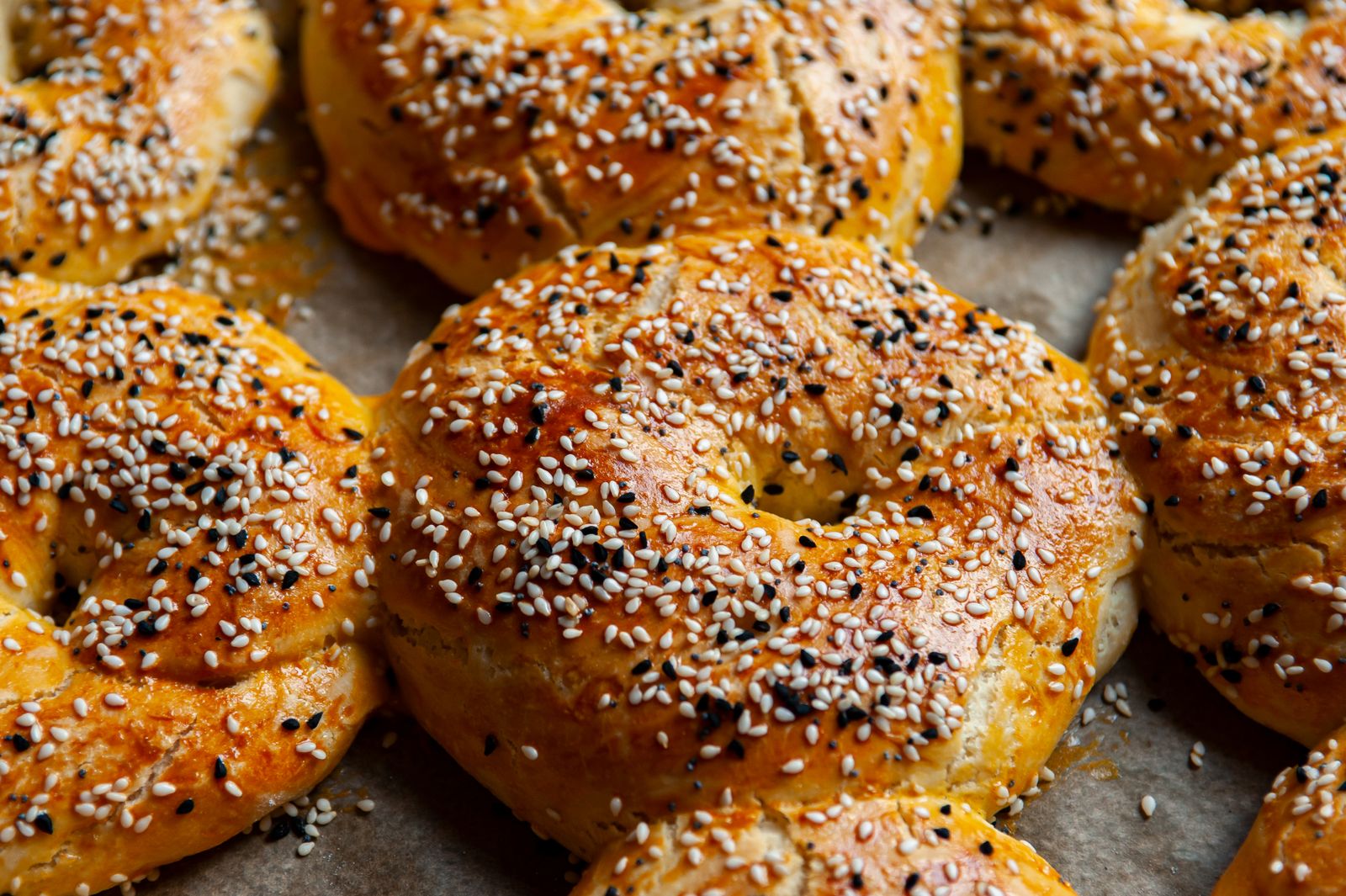
A bagel is the most technical bake most home cooks will attempt, and sourdough discard bagels are the best way I know to practice it. The discard gives the dough a quiet tang and a chewier bite, and because a pinch of yeast does the lifting, you do not need an active, peaking starter. Cold discard from the fridge works. What makes a bagel a bagel is the boil, not the leaven, so this recipe rewards technique over timing. Here is the dough, the boil that gives you that glossy chew, and both a same-day and an overnight schedule.
Quick answer: Sourdough discard bagels use leftover, unfed starter for tang and chew, with a pinch of instant yeast doing the rising, so you don't need an active, peaking starter. Make a deliberately stiff, low-hydration dough, shape and proof it, then boil each bagel 30 to 60 seconds in malt-and-baking-soda water before baking at 425°F. The boil, not the leaven, is what makes a bagel chewy and glossy. Same-day and overnight schedules both work; the overnight cold proof adds flavour. They contain gluten.
The dough
Bagel dough is deliberately stiff and low in hydration, which is what gives the dense, chewy crumb. It will feel firm and a little stubborn. That is correct.
- 500 g (about 4 cups) bread flour
- 260 g (1 cup plus 4 tsp) warm water
- 100 g (1/2 cup) sourdough discard, unfed
- 7 g (2 1/4 tsp) instant yeast (4 g for the overnight schedule)
- 10 g (2 tsp) fine salt
- 1 tbsp (20 g) barley malt syrup or honey
- 2 litres (8 cups) water
- 2 tbsp (40 g) barley malt syrup
- 1 tbsp (14 g) baking soda
- 1 egg white, beaten
- Sesame seeds or everything seasoning
- Mix and knead. Combine the dough ingredients and knead until smooth and very firm, about 10 minutes. It should pass a rough windowpane test.
- Rise. Cover and let rise until puffy, about 90 minutes on the same-day schedule.
- Shape. Divide into 8 and shape each into a ball. Poke a hole through the center with your thumb and stretch it to about 4 cm.
- Proof. Proof the shaped bagels about 30 minutes while you bring the boil water, malt syrup, and baking soda to a rolling simmer and heat the oven to 220C (425F).
- Boil. 30 seconds per side for a tender bagel, 60 for a proper New York chew.
- Top and bake. Brush with egg white, scatter the seeds, and bake 20 to 25 minutes until deep golden.
Does sourdough discard need to be active for bagels?
No. This is the same principle that runs through every recipe in our sourdough discard recipes roundup: the instant yeast handles the rise on a dependable clock, and the discard rides along for flavor and chew, thanks to the acids that sourdough fermentation builds up. Cold, unfed discard straight from the fridge is exactly what you want here.
If you would rather build a fully wild-leavened bagel with no commercial yeast, you can, but the proof stretches to many hours and the dense dough is slow to rise. For a reliable batch on a single morning, yeast plus discard wins, the same way it does for sourdough discard pizza dough. Save the long wild ferment for a whole grain sourdough loaf where a slow rise is the goal.
Why do you boil bagels?
The boil is the whole game. A 30 to 60 second bath in alkaline water before baking gelatinizes the starch on the surface, which sets a skin that bakes into the signature glossy, chewy crust. Skip the boil and you have bread rolls with a hole, not bagels. The bagel earned its texture from exactly this step.
Two details matter. Add barley malt syrup to the boiling water for color and a faint malty sweetness, which is the traditional move. And add a tablespoon of baking soda to push the water more alkaline, which deepens the browning. Boil longer for a thicker, chewier crust: 30 seconds per side for a tender bagel, 60 for a proper New York chew. Then top and bake at 220C (425F) until deep golden, about 20 to 25 minutes.
Same-day or overnight: which schedule is better?
Both work. The overnight cold proof develops more flavor from the discard and fits a morning bake.
| Method | Yeast | Schedule | Best for |
|---|---|---|---|
| Same-day | 7g | Mix, rise 90 min, shape, proof 30 min, boil, bake | An afternoon project |
| Overnight | 4g | Mix and shape at night, cold proof in the fridge, boil and bake cold in the morning | Fresh bagels at breakfast |
For the overnight version, shape the bagels, set them on a parchment tray, cover, and refrigerate; it is the same cold-proof schedule our discard cinnamon rolls use. In the morning, boil them straight from the fridge while the oven heats. Cold dough holds its shape better in the boil, so the overnight batch often looks neater.
How do you get chewy bagels?
Three levers. Use a high-protein bread flour, because the gluten network is what gives the chew. Keep the dough stiff, since low hydration means a denser crumb. And boil longer. A full minute per side builds the thick, taut skin that defines a chewy bagel. A good chew also depends on not over-proofing: a slightly under-proofed bagel holds its bite, while an over-proofed one bakes up puffy and bread-like. For more on how flour protein drives texture, our ancient grain bread guide digs into the science.
Can you make them whole grain or gluten-free?
Yes, with adjustments. Whole grain flours drink more water and have sharper bran that cuts gluten strands, so add a splash more water and expect a slightly denser bagel. They also carry more fiber and minerals than refined flour, as the nutrient data in USDA FoodData Central shows. Truly gluten-free is a different recipe rather than a swap, since discard itself is wheat: our gluten-free bagels use psyllium to build the chew that gluten normally provides.
- Spelt makes a lovely nutty bagel and keeps a decent chew. Use a good spelt flour for up to half the bread flour. More on the grain is on the spelt page.
- Rye is the deli baker’s instinct. A 15 to 20% rye swap gives a darker, pumpernickel-leaning bagel that is excellent with cream cheese and lox. Our rye flour guide explains how it behaves, and the rye page covers the grain.
- Einkorn adds a golden, tender crumb, though its weak gluten softens the chew, so keep it to a 50% swap or less.
And if you want to test-drive bagel making before committing to a starter schedule, the FarmSteady everything bagel and cream cheese kit boxes the dough mix, seasoning, and a cream-cheese culture in one go; it is the training wheels version of this recipe, and a good gift for the bagel-curious.
For a celiac-safe bagel, discard is off the table, since starters are wheat or rye based. Build the dough on a gluten-free blend with a binder for structure. Quinoa flour adds protein and bite to such blends, and the grain’s Andean story is in our quinoa history piece.
Frequently asked questions
What can you use instead of barley malt syrup for bagels?
Honey is the closest everyday swap in both the dough and the boiling water, giving a similar browning and faint sweetness. Brown sugar or molasses also work in the boil, with molasses leaning darker and more bitter. Barley malt is the classic for its malty flavour, and our barley malt syrup guide covers why it browns the way it does, but any of these produces a properly glossy, golden crust.
How do you store sourdough discard bagels?
Bagels are best the day they are baked. Keep them in a paper bag at room temperature for a day or two, then slice and freeze the rest in a sealed bag for up to three months. Toast frozen halves straight from the freezer, which revives the chew far better than a microwave.
Why did my bagels turn out flat?
Usually over-proofing or a weak boil. An over-proofed bagel collapses in the water and bakes up puffy and slack, so proof it just until slightly springy. Make sure the water is at a rolling simmer with baking soda added, and do not boil longer than a minute a side, since an under-hot or over-long bath both hurt the rise.
Better bagels start with better flour.
The flour you feed your starter and your dough is the chew in every bite. Browse the spelt, rye, and heritage flours we recommend for sourdough baking.
Shop rye flour →