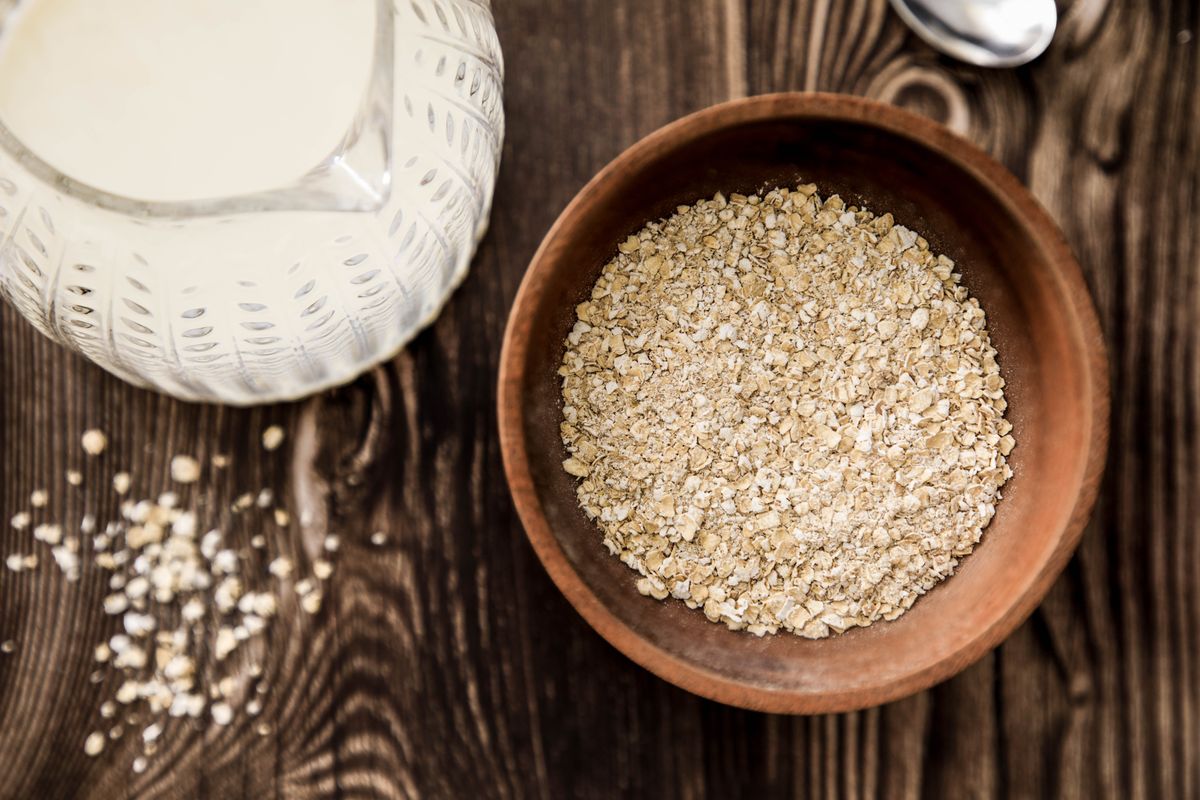
Learning how to make oat milk takes exactly one batch, because the recipe is a ratio and a rule: one part oats to four parts cold water, and never blend longer than 40 seconds. That second part is the one the cartons do not tell you about, and it is the difference between a clean, creamy glass and the gluey disappointment that sends people back to the shop. Growing up, oats were a crop before they were a lifestyle drink, so I will give it to you straight: homemade oat milk costs pennies a litre, takes ten minutes, and only goes wrong in one, very preventable, way.
Quick answer: To make oat milk, blend 1 part rolled oats with 4 parts cold water for no more than 30 to 40 seconds, then strain through a cloth-lined sieve without squeezing and chill. The two rules that keep it from turning slimy are cold water and a short blend, since heat, over-blending, and wringing the cloth all release gluey oat starch. It keeps 4 to 5 days in the fridge. Use certified gluten-free oats to make it safe for celiacs, and stir it into hot drinks rather than steaming it.
How do you make oat milk?
Blend one cup of rolled oats with four cups of cold water for 30 to 40 seconds, strain it through a cloth-lined fine-mesh sieve without squeezing (twice, if it is destined for coffee), and chill. That is genuinely the whole method.
- 1 cup (90 g) certified gluten-free rolled oats
- 4 cups (960 ml) cold water
- Pinch of fine salt
- 1 tbsp maple syrup (optional)
- 1/2 tsp vanilla extract (optional)
- Blend. Combine the oats, cold water, salt, and any sweetener or vanilla in a blender. Blend for 30 to 40 seconds, no longer.
- Strain. Pour through a fine-mesh sieve lined with a thin tea towel into a jug. Let it drip through on its own, about five minutes; do not wring the cloth hard, which pushes starch through and turns the milk gluey.
- Strain again for coffee. One pass makes everyday milk. For an extra-silky glass that behaves better in hot drinks, rinse the cloth and pour the milk through a second time.
- Chill and shake. Refrigerate and drink within 4 to 5 days. It separates as it sits, which is natural; give the jug a shake before pouring.
Use rolled oats, not steel-cut (too coarse to give up their starch in 40 seconds) and not instant (too processed, they dissolve into paste). If oats live in your pantry anyway, a 32 oz bag of certified gluten-free rolled oats makes about ten batches.
Why is my oat milk slimy?
Because oat starch was pushed past its breaking point, and every route there is avoidable. Oats are full of starch that thickens beautifully in porridge but turns to wallpaper paste in milk if you activate it: warm water activates it, long blending activates it, squeezing the straining cloth forces it through, and heating the finished milk activates whatever made it into the jug. So the four rules are cold water always, 40 seconds maximum, let the sieve drip at its own pace, and treat the finished milk as a cold ingredient. That last one matters for coffee drinkers: homemade oat milk thickens noticeably if you steam it hard, so pour it into hot drinks rather than steaming it like a barista carton (those hold up because of added oils and stabilisers, not better oats; the Wikipedia entry on oat milk covers how the commercial category is formulated).
How do you make oat milk creamer?
Halve the water. One cup of oats to two cups (480 ml) of cold water, blended and strained exactly the same way, gives a pour thick enough to behave like creamer in coffee. A soft pitted date blended in makes the classic sweet version; the salt matters even more at this strength. The same double-strain trick from the method keeps it silky, and the same heat rule applies: stir it into the cup rather than steaming it.
Is homemade oat milk gluten-free?
Only if your oats are, and that is a supply-chain question rather than a botany one. Oats themselves contain no gluten, but ordinary oats are routinely contaminated with wheat during growing, transport, and milling, so anyone with celiac disease should buy oats with a certified gluten-free seal and get milk that genuinely is; the Celiac Disease Foundation’s label-reading guidance covers the certification seals worth trusting. The full fine print, including what carton labels do and do not promise, lives in our is oat milk gluten free explainer, and the wider safe-grain map is in the gluten-free grains guide.
How long does homemade oat milk last?
Four to five days in the fridge, in a sealed jug or bottle. It has no stabilisers, so separation is normal (shake it), and a sour smell past day five means it is done. If a batch regularly outlives your appetite, halve the recipe; blending takes the same ten minutes either way. Freezing technically works but the texture comes back grainy, so I do not recommend it for drinking, only for smoothies where the blender re-does the work anyway.
What do you do with the leftover oat pulp?
Do not bin it; it is cooked-adjacent oatmeal with the flavour intact. Stir it into a pot of porridge or overnight oats, fold it into pancake or muffin batter a spoonful at a time, or spread it thin and toast it into a crumble topping. The pulp from one batch is roughly half a cup, and the oat flavour survives straining better than you would expect.
Where to go from here
The same blend-and-strain method makes milk from other grains and seeds: hemp seeds skip the slime problem entirely (no starch) and blend into a richer, faster milk, and the technique tolerates half-oat, half-hemp experiments happily. For the rest of the oat shelf, our is oatmeal gluten free explainer covers the breakfast side, and the oat flour recipes roundup puts the same grain to work in baking.
Frequently asked questions
Do you need to soak the oats before making oat milk?
No, and you should not. Soaking softens the oats and releases extra starch, which is exactly what makes oat milk slimy. Blend dry rolled oats straight with cold water for 30 to 40 seconds instead; the short blend extracts enough creaminess without turning the milk gluey.
Is homemade oat milk healthy?
It carries the soluble fibre and mild sweetness of oats and skips the oils, gums, and added sugar in many cartons. The trade-off is that homemade oat milk is thinner and is not fortified, so it lacks the added calcium, vitamin D, and B12 that store versions add. If you rely on it as a main milk, get those nutrients elsewhere. And if you are still deciding which carton to replace, oat milk vs almond milk compares the two by the job.
Is homemade oat milk cheaper than store-bought?
Considerably. A cup of oats and a jug of water makes about a litre for pennies, where a carton costs several times that. The only extras are a blender and a straining cloth you already own, so once you are set up, homemade is the budget option as well as the additive-free one.
Start with proper oats
See our hand-picked oats, from rolled to whole groats, with the brands worth buying.
Shop oats →