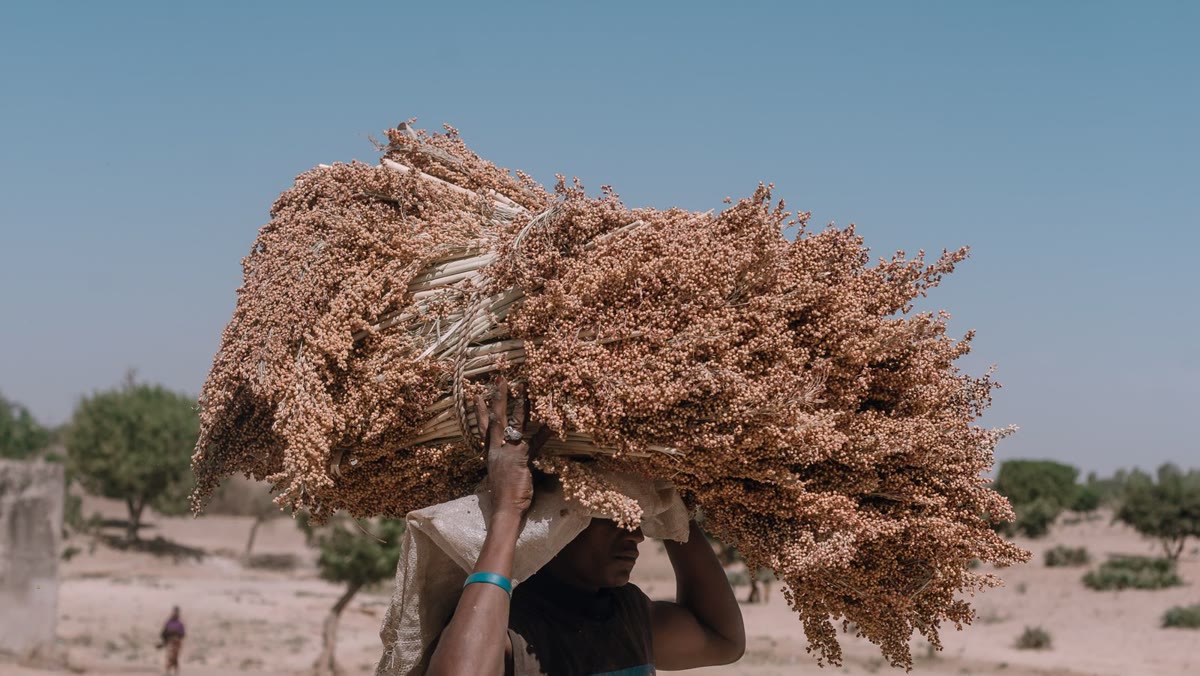
Where did sorghum come from? Africa. Sorghum is a native African grass, and the oldest evidence of people turning it into a crop comes from eastern Sudan, more than 5,000 years ago. Most of the grains on this site were first farmed in the Fertile Crescent or China, so sorghum is a different story: an African domestication that spread across the continent and the world, and is now one of the planet’s most important cereals.
Quick answer: Sorghum came from northeast Africa. The earliest domesticated sorghum known comes from pottery impressions at an eastern Sudan site dated to 3500 to 3000 BC, and a genomic study places the origin of the crop in eastern Sudan and western Ethiopia. Sorghum farming began spreading across Africa around 4,600 years ago.
Where did sorghum come from?
Sorghum came from northeast Africa, in the region of today’s eastern Sudan and western Ethiopia. Wild sorghum is a native African grass that people gathered for thousands of years before they farmed it. The oldest evidence of the domesticated plant comes from eastern Sudan, and modern genetic studies of cultivated sorghum point back to the same region.
That makes sorghum one of the few major cereals domesticated in Africa. A 2017 release on the discovery called it the earliest known native African cultigen, meaning the oldest crop African farmers are known to have domesticated themselves.
When was sorghum domesticated?
Sorghum was domesticated by the fourth millennium BC. The earliest domesticated forms come from a site called KG23 in eastern Sudan, dated to 3500 to 3000 BC and linked to an ancient culture known as the Butana Group. The study, by Frank Winchell, Chris Stevens, Charlene Murphy, Louis Champion and Dorian Fuller, was published in Current Anthropology in 2017.
The finds suggest a gradual process rather than a single moment. According to the release, the Butana Group people were intensively cultivating wild stands of sorghum until the plant began to change genetically into its domesticated forms. For half a century, scholars had suspected that African farmers domesticated sorghum away from the Nile Valley, in the semi-arid tropics with summer rain, but until this find there was no archaeological evidence for it.
How do archaeologists know ancient sorghum was domesticated?
They read the shape of the grain’s husks preserved in pottery. Plant material caught in wet clay leaves impressions that survive after a pot is fired. At KG23, the researchers examined sorghum impressions in broken pottery and studied the spikelets, the small husk units that hold each grain. Domesticated sorghum spikelets look different from wild ones, so the impressions showed which kind the Butana Group had been growing.
What does DNA say about sorghum’s origin?
Genetics agrees with the pottery. A genomic study led by Aude Gilabert, published in Peer Community Journal, built a probability map of where sorghum was first domesticated and located the origin in eastern Sudan and western Ethiopia, which the authors describe as in perfect agreement with the archaeobotanical evidence. Calibrated on archaeological remains, their model puts the start of the spread of sorghum agriculture at around 4,600 years ago.
The same study found that the genetic structure of sorghum across Africa matches the continent’s language groups at several scales. The authors read this as a sign that people and their sorghum spread together, with social preferences and local climates shaping the many types of sorghum grown today.
A third line of evidence comes from ancient DNA. In 2019, a team sequenced a time series of sorghum genomes from a single site in Egyptian Nubia (Nature Plants, 2019). They found no sign of a sudden bottleneck at domestication. Instead, genetic diversity declined steadily over time while harmful mutations accumulated, and later crossing between different races of sorghum helped repair that damage.
Sorghum’s origin at a glance
| Evidence | Date | Where |
|---|---|---|
| Domesticated sorghum in pottery | 3500 to 3000 BC | Eastern Sudan (KG23) |
| Sorghum farming begins to spread | About 4,600 years ago | From eastern Sudan and western Ethiopia |
| Pearl millet domesticated | About 2500 BC | Eastern Mali |
| Sorghum grown in Egypt | Roman period | Nile Valley |
Did ancient Egyptians grow sorghum?
Not in the pharaonic period. Egypt’s staples were emmer wheat and barley, as our post on what ancient Egyptians ate explains, and the 2026 UCLA Encyclopedia of Egyptology entry on cereals lists sorghum among the crops of Roman and modern Egypt. The release on the Sudan find makes the same contrast: Egypt’s Nile Valley had winter rains and grew wheat and barley, while sorghum was a summer-rainfall crop of the savanna to the south.
The confusion has a history. The same encyclopedia entry notes that mid-19th-century scholars misidentified flax harvest scenes in Egyptian tombs as sorghum or millet harvests, partly because sorghum was being grown in Egypt in their own day.
Why did sorghum spread so widely?
Sorghum suited the hot, dry lands where it was born. It is a summer-rainfall crop built for heat, and the genomic study found it adapted to different climate zones as it traveled with farmers across Africa. The 2017 release ranks it among the world’s five most important cereal crops alongside rice, wheat, barley and maize. It is still a staple across hot, dry regions of Africa and India, and it tops our list of drought-tolerant grains.
African farmers domesticated other summer-rain cereals too. The same release notes domesticated pearl millet in eastern Mali around 2500 BC, and Ethiopia gave the world teff. For the different millets and how they compare, see our guide to types of millet.
How to eat sorghum today
Sorghum is naturally gluten-free and easy to cook. Whole grain sorghum simmers into a chewy, rounded grain that holds its shape in salads and bowls; whole sorghum grain is the simplest place to start, and our guide on how to cook sorghum covers the timing. Sorghum flour is one of the most useful gluten-free flours for baking, and the sweet-stemmed varieties give us sorghum syrup.
Frequently asked questions
Is sorghum gluten-free?
Yes. Sorghum is naturally gluten-free, so whole sorghum and pure sorghum flour are safe for a gluten-free diet when they are processed away from wheat.
Is sorghum the same as millet?
No. Sorghum and the millets are different grasses, though they are often grown in the same dry regions and sold side by side.
Is sorghum an ancient grain?
Yes. Sorghum was domesticated in northeast Africa more than 5,000 years ago and has been farmed ever since.
Who studied the oldest domesticated sorghum?
A team including Frank Winchell and Dorian Fuller described the eastern Sudan pottery impressions in Current Anthropology in 2017.
Cook Africa's oldest grain
See our hand-picked sorghum, from whole grain to flour and syrup, with the brands worth buying.
Shop sorghum →