This summer a farmer in southwestern Colorado had his irrigation water cut off by mid-August, weeks early, after a record-dry winter. He had already planned for it. Instead of thirsty crops like chiles and melons, he planted heritage grains and legumes picked for deep roots, quick growth and heat tolerance, and that choice helped keep the farm afloat. Drought-tolerant grains like his are getting fresh attention as water gets scarcer, and many of them are the same ancient grains this site covers. Here are eight worth knowing, what makes them tough, and where even they fall short.
Quick answer: The most drought-tolerant grains include sorghum, millet, fonio, teff, barley, rye, amaranth and the perennial Kernza. What they share is some mix of deep roots, fast maturity and heat tolerance. None of them is drought-proof: yields still drop in a hard drought, and some, like teff, need water to get established.
Which grains handle drought best?
The grains that handle drought best are sorghum, millet, fonio, teff, barley, rye, amaranth and Kernza. Most of them come from hot or dry parts of the world, and a Colorado Department of Agriculture official told the Colorado Sun that grains like sorghum, millets and rye tend to be hardy because they have been through so many different climate cycles, while adding that an ancient grain is not automatically a water-saving one.
Sorghum
Sorghum is a staple across hot, dry regions of Africa and India and one of the world’s most widely grown grains. It is naturally gluten-free and holds its shape with a pleasant chew when cooked; our guide to how to cook sorghum covers the method.
Millet
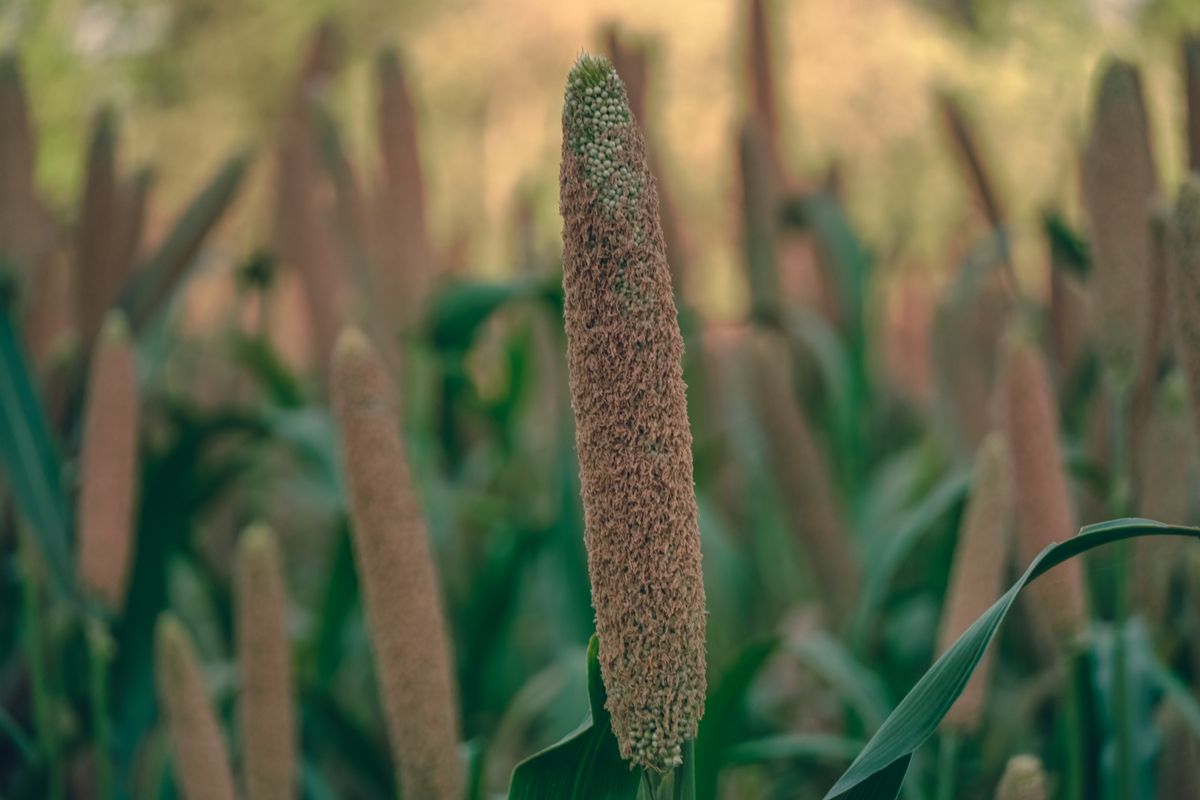
Millet is a family of small-seeded grasses rather than one plant, and pearl millet, the biggest of them by acreage, is a drought-hardy staple across Africa’s Sahel. The common millet on most US shelves is proso millet, a separate species that also copes well with dry summers, which is part of why it became one of the first crops farmed in northern China.
Fonio
Fonio is a tiny West African grain that grows in poor, sandy soil and can be ready to harvest six to eight weeks after sowing, with roots that reach more than a meter deep. A 2026 study still projects it will lose roughly 8 to 10 percent of its suitable growing land as temperatures rise, a reminder that drought tolerance has limits.
Teff
Teff, native to Ethiopia and Eritrea, is known for handling heat and tending to use less water than some other crops once it is established. That last part matters: in 2026, Capital Press reported that two Idaho growers for the Teff Co. sat out the season because of their irrigation water supply after a low-snowpack winter.
Barley
Barley is one of the hardiest of the cereals, and the Colorado farmer put it simply: its roots go down as far as 2 meters. That depth lets it reach moisture that shallow-rooted crops miss.
Rye
Rye made the Colorado agriculture official’s short list of hardy grains alongside sorghum and millets, and it has long been the grain farmers grow where wheat struggles.
Amaranth
Amaranth, domesticated in central Mexico roughly 6,000 to 8,000 years ago, is often called a drought-beater, and it was one of the crops the Colorado farm chose for its dry year. Technically it is a pseudocereal, a seed cooked like a grain.
Kernza
Kernza is the outlier: a perennial grain that grows back for years without replanting. Its roots reach up to 10 feet deep, which lets it draw water far below where annual crops can reach, though it still yields only about 20 to 40 percent as much as wheat.
What makes a grain drought-tolerant?
A grain tolerates drought through some mix of deep roots, fast maturity, heat tolerance and the ability to produce a crop on very little water. When the Colorado farm faced its water cuts, the farmer screened his seed bank for exactly those traits: deep roots, quick growth, tolerance of heat, and the ability to make a crop after only one or two irrigations, as the Colorado Sun reported.
Each of the eight grains above leans on a different trick. Barley and Kernza send roots deep, fonio races to harvest before the soil dries out, and sorghum and millet are built for heat. A crop that finishes fast or reaches deep water simply spends less of its life exposed to the dry spell.
Are ancient grains always better in a drought?
No, and the farmers growing them are the first to say so. Many ancient grains have low or erratic yields, can be hard to grow, and need specialized equipment to clean and process, as the Colorado growers told the Colorado Sun. Kernza yields a fraction of what wheat does, teff still needs water to get established, and fonio’s growing area is shrinking as temperatures climb.
What these grains offer is resilience rather than abundance: a smaller but more reliable harvest in a bad year, and a wider range of crops so that one failed season does not sink the farm.
Where to start in the kitchen
The easiest way to eat more of these grains is to swap them into dishes you already make. Sorghum flour is the most wheat-like of the gluten-free flours for baking, whole grain millet cooks into a fluffy side in 15 to 20 minutes, and whole grain teff makes a creamy porridge. Whole grain amaranth simmers into a similar porridge, and hulled barley, the least processed form of the grain, makes a chewy pilaf. For the broader picture, our guide to what ancient grains are covers the whole family.
Frequently asked questions
Are drought-tolerant grains gluten-free?
Some are and some are not. Sorghum, millet, fonio, teff and amaranth are naturally gluten-free, while barley, rye and Kernza all contain gluten.
Is wheat drought-tolerant?
Only moderately. In 2026 a Kansas drought left one wheat farmer with his lowest yield in years, though durum, the pasta wheat, handles heat better than most and was one of the crops the Colorado farm planted for its dry year.
Is rice a drought-tolerant grain?
No. Most rice is grown in flooded paddies and is one of the thirstiest grains to farm, which is why sorghum and millet are often promoted as alternatives in dry regions.
Cook with a grain built for heat
See our hand-picked sorghum, from flour to whole grain, with the brands worth buying.
Shop sorghum →