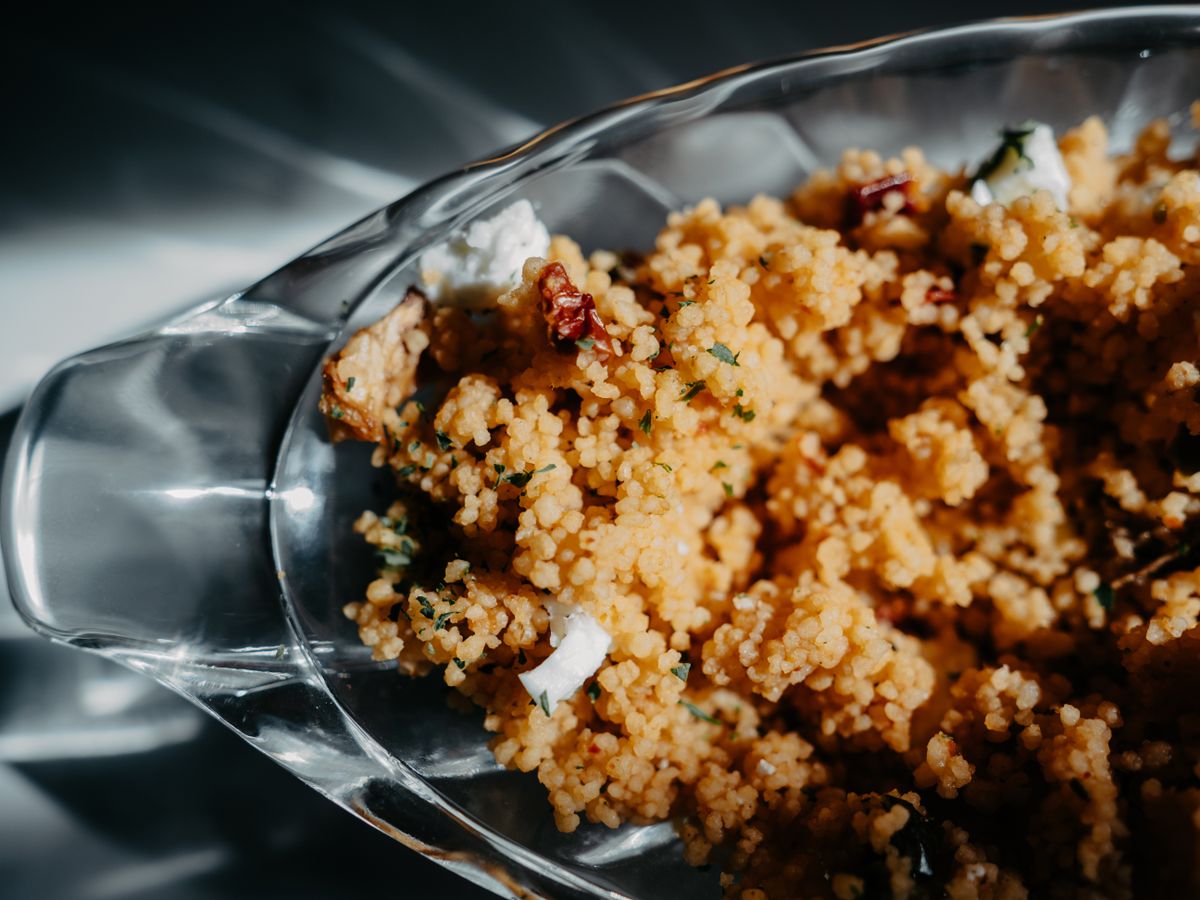
Fonio is one of the oldest grains you have probably never cooked. It is a tiny, gluten-free cereal grown across the savannas of West Africa, where farmers have relied on it for centuries because it ripens fast and grows in sandy, worn-out soil that defeats most other crops. In the kitchen it behaves like a cross between couscous and quinoa: a quick simmer and a few minutes of steaming turn it light and fluffy. It has started showing up in American supermarkets, and in 2026 it landed in the science news too, as researchers worked out how a hotter climate will change where it can grow.
Quick answer: Fonio is a tiny, gluten-free grain from West Africa, mainly Digitaria exilis (white fonio), also sold as fonio millet, acha or hungry rice. It ripens in as little as six to eight weeks and grows in poor, sandy soil. To cook it, use two parts water to one part fonio, bring it to a boil, cover, take it off the heat and let it steam for 5 minutes, then fluff with a fork.
What is fonio?
Fonio is the seed of a West African grass, and the name covers two cultivated species: white fonio (Digitaria exilis), the one you can buy, and black fonio (Digitaria iburua), grown mostly on the Jos-Bauchi Plateau in Nigeria and in northern Togo and Benin. White fonio goes by many local names, including acha in Nigeria and findi in The Gambia, and the English word comes from the Wolof foño.
The grains are tiny, about 1.5 mm long, at roughly 2,000 seeds to the gram. That puts fonio in the same size class as teff, the grain usually called the smallest in the world, and it is why fonio cooks so quickly. It is often grouped with the millets and sold as “fonio millet,” although botanically it belongs to its own genus, Digitaria.
Where does fonio come from?
Fonio comes from the savanna belt of West Africa, from Senegal and Guinea east to Nigeria and Chad. Guinea is by far the largest producer, and in parts of Mali, Burkina Faso, Guinea and Nigeria it is one of the main cereals. A 2013 estimate put West African production at about 587,000 tonnes, almost all of it eaten close to where it was grown.
A 2025 genome study in Nature Communications sequenced 265 samples of fonio and its wild relatives and found that white and black fonio were domesticated separately, with no gene flow between them. The researchers dated a large expansion of fonio farming to about 2,000 years ago, which lines up with the oldest fonio remains archaeologists have found in Nigeria. Fonio then declined over the last few centuries, which the authors tie to social upheaval, the slave trade and the arrival of crops that took less work to process.
That last point is the catch with fonio. Each grain sits inside a husk that is very hard to remove from something so small, and the traditional method was pounding it in a mortar with sand. Mechanical huskers have made cleaned fonio far easier to produce, and that is a big part of why it can now be shipped to grocery stores abroad.
Is fonio gluten-free?
Yes. Fonio is naturally gluten-free, as a 2020 review of fonio’s nutrition and food uses confirms, so it suits gluten-free cooking the same way millet, sorghum and teff do. If you have celiac disease, buy a brand that is labeled certified gluten-free, because any grain can pick up wheat during harvest or packing.
For a broader list of safe swaps, see our guide to gluten-free grains.
What does fonio taste like?
Cooked fonio tastes mild and slightly nutty, and its texture is the selling point: the grains stay separate and fluffy, closer to fine couscous than to the chewy pop of quinoa. Cooked with more liquid and stirred, it turns soft and creamy like cream of wheat, which is how it is often eaten as a porridge in West Africa.
How do you cook fonio?
Cook fonio at two parts water to one part grain: bring it to a boil, cover, cut the heat and let the pot steam for 5 minutes before fluffing. The whole process takes about 12 minutes, and most of that is the water coming to a boil. This basic method, based on the stovetop instructions from the US fonio brand Yolélé, makes enough for two side servings.
- 1/2 cup (about 85 g) fonio
- 1 tbsp (15 ml) olive oil
- 1 cup (240 ml) water
- Pinch of salt
- Stir the fonio and olive oil together in a small saucepan until every grain is coated.
- Add the water and salt and bring to a boil over high heat, about 4 minutes.
- Cover, turn the heat to low and cook for 1 minute.
- Turn off the heat and leave the pot covered for 5 minutes.
- Fluff with a fork and serve.
For a breakfast porridge, use four parts water or milk to one part fonio and simmer for 3 to 5 minutes, stirring, until creamy. Fluffy fonio works anywhere you would use couscous or quinoa: under a stew, in a grain salad, or stuffed into vegetables.
Why are scientists studying fonio?
Because fonio already does what breeders are trying to make other crops do: survive heat, drought and poor soil. Some varieties are ready to harvest 42 to 56 days after sowing, which makes fonio one of the fastest-maturing cereals in the world, and the plant’s roots can reach more than a meter deep. A 2020 fonio genome study found that most of the domestication genes that shaped other cereals were never strongly selected in fonio, which leaves breeders an obvious route to bigger, easier-to-harvest varieties.
Fonio has limits, though, and a 2026 study in Annals of Botany measured them. The team germinated seeds from 37 collections across Guinea, Togo, Mali and Burkina Faso and found that fonio seed germinates best at about 36°C and stops germinating at about 43°C. Combined with climate models, that points to a 7.9 to 10.45 percent loss of the land suitable for growing fonio, hitting Senegal, Mali and Burkina Faso hardest, while new suitable land opens up in Guinea, Ghana, Côte d’Ivoire and Nigeria (the abstract is on PubMed).
Where to go from here
If fonio’s speed appeals to you, two more small gluten-free grains are worth knowing. Our guide to how to cook teff covers its Ethiopian cousin, and how to cook millet covers the millets fonio is usually shelved beside. The common millet and sorghum pages list the flours and whole grains worth buying.
Frequently asked questions
How do you pronounce fonio?
Fonio is pronounced “FOHN-yo,” with two syllables and the stress on the first.
Is fonio the same as millet?
Not exactly. Fonio belongs to the genus Digitaria, separate from the common millets, but it is grown and eaten the same way, so it is often grouped with them and sold as “fonio millet.”
Can you substitute fonio for couscous or quinoa?
Yes. Cooked fonio works in salads, pilafs and grain bowls wherever you would use couscous or quinoa, and it cooks faster than quinoa.
Get a bag of fonio
Yolélé's fonio is the bag this post's cooking method comes from: two parts water, five minutes off the heat.
Shop fonio →Try fonio's millet cousins
See our hand-picked millet, from whole grain to flour, with the brands worth buying.
Shop millet →