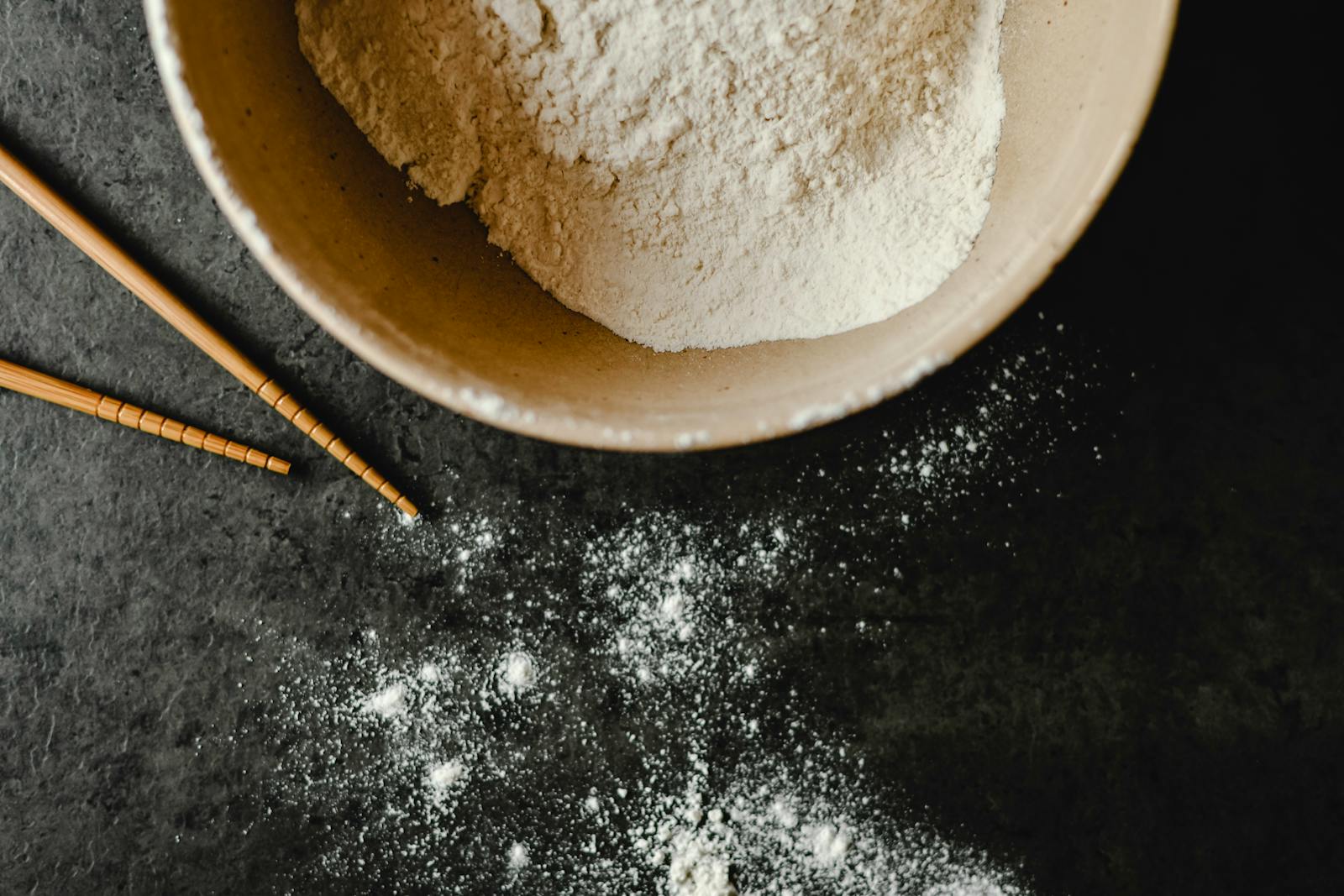
When a friend with coeliac disease first asked me which gluten-free flour to start with, I told her sorghum flour, and I’d give the same answer today. Of all the gluten-free flours in my pantry, sorghum is the one that behaves most like wheat: mild, finely textured, faintly sweet, and forgiving in a way that buckwheat and teff simply are not. It will not fool anyone into thinking they’re eating wheat, but it gets closer than any other single gluten-free flour I know.
This is the flour-focused companion to our how to cook sorghum guide, which covers the whole grain simmered like rice. This post is about the milled flour: how it behaves in a mixing bowl, why it almost never works alone, and the blend ratios that actually produce good baking.
Quick answer: Sorghum flour is a mild, finely milled, naturally gluten-free whole-grain flour, the one that behaves most like wheat of the gluten-free options. It has no gluten, so it cannot build structure alone and bakes up dry and crumbly on its own; use it as 25 to 30 percent of a blend with a starch and a binder like xanthan gum or psyllium. It shines in pancakes, quick breads, cookies, roux, and Indian jowar flatbread.
What is sorghum flour?
Sorghum flour is finely milled whole-grain sorghum, an ancient African cereal grass that is naturally gluten-free. Because the whole kernel is milled, including the bran and germ, it is a whole-grain flour by default, with the fibre and nutrition that implies.
It is sometimes sold as “sweet white sorghum flour” or “jowar flour” (the Hindi name, since sorghum is a staple flour across India). They are the same thing. The flour is pale tan, much lighter in colour than buckwheat or teff flour, with a fine, soft texture closer to wheat pastry flour than to gritty rice flour.
How does sorghum flour behave in baking?
It cannot build structure without a binder, it tastes mild and faintly sweet, and on its own it bakes up dry. Three things are worth understanding before you bake with it.
- It has no gluten, so it cannot build structure on its own. Gluten is the protein network that traps gas and lets wheat dough rise and hold its shape. Sorghum has protein but no gluten, so a 100% sorghum bake has nothing holding it together. It needs a binder.
- The flavour is mild and slightly sweet. This is sorghum’s great advantage. Where buckwheat tastes earthy and teff tastes molasses-dark, sorghum tastes almost neutral, with a faint sweetness that works in both sweet and savoury baking.
- The texture is fine, but 100% sorghum still reads as slightly dry and crumbly. Even finely milled, an all-sorghum bake tends toward a dry, sandy crumb. This is why sorghum is almost always used in a blend.
Why does sorghum flour need a binder?
Because there is no gluten, you have to replace the gas-trapping, crumb-holding job that gluten normally does. There are two common approaches.
- Xanthan gum or psyllium husk. Add roughly 1/4 teaspoon of xanthan gum per cup of sorghum flour for cookies and quick breads, up to 1 teaspoon per cup for yeasted bread. Psyllium husk (1-2 teaspoons per cup) is the binder I prefer for bread because it gives a more bread-like chew; our gluten-free sourdough bread method uses it with sorghum at 30% of the blend.
- Eggs. In pancakes, muffins, and cakes, eggs do enough binding that you can often skip the gum entirely. This is why sorghum pancakes are one of the easiest entry points.
Skip the binder and your bake will crumble the moment it cools. I learned this the hard way with a tray of sorghum shortbread that turned to sand.
Can you substitute sorghum flour 1:1 for wheat flour?
Not on its own, no. But a good sorghum flour shines as the base of a gluten-free flour blend. This is the guidance I give in my baking classes.
| Use case | Sorghum proportion | Notes |
|---|---|---|
| As the base of a GF flour blend | 25-30% of total flour | Pair with starch (tapioca, potato) and a second flour |
| Pancakes and waffles | Up to 50% | Eggs bind; the rest can be oat or rice flour |
| Quick breads and muffins | 30-40% | Add xanthan gum or rely on eggs |
| Cookies | 30-50% | Chill the dough; sorghum dough is soft |
| Yeasted sandwich bread | 20-30% | Needs starch, binder, and ideally a second flour |
| Roux or gravy thickener | 100% | No structure needed, so sorghum works neat here |
| Flatbread (roti/jowar bhakri) | 100% with hot water | The traditional Indian method; hot water is the trick |
A reliable all-purpose blend to start from: 30% sorghum flour, 30% oat flour or brown rice flour, 30% tapioca or potato starch, 10% buckwheat or millet for depth, plus xanthan gum per the ratios above (1/4 to 1 tsp per cup of flour depending on the bake).
Why is 100% sorghum flour gritty or crumbly?
It usually isn’t gritty (that is more a rice-flour problem), but it is crumbly, and the reason is the missing gluten plus the absence of starch. A good gluten-free bake balances three things: a whole-grain flour for flavour and nutrition (sorghum), a refined starch for lightness and binding (tapioca or potato), and a binder for structure (gum or psyllium). Use sorghum alone and you have flavour and nutrition but no lightness and no structure. The fix is never “more sorghum”; it is “add starch and binder.”
The exception is jowar flatbread. Indian cooks have made unleavened sorghum bhakri for centuries by mixing the flour with very hot water, which gelatinises some of the starch and lets the dough hold together without gluten. If you want to experience 100% sorghum done right, that is the dish to try.
Where does sorghum flour shine?
Pancakes, quick breads, cookies, roux, and flatbread. Five places sorghum earns its pantry space stand out.
Pancakes and waffles. The mild sweetness and egg binding make this the easiest sorghum bake. Our buckwheat pancake recipe uses a stronger-flavoured flour; swap in sorghum for a milder, more kid-friendly version.
Quick breads and muffins. Banana bread, zucchini muffins, anything where the crumb is meant to be tender rather than chewy. Sorghum’s softness is an asset here.
Cookies. Sorghum shortbread, chocolate chip cookies, anything where a tender, slightly sandy crumb is welcome. Chill the dough first.
Roux and gravy. As a 1:1 thickener for wheat flour in a roux, sorghum works neat with no adjustment. No structure is needed, so the no-gluten issue never comes up.
Flatbread. Jowar roti and bhakri, the traditional Indian and African use, made with hot water.
How should I store sorghum flour?
In the fridge or freezer, not the cupboard. Because sorghum flour is whole-grain, it contains the germ, and the germ contains oils that go rancid at room temperature within 2-3 months. Refrigerated, the flour keeps about 6 months; frozen, up to a year. A rancid flour smells faintly of old paint or crayon. If yours does, compost it.
This is the same storage rule as our einkorn flour guidance and most whole-grain flours: cold storage, airtight container.
How does sorghum flour compare to other gluten-free flours?
Sorghum is the neutral all-rounder of the gluten-free flours, milder than most, as the comparison below shows.
| Flour | Flavour | Texture | Best for |
|---|---|---|---|
| Sorghum | Mild, faintly sweet | Fine, soft | All-rounder, blend base |
| Brown rice | Neutral, faintly gritty | Slightly sandy | Blend filler |
| Buckwheat | Earthy, strong | Dense | Pancakes, strong flavour |
| Teff | Molasses, nutty-dark | Fine | Injera, dark bakes |
| Almond | Rich, nutty | Moist, heavy | Low-carb, cakes |
| Oat | Mild, oaty | Soft | Pancakes, cookies |
The takeaway: sorghum is the neutral team player. Where buckwheat and teff bring assertive flavour you sometimes don’t want, sorghum stays in the background and lets the rest of the recipe lead.
If you’re new to gluten-free grains in general, our quinoa history post is a good companion read on how a non-wheat staple earns a place in a modern kitchen, and the quinoa grain page covers the most familiar gluten-free pseudocereal. The emmer vs einkorn explainer covers the gluten-containing side of the spectrum for contrast (neither is gluten-free, despite the heritage-grain marketing). For the nutrition numbers, the USDA FoodData Central sorghum entry puts whole sorghum flour at roughly 361 kcal, 8g protein, and 6g fibre per 100g, with a low glycaemic profile relative to rice flour. The Whole Grains Council sorghum page has more on the grain’s history and varieties.
Start with pancakes. Get a feel for how the flour smells and handles. Then build a blend and move up to muffins and cookies. By the time you attempt bread, sorghum will feel like the familiar one in your gluten-free pantry, which is exactly the role it is best suited to play.
Frequently asked questions
Is sorghum flour the same as jowar?
Yes. Jowar is the Hindi name for sorghum, and jowar flour and sorghum flour are the same product. It is a staple flour across India, used for flatbreads like bhakri and roti.
Is sorghum flour good for you?
It is a nutritious choice: a naturally gluten-free whole grain with useful fibre and protein, and a lower glycemic impact than rice flour. Because the whole kernel is milled, it keeps the bran and germ that refined flours lose.
Is sorghum flour low-carb or keto?
No. Unlike almond or coconut flour, sorghum is a cereal grain, so it is starchy and carbohydrate-rich. It suits gluten-free baking, not low-carb or keto baking; reach for a nut flour if carbs are the concern.
Ready to start baking with sorghum?
See our hand-picked sorghum flour and whole grain, with quality brands ready to ship.
Shop sorghum →