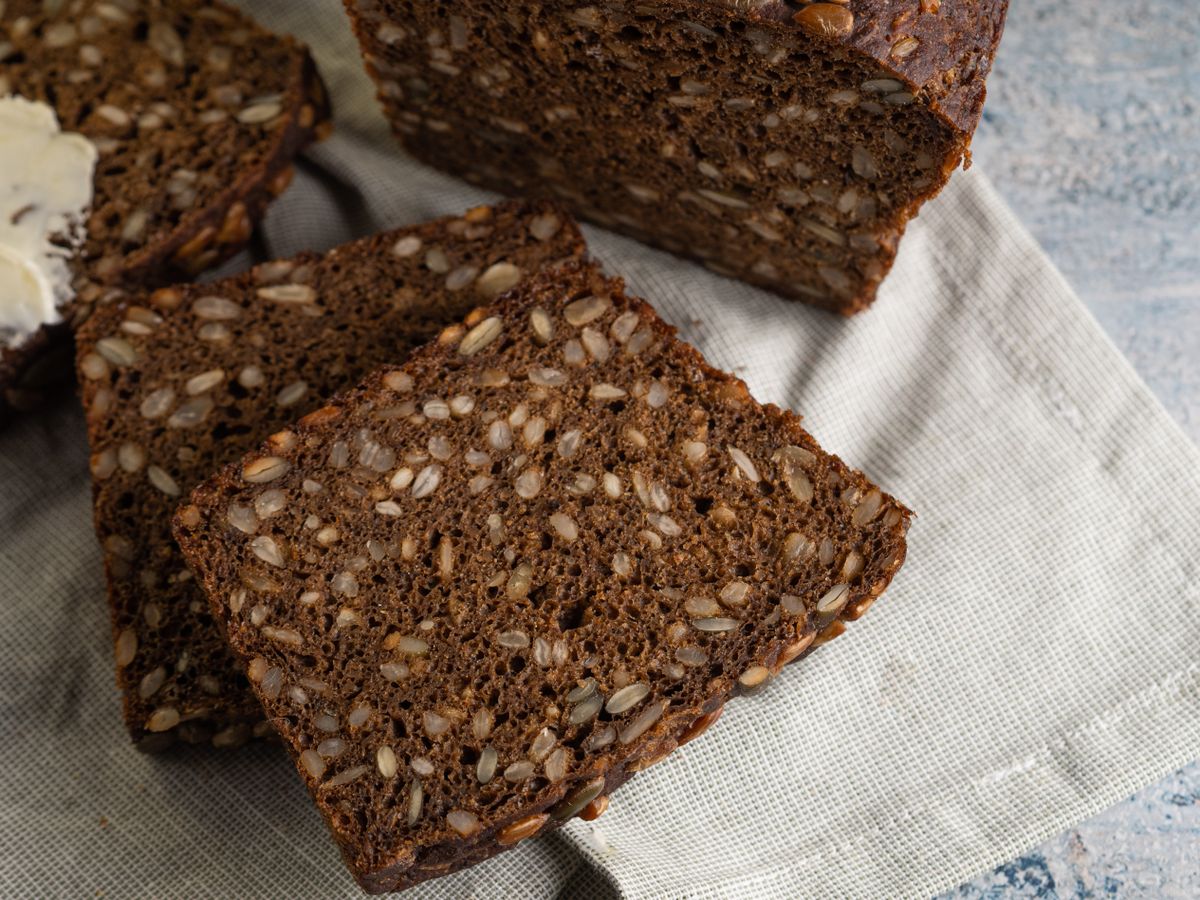
Ask ten people what pumpernickel is and most will describe the color rather than the bread. That is fair enough, because the American deli version is often ordinary rye tinted with molasses and cocoa. The real thing is stranger and better: pumpernickel bread is a Westphalian loaf of coarsely cracked whole rye berries, baked at a low temperature for sixteen to twenty-four hours until the sugars in the grain caramelize the crumb dark brown on their own. No dye, no dough conditioner, just rye and time. As an agronomist I find it one of the purest demonstrations of what a single grain can do when nobody rushes it.
Quick answer: Pumpernickel is a dense, dark German bread made from coarsely ground whole rye, traditionally baked at a low temperature for 16 to 24 hours. That long slow bake, not any added coloring, is what turns it near-black and gives it a faintly sweet, malty flavor. It contains gluten because rye is a gluten grain, and it is one of the highest-fiber, lowest-glycemic breads you can buy.
Why is pumpernickel bread so dark?
Because of what happens to sugar and protein over a very long, very gentle bake. Traditional Westphalian pumpernickel sits in a steam-filled oven at around 250°F for the better part of a day, and in that time the Maillard reaction and caramelization work through the whole loaf rather than just the crust, browning the crumb from the inside out. The result is nearly black, faintly sweet, and intensely aromatic without a gram of added colorant.
The American supermarket version usually takes a shortcut: standard rye dough darkened with molasses, caramel color, coffee, or cocoa powder and baked in a couple of hours. It is a perfectly pleasant sandwich bread, and it is not the same food. The tell is the crumb: real pumpernickel is dense, moist, and almost fudgy, with visible flecks of cracked grain, while the deli loaf is springy and uniform.
Is pumpernickel bread healthy?
By the usual measures, it is one of the better breads on the shelf. Whole rye carries more fiber than whole wheat, and rye’s particular soluble fiber slows digestion enough that pumpernickel posts a notably low glycemic response for a bread, per the fiber and carbohydrate figures in USDA FoodData Central. The long bake also breaks down some starch into simpler sugars that ferment rather than spike. Add the fact that it is usually eaten in thin slices, because it is dense enough to demand it, and the portion takes care of itself.
Two caveats keep it honest. Many American loaves add molasses or sugar for color and sweetness, which changes the math. And pumpernickel is not gluten-free, as our is rye bread gluten-free explainer covers in detail: rye’s gluten protein is secalin, and it is unsafe for celiac disease exactly as wheat is.
What is the difference between rye bread and pumpernickel?
Pumpernickel is a type of rye bread, distinguished by using the whole rye berry coarsely cracked rather than sifted rye flour, and by the marathon bake. Ordinary deli rye uses lighter rye flour blended with wheat flour, rises with yeast, and bakes in an hour or two.
| Bread | Grain | Bake | Character |
|---|---|---|---|
| Pumpernickel (traditional) | Whole cracked rye berries | 16 to 24 hr, low heat | Near-black, dense, malty |
| American pumpernickel | Rye + wheat flour, molasses or cocoa | 1 to 2 hr | Dark brown, springy, mild |
| Deli or Jewish rye | Light rye + wheat flour, caraway | 1 hr | Tan, open crumb, sour |
| Danish rugbrød | Cracked rye + seeds | 1 to 2 hr | Dense, seedy, sliceable |
Our whole grain rye bread guide covers the rugbrød end of that table with a full method, and the marble rye post handles the deli swirl that pairs light and dark doughs.
Why do people call it pumpkin nickel bread?
Because the word is genuinely hard to say, and the mishearing is common enough that “pumpkin nickel bread” turns up thousands of times a month in searches. There is no pumpkin in it and never was. The real etymology is disputed and delightful: the most-repeated story claims Napoleon’s troops dismissed it as bread fit only for his horse Nickel, bon pour Nickel, though most food historians treat that as folklore invented long after the fact. The likelier root is older German, from pumpern, to break wind, and Nickel, a goblin or devil, a rustic joke about what a dense rye loaf does to the digestion. Either way, the name is centuries older than the American deli loaf that borrowed it.
How do you eat pumpernickel bread?
Thinly, and with something assertive. Traditional Westphalian pumpernickel is sold in small dense squares meant to be sliced no thicker than a finger and topped with butter and smoked fish, cured meat, strong cheese, or simply good salted butter. It is the classic base for open sandwiches across northern Europe, and it holds up under anything oily or salty without going soggy. The American version behaves like ordinary sandwich bread and makes an excellent reuben.
For baking at home, the honest advice is that a true 24-hour pumpernickel needs steam-oven conditions most kitchens lack; a Danish-style rugbrød approach gets you the dense, dark, seedy loaf without the marathon. Start with a good dark rye flour or whole rye berries and our whole grain rye bread method.
Where to go from here
Rye rewards patience more than any grain in the cupboard, and pumpernickel is that principle taken to its limit. The rye grain page covers its agronomy and nutrition, the rye flour guide explains light versus dark versus whole grinds, and how to cook rye berries puts the whole grain to work outside the oven. For the wider context of heritage loaves, our ancient grain bread guide maps where rye sits among the older wheats. And if you would rather buy a genuine Westphalian loaf than bake one, our guide on where to buy German pumpernickel names the brands worth trusting.
Frequently asked questions
Does pumpernickel bread contain gluten?
Yes. Rye is a gluten grain, and its gluten protein secalin triggers the same immune response as wheat in celiac disease. No form of pumpernickel is safe gluten-free; our gluten-free grains guide covers the breads that are.
Is pumpernickel bread sourdough?
Traditionally yes, in part: authentic Westphalian pumpernickel is leavened with a rye sourdough starter, which is also what keeps the dense crumb from turning gummy. Many commercial versions use commercial yeast plus added acid instead.
Why is pumpernickel bread so expensive?
Because the traditional bake occupies an oven for the better part of a day, which is enormously expensive in a commercial bakery, and imported German loaves carry shipping on a very heavy product. The vacuum-packed squares cost more per pound than almost any other bread for exactly that reason.
How long does pumpernickel bread last?
Far longer than most bread: the density and acidity of a real rye loaf keep it good for a week or more wrapped at room temperature, and vacuum-sealed imported pumpernickel keeps for months unopened. Never refrigerate it, which dries the crumb.
Bake with real dark rye
Dark rye flour is the starting point for every loaf on this page, from rugbrød to a deli swirl.
Shop rye flour →Explore the rye pantry
Rye berries, flour, and the rest of the heritage grains we profile with history, nutrition, and recipes.
Shop rye →