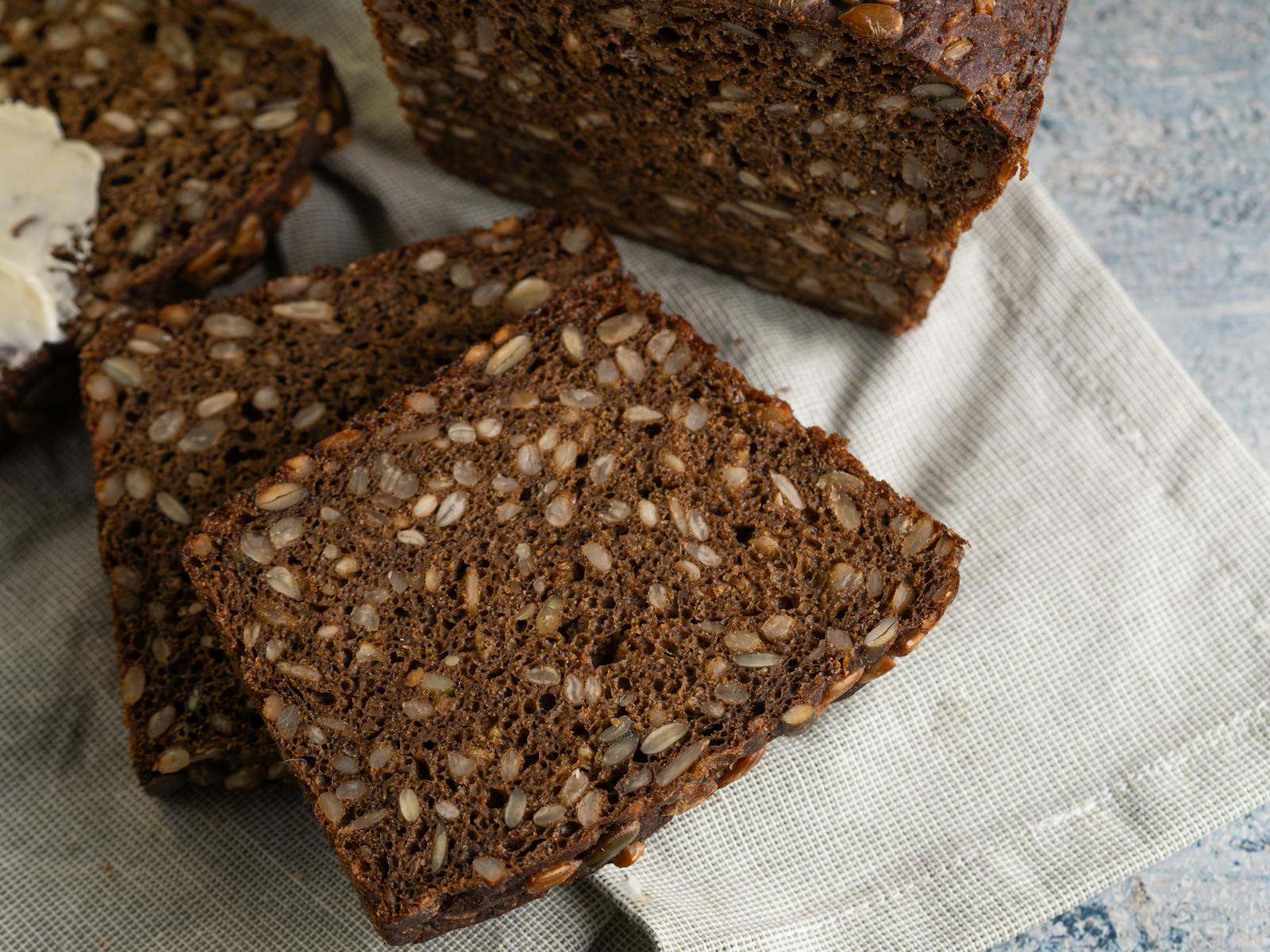
I bake dark Nordic loaves for a living and I get the is rye bread gluten free question constantly, often from shoppers who have heard somewhere that rye is “different” or “easier on the gut” than wheat. I will be as direct as my grandmother would be: no. Rye bread is not gluten-free, it is not safe for anyone with celiac disease, and the marketing copy that suggests otherwise is the kind of half-truth that gets people sick.
Rye contains gluten. The specific gluten protein is called secalin, the rye-family equivalent of the gliadin and glutenin in wheat. Secalin is structurally close enough to wheat gluten that it triggers the same celiac autoimmune response, and a 100% rye loaf still carries well above the FDA’s 20 parts-per-million threshold required to label a food gluten-free. If you have celiac disease, every rye bread you encounter at the bakery, the grocery store, or your aunt’s kitchen counts as off-limits.
Quick answer: No, rye bread is not gluten-free and is not safe for celiacs. Rye has its own gluten protein, secalin, which triggers the same celiac reaction as wheat gluten, and a 100 percent rye loaf still measures about a thousand times over the 20 ppm gluten-free limit. Rye also carries a high risk of wheat cross-contamination. Traditional dark ryes like pumpernickel, borodinsky, and rugbrød all contain gluten.
What gluten does rye contain?
Rye contains two main storage proteins of concern: secalin (the prolamin, equivalent to wheat’s gliadin) and a glutelin fraction equivalent to wheat’s glutenin. These rye proteins share enough amino-acid sequence similarity with wheat gluten that the immune system of a person with celiac disease cannot tell them apart. Both trigger the same inflammatory cascade in the small intestine, the same villi damage, and the same long-term nutritional consequences if eaten regularly.
This is the same story for barley, which contains hordein. Wheat, barley, and rye are the three grains universally excluded from a gluten-free diet, and the Celiac Disease Foundation’s gluten-free guidance lists all three explicitly.
Does rye have less gluten than wheat?
By weight, yes, slightly. Whole rye flour typically tests at around 8-12% protein, of which roughly 30-40% is gluten (secalin plus glutelin). Whole wheat flour typically tests at 11-14% protein with a similar gluten fraction. So a 100g serving of rye bread has somewhat less total gluten than a 100g serving of wheat bread.
This number is interesting and completely irrelevant to celiac safety. The FDA threshold for “gluten-free” is less than 20 parts per million of gluten in the final food. Rye bread comes in at roughly 20,000 to 25,000 ppm, the same order of magnitude as wheat bread, and about a thousand times the gluten-free threshold. “Less than wheat” is not “safe for celiacs”; it is closer to “still very much off-limits.”
For more on what the 20 ppm threshold actually means and where it came from, our is sourdough bread gluten free post covers the threshold and the long-fermentation question in depth. The same threshold applies here, with the same conclusion.
What about traditional rye breads like pumpernickel, borodinsky, or rugbrød?
All of them contain gluten, as the table of traditions from my own pantry shows.
| Bread | Origin | Rye content | Gluten status |
|---|---|---|---|
| Pumpernickel | German | Mostly rye, often 100% | Contains gluten |
| Borodinsky | Russian | 80-100% rye | Contains gluten |
| Rugbrød (Danish) | Denmark | Mostly rye, often whole grain | Contains gluten |
| Limpa | Swedish | Rye and wheat blend | Contains gluten |
| Hardtack (knäckebröd) | Scandinavian | Often 100% rye | Contains gluten |
| Marble rye | Jewish-American | Rye and wheat | Contains gluten |
The Scandinavian and German traditions I grew up with treat rye as a serious daily bread and produce some of the world’s most distinctive loaves. None of them are gluten-free, and the tradition does not pretend otherwise. The historical context of these breads is dense and proud, but it does not change the protein chemistry.
Is rye flour gluten-free?
No, for the same reasons. Whole rye flour and light rye flour both carry secalin. Our existing rye-flour post covers what the flour actually does in baking (where it shines, where it struggles in a blend). The short version: a good dark rye flour is one of my favourite baking tools and one of the worst choices for anyone needing gluten-free flour.
Is there a cross-contamination problem with rye?
Yes, and arguably worse than with oats. Rye is often grown in rotation with wheat, harvested with the same combines, milled in the same facilities, and stored in the same silos. Commercial rye flour and rye bread routinely show measurable wheat contamination on top of their inherent secalin content. This compounds the celiac risk in a way that is irrelevant if you already cannot eat rye, but worth knowing for non-celiac shoppers who imagine that “rye” and “wheat” are well-separated supply chains in modern milling. They are not.
The takeaway: nobody on a strict gluten-free diet should treat a “100% rye” label as meaningfully safer than a wheat-containing label. The label is honest about rye, but it cannot promise the absence of trace wheat.
What about non-celiac gluten sensitivity (NCGS)?
This is the one place rye behaves differently from wheat, and not necessarily in your favour. Some people with NCGS who tolerate long-fermented wheat sourdough still react to rye, because secalin appears to be slightly more reactive than wheat gliadin in those individuals. The mechanism is not fully understood, but the practical implication is that “I’m fine with wheat sourdough” does not automatically extend to “I’m fine with rye sourdough.”
If you are NCGS and curious, introduce a small amount of long-fermented rye and watch for symptoms over 24-48 hours before deciding. For celiacs, this question is moot: rye is off the table regardless of fermentation.
What are gluten-free alternatives to rye bread?
The honest answer is that nothing tastes exactly like rye, because the flavour of rye comes from the grain itself. But three breads come close enough in flavour and texture to deserve mention if you are missing dark loaves on a gluten-free diet.
- Whole-buckwheat dark bread. Earthy, dense, deeply flavoured, naturally gluten-free. The closest single-flour analogue. Our buckwheat flour guide covers how to bake with it.
- Sorghum-based dark loaves. Milder than buckwheat but capable of carrying caraway, molasses, and the seed mix that defines a rugbrød-style loaf. Our sorghum flour post is the practical companion.
- Teff injera. Not a sliced loaf, but the dark Ethiopian flatbread is a genuinely gluten-free dark-grain product with its own deep, fermented character. Our gluten-free grains hub covers teff and the broader pseudocereal landscape.
For the broader heritage-grain-vs-gluten conversation, our emmer vs einkorn comparison covers the wheat side of the spectrum (also not gluten-free, despite the heritage marketing), and the spelt grain page covers another gluten-bearing heritage option that often gets confused with safe alternatives, and the gluten-free comparison extends through our is buckwheat gluten free and is quinoa gluten free posts. The USDA FoodData Central rye entry puts whole rye at roughly 338 kcal, 10g protein, and 15g fibre per 100g, which is genuinely excellent nutrition for anyone who can eat it. For everyone else, see the alternatives above.
Rye bread is dark, dense, complicated, deeply flavoured, and contains gluten. All of those facts have been true for the entire span of human rye baking. The label on the bag will not change them.
Frequently asked questions
Is pumpernickel gluten-free?
No. Pumpernickel is a mostly- or all-rye bread, so it contains secalin, rye’s gluten protein, and is unsafe for celiacs. Its dark colour comes from long, slow baking, not from any grain that would make it gluten-free.
Is there such a thing as gluten-free rye bread?
Not from actual rye. What is sold as “gluten-free rye-style” bread is made from gluten-free flours like buckwheat and sorghum, flavoured with caraway and molasses to mimic rye’s taste. It is a good stand-in, but it is not rye.
Is rye healthier than wheat?
For people who can eat gluten, whole rye is genuinely excellent: higher in fibre, more filling, and gentler on blood sugar than refined wheat. None of that helps a celiac, though, because the gluten makes it off-limits regardless of its nutrition.
Stock up on Rye
See our hand-picked Rye, from flour to whole grain, with the brands worth buying.
Shop Rye →