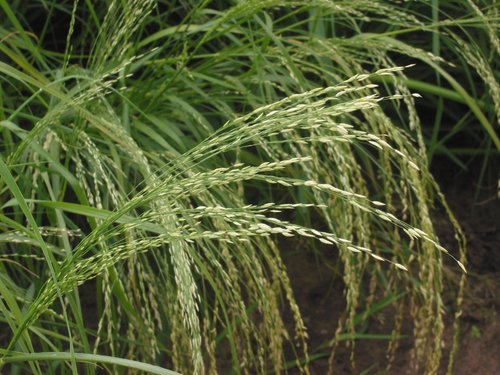
Teff is the smallest grain in the world, an ancient gluten-free cereal about the size of a poppy seed that has fed Ethiopia and Eritrea for thousands of years. If you have eaten the soft, tangy flatbread called injera, you have already met teff, because that is what injera is made from. So when people ask what is teff, the simplest answer is that it is a tiny, nutrient-dense whole grain you cook much like a fine porridge or grind into flour. It happens to be one of the most nutritious grains you can put on your plate, and because it is naturally gluten-free, it has found a second life well beyond the Horn of Africa.
Quick answer: Teff is the world's smallest grain, an ancient gluten-free cereal from the Ethiopian highlands about the size of a poppy seed. Because it is too tiny to refine, it is always eaten whole, which makes it exceptionally rich in fibre, iron, and calcium. Its most famous form is injera, the soft, tangy Ethiopian flatbread, and it also cooks into a smooth porridge in about 15 minutes. It is naturally gluten-free.
What exactly is teff?
Teff is the seed of a grass, Eragrostis tef, and its defining feature is its size. The grains are so small that roughly 150 of them weigh about as much as a single grain of wheat. That tininess is the whole story of teff. Because you cannot practically hull or refine a seed that small, teff is almost always eaten as a whole grain, bran, germ, and all. That is why its nutrition holds up so well: there is no refined white version stripping the good parts away.
It comes in shades from ivory to deep reddish brown, and the color hints at flavor. Lighter teff is milder, darker teff is earthier and a little more iron-rich.
Is teff gluten-free?
Yes. Teff is naturally gluten-free and is safe for people with celiac disease or gluten sensitivity, with the same caveat that applies to every naturally gluten-free grain: buy certified gluten-free teff if you are highly sensitive, because shared milling equipment can introduce cross-contact. The grain itself contains no gluten, which is exactly why injera works for so many people who cannot eat wheat bread. The Celiac Disease Foundation makes this whole-grain-versus-handling distinction clearly.
This is part of what makes teff genuinely useful rather than just fashionable. It gives gluten-free eaters a true whole grain with real substance, which our gluten-free grains roundup sets alongside the other options.
Where does teff come from?
Teff was domesticated in the Ethiopian highlands thousands of years ago and remains the backbone of the cuisine there and in Eritrea. Its most famous form is injera, the large, spongy, slightly sour flatbread that doubles as plate and utensil across the region. The teff flour is fermented for a few days, which gives injera its characteristic tang, then poured and cooked into a soft round covered in tiny bubbles. Teff is so central to the culture that it was for a time a protected export, and it is now grown in small quantities in the United States, Australia, and Europe to meet demand.
What does teff taste like, and how do you cook it?
Teff has a mild, malty, faintly cocoa-like flavor that leans sweeter in the ivory variety and earthier in the brown. You can cook the whole grain into a creamy porridge in about 15 to 20 minutes, where its small size gives a naturally smooth, almost custardy texture. A bag of whole grain teff is the place to start for porridge, and teff flour is what you want for injera, pancakes, and gluten-free baking.
For the full method, see how to cook teff, and for specific dishes from injera to sweet bakes, our teff flour recipes roundup. Teff flour also works in mixed gluten-free baking, though its strong flavor means it is usually one player in a blend rather than the whole loaf.
Is teff good for you?
This is where teff really stands out, and it is the reason I reach for it so often. For a grain, it is unusually rich in minerals, as the table below shows.
| Nutrient | What teff offers |
|---|---|
| Iron | High for a plant food, long credited in the Ethiopian diet |
| Calcium | Among the highest of any grain |
| Fiber | Excellent, since it is always eaten whole |
| Protein | Around 13 percent, with a good amino acid balance |
| Resistant starch | Notable, which supports gut health and steadier blood sugar |
Full figures are available through USDA FoodData Central. The calcium and iron numbers are the headline, because both are minerals many people fall short on, and few grains supply them in meaningful amounts. As always, teff is a food and not a supplement, so the honest framing is that it is a genuinely strong whole-grain choice rather than a cure for anything. For an everyday grain that quietly does a lot of nutritional work, it is hard to beat.
How does teff compare to other gluten-free grains?
Teff sits in the same family of gluten-free ancient grains as quinoa, millet, and sorghum, but it brings its own strengths. It beats most of them on calcium and iron, cooks faster and smoother thanks to its size, and carries more flavor. Quinoa edges it on complete protein and is easier to find, while millet is milder and cheaper. If you want the fuller picture of the family, the common millet, sorghum, and quinoa profiles are good companions, and the history of quinoa shows how its better-known cousin became a global staple. For the gluten-bearing side of the ancient-grain world, what is spelt covers the wheat family.
Where to go from here
Teff is the grain to reach for when you want serious nutrition, a gluten-free whole grain, and a flavor with real character. Start with the teff profile for everything in one place, then move to how to cook teff when you are ready to make your first pot of porridge or batch of injera.
Frequently asked questions
What is injera made of?
Injera is made from teff flour and water, fermented for a few days so wild yeast gives it its signature sour tang, then poured onto a hot griddle and cooked into a large, spongy, bubbled flatbread. Traditional injera is 100 percent teff, though some versions stretch it with wheat or barley flour, which are not gluten-free.
Is teff the same as millet?
No. Both are tiny, ancient, gluten-free grains, but they are different species: teff is Eragrostis tef and millet is a group of grasses like proso and finger millet. Teff grains are far smaller and richer in calcium and iron, while millet is milder and cheaper.
Is teff really high in iron and calcium?
Yes, unusually so for a grain. Teff is one of the best plant sources of calcium among cereals and a solid source of iron, largely because its size means it is always eaten whole, bran and germ included. Both are minerals many diets fall short on.
Cook with teff
See our hand-picked teff, from whole grain to flour, with the brands worth buying.
Shop teff →