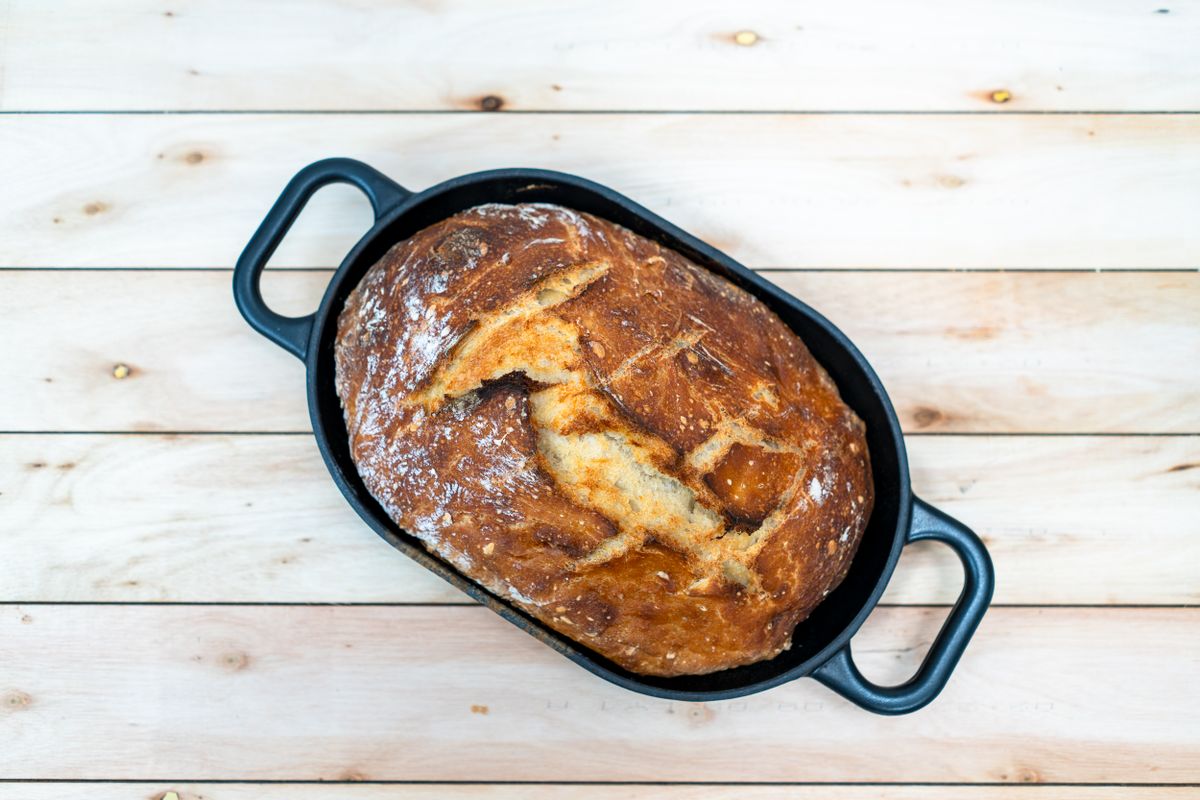
The question I get asked more than any other about bread is not about flour or starter, it is about the pot. What size Dutch oven for bread, and does it really matter? It does, more than most people expect, and the good news is the answer is simple: a 5 to 7 quart Dutch oven handles almost any loaf a home baker will make, and a 5 or 6 quart round is the one I would buy first. Too small and the dough scorches against the sides; too large and it struggles to trap the steam that gives a loaf its crust. Here is how to pick the right size, why it matters, and the sizes I actually reach for.
Quick answer: For bread, a 5 to 7 quart Dutch oven is the sweet spot, and 5 to 6 quart is ideal for a standard loaf made with about 500g of flour. What size Dutch oven for sourdough bread is the same answer: a 5 or 6 quart round suits a boule, while a longer oval (6 to 7 quart) suits a batard. Smaller than 4 quart crowds the dough and risks scorching; larger than 7 quart wastes heat and traps less steam. When in doubt, buy the 5.5 to 6 quart round.
What size Dutch oven is best for bread?
A 5 to 7 quart pot is best for bread, with 5 to 6 quart the safe default for a standard loaf. That range gives a typical boule room to spring upward without spreading into a thin disc, while staying small enough to hold the steam close around the loaf. A Dutch oven works by trapping the moisture the dough releases in the first minutes of baking, and that trapped steam is what keeps the crust soft enough to expand before it sets into a thin, glossy shell. A pot in this range does that job for the loaf sizes almost every home recipe is written for, which is why our Dutch oven bread recipe calls for exactly this size.
What size Dutch oven for sourdough bread specifically?
The same 5 to 7 quart range, chosen by the shape of your loaf rather than anything special about sourdough. A round boule, the classic sourdough shape, wants a 5 to 6 quart round pot so it can rise tall. A longer batard wants a 6 to 7 quart oval so the ends are not crushed against the pot. Sourdough is not more demanding of the pot than yeasted bread; it is the same wet, high-hydration dough needing the same steam and the same room to spring. If you are still building your starter, our 7-day starter method and einkorn sourdough guides pair with any pot in this range.
Why does Dutch oven size matter for the rise?
Because size controls two things at once: how much the loaf can spring, and how well the pot holds steam. Get the pot too small and the dough hits the sides before it has finished rising, so it scorches where it touches the hot metal and cannot climb any higher. Get it too large and two problems appear. The dough spreads outward across the wide base instead of rising up, giving a flatter loaf, and the extra empty volume dilutes the steam so the crust sets drier and thicker. A right-sized pot keeps the loaf contained enough to grow upward and snug enough that its own steam stays wrapped around it. That balance is the whole reason the pot matters more than the brand.
What size Dutch oven do you need for your loaf?
Match the pot to how much flour your recipe uses, since that is what sets the dough’s final size. The table covers the loaves a home baker actually makes.
| Loaf | Flour weight | Dutch oven size | Shape |
|---|---|---|---|
| Small boule | ~350 g | 4 to 5 qt | Round |
| Standard boule | ~500 g | 5 to 6 qt | Round |
| Large boule | ~700 g | 7 qt | Round |
| Batard / oval loaf | ~500 g | 6 to 7 qt | Oval |
| Two small loaves | varies | 7+ qt or bake separately | Either |
Most sourdough and no-knead recipes are written for about 500g of flour, which is why the 5 to 6 quart round is the workhorse. If you mostly bake one everyday loaf, that single pot will cover you for years. The Lodge 6-quart enameled round is the size I recommend first, and a cast-iron combo cooker is the clever budget alternative, since its shallow skillet base lets you slide the dough in flat instead of dropping it into a deep, knuckle-burning well. Once you have settled on a size, our Dutch oven picks compare five pots across every budget.
Round or oval: which Dutch oven shape for bread?
Round for boules, oval for batards, and if you only buy one, buy round. A round pot matches the round boule that most sourdough and artisan recipes produce, and it heats evenly with no corners for the dough to under-fill. An oval pot is worth having only if you specifically bake longer batard-shaped loaves, where the extra length keeps the ends from being squashed. The trade-off is that an oval heats a little less evenly and a round loaf placed in it leaves cold, empty ends. For a first pot, and for almost all the recipes on this site, round is the answer. Shape the loaf to the pot with a banneton that matches, round basket for the round pot.
Can a Dutch oven be too big for bread?
Yes, and it is the more common mistake than going too small. A 9 quart or larger pot, the kind sold for stews and whole chickens, gives a single loaf too much room: the dough slumps outward, the crust comes out paler and thicker because the steam is spread thin, and the heavy lid is a genuine hazard to lift at 475°F. You can bake bread in a large pot in a pinch, and it will be edible, but it will not spring or crust like the same dough in a right-sized one. If your only Dutch oven is a big family braiser, it will get you started, but a 5 to 6 quart pot is the upgrade that visibly improves the loaf. For the workarounds when you have no suitable pot at all, our Dutch oven bread guide covers baking on a stone with a steam tray instead.
Where to go from here
Size sorted, the next question is which pot, and our best Dutch oven for sourdough guide answers it: enamelled or bare, and why a combo cooker is easier to load. After that, the rest is flour and time. A 5 to 6 quart round Dutch oven will bake everything from a simple no-knead loaf to a whole grain sourdough, and it pairs naturally with fresh-milled flour, so if you grind your own our home grain mill picks sit alongside it. Heritage flours like spelt and rye bake beautifully in the same pot with the small tweaks our grain guides cover, and the Real Bread Campaign is a good independent place to keep learning once your first pot loaf comes out. Buy the right size once and it becomes the most-used pot in the kitchen.
Frequently asked questions
Is a 5 quart Dutch oven big enough for sourdough bread?
Yes, a 5 quart round is big enough for a standard sourdough boule made with about 500g of flour, and it is a good first pot. Go up to 6 quart only if you often bake larger loaves or want a little extra headroom for a dramatic oven spring.
Can you bake bread in a 7 quart Dutch oven?
Yes. A 7 quart pot is at the top of the useful range and works well, especially for larger boules or oval batards. A single standard loaf will spread a touch more than in a 5 to 6 quart pot, but the result is still very good; it is only past about 8 to 9 quart that the extra size starts to hurt the crust and rise.
Does the Dutch oven need to be preheated for bread?
Yes, almost always. Heating the empty covered pot for 30 minutes before the dough goes in is what gives the loaf its oven spring and crackly crust, and it matters far more than the exact size. Lower the dough in on parchment to avoid burning your hands.
Get the right-sized pot
A 6-quart enameled round is the everyday pick for bread; a cast-iron combo cooker is the cheaper, easier-to-load route in.
Shop Dutch ovens →Bake it with heritage flour
See our hand-picked spelt and rye, the grains that bake beautifully in a Dutch oven.
Shop spelt →