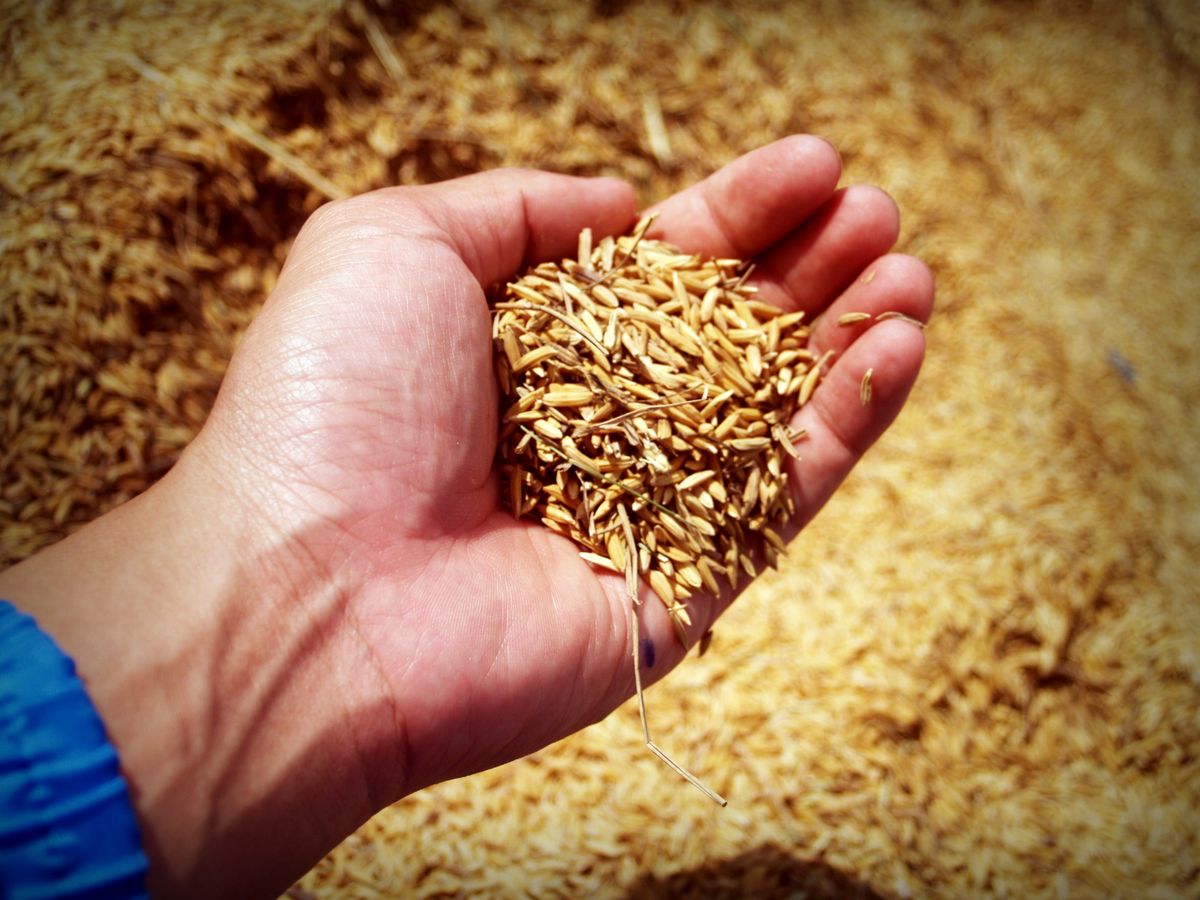
Where did rice come from? Asian rice, the rice most of the world eats, was domesticated in southern China from a wild grass, and the process took thousands of years. A study published in November 2026 from a site near Taihu Lake in the lower Yangtze adds fresh numbers to that story, showing domesticated rice slowly taking over a single village’s fields across three successive cultures. Here is what the archaeology and the genetics say, including the places where they still disagree.
Quick answer: Asian rice came from a wild rice, Oryza rufipogon, in southern China. Rice remains from Shangshan in the lower Yangtze are about 9,400 years old and already look partly domesticated, but fully domesticated rice took thousands of years to win out. African rice is a separate crop, domesticated from a different wild rice in West Africa.
Where did rice come from?
Rice came from southern China. Asian rice, Oryza sativa, was domesticated from a wild rice called Oryza rufipogon, and the earliest evidence of people growing it comes from the lower Yangtze River valley in Zhejiang province. Genetic studies agree that the crop began in southern China, though, as the sections below explain, they point to a different river valley than the archaeology does.
There is a second, separate rice. African rice, Oryza glaberrima, was domesticated in West Africa from its own wild ancestor, Oryza barthii. The rice in almost every supermarket is the Asian species.
When was rice domesticated?
Rice domestication began around 9,000 to 9,400 years ago and continued for several thousand years. The oldest dated rice comes from the Shangshan and Hehuashan sites in the lower Yangtze. A 2017 study in PNAS dated rice phytoliths (microscopic silica bodies from the leaves) directly, at about 9,400 and 9,000 years old, and found their shape closer to domesticated rice than to wild rice. The authors concluded that domestication may have begun at Shangshan at the very start of the Holocene.
“Began” is the key word. Every later site shows wild and domesticated rice growing side by side for thousands of years, with the domesticated type slowly gaining ground.
How do archaeologists tell wild rice from domesticated rice?
They look at the spikelet base, the small scar where each grain attached to the plant. Wild rice shatters: ripe grains break off cleanly and fall to the ground to reseed, leaving a smooth scar. Domesticated rice does not shatter, so the grain has to be threshed off, which leaves a rough, torn base. Counting the two kinds in a pile of charred rice gives the share of domesticated plants in a harvest. The same shattering trait separates wild from domesticated wheat, as our post on where wheat came from explains.
How long did rice domestication take?
Thousands of years. The evidence from the lower Yangtze shows the domesticated share rising slowly from one period to the next.
| Site | Age | What it shows |
|---|---|---|
| Shangshan | About 9,400 years | Rice phytoliths, partly domestic in shape |
| Huxi | 9,000 to 8,400 years | Oldest spikelet bases, wild and domestic mixed |
| Tianluoshan | About 6,900 to 6,600 years | Domestic share rises from 27% to 39% |
| Banqiaotou | Majiabang to Liangzhu periods | Domestic share rises from 57% to about 82% |
A 2016 study in Scientific Reports described the spikelet bases from Huxi, dated 9,000 to 8,400 years ago, as the oldest found in China. They include wild, intermediate and domesticated forms, so selection for non-shattering rice was already underway. The same study traced continuing selection through later sites, including Kuahuqiao, Tianluoshan, Majiabang and Liangzhu, the last dated 5,300 to 4,300 years ago, and called rice domestication a prolonged process.
At Tianluoshan, a 2009 study in Science found the share of non-shattering domesticated rice rising from 27% to 39% between about 6,900 and 6,600 years ago. Over the same three centuries, rice grew from 8% to 24% of all plant remains, a sign that people were eating more farmed rice and fewer wild foods. Weeds typical of rice fields increased too.
What did the 2026 Banqiaotou study find?
The Banqiaotou study found domesticated rice steadily taking over across three cultures at one site in northern Zhejiang. Published on 14 November 2026 in Archaeological and Anthropological Sciences, the team recovered 248,764 charred plant remains from 120 flotation samples. Rice dominated: 2,717 grains and 239,932 spikelet bases, against only five grains of foxtail millet.
Domesticated-type spikelet bases made up 57.20% of the Majiabang-period assemblage and 69.86% of the Songze-period assemblage. One Liangzhu-period pit reached 81.63%, which the authors treat as a local result consistent with the regional trend rather than a figure for the whole site. The weeds fit wet-field cultivation, and the grains that could be measured fall mostly in the range of japonica rice. The authors describe the rise of rice farming around Taihu Lake as protracted and uneven, shaped by environment, farming practice and changing social organization.
The five millet grains are a reminder that the north and south of China farmed differently. While the lower Yangtze turned to rice, northern China was building its agriculture on millet, as our post on the first millet farmers describes.
Where does the genetic evidence say rice came from?
Genetics points to a different river. A 2012 study in Nature sequenced 446 wild Oryza rufipogon plants and 1,083 cultivated varieties and concluded that japonica rice was first domesticated from a specific wild population around the middle Pearl River in southern China. In that model, indica rice, the long-grain type common across South and Southeast Asia, developed later as early japonica rice spread and crossed with local wild rice.
The archaeology, meanwhile, keeps finding the oldest domestication evidence in the lower Yangtze, more than 1,000 km to the northeast. The two lines of evidence agree on southern China and on japonica coming first, but not yet on the exact river valley.
Where did African rice come from?
African rice was domesticated in West Africa from the wild rice Oryza barthii. The inner Niger delta was long suggested as its center of origin, but a 2019 genomic study of 282 plants found that the key domestication mutations trace back to wild populations in several parts of West and Central Africa, and proposed that African rice came from a diffuse, multiregional process rather than one center. Later work continues to debate that.
How to cook rice today
All true rice is naturally gluten-free, a point our guide to whether rice is gluten-free covers in detail. North American wild rice is a different grass altogether; see how to cook wild rice. For everyday rice, a fuzzy-logic cooker takes the guesswork out of the water ratio: the Zojirushi Neuro Fuzzy is a popular step-up pick, and our rice cooker recipes show how much else it can make. For baking, brown rice flour keeps the whole grain, and the rice flour guide explains the different types.
Frequently asked questions
What is the wild ancestor of rice?
Asian rice was domesticated from the wild rice Oryza rufipogon, according to a 2012 genome study of 446 wild and 1,083 cultivated plants. African rice comes from a different wild species, Oryza barthii.
Is japonica or indica rice older?
Japonica. The 2012 genome study found japonica was domesticated first in southern China, and indica developed later when japonica crossed with local wild rice in South and Southeast Asia.
Is wild rice related to rice?
Only distantly. North American wild rice belongs to a different genus of grasses, so it is not a wild form of the rice grown in Asia.
How old is the oldest rice?
The oldest dated rice remains, from Shangshan in China’s lower Yangtze, are about 9,400 years old.
Cook rice the easy way
Start with a budget fuzzy-logic cooker, or step up to the Zojirushi for perfect rice and porridge every time.
Shop rice cookers →Meet the other ancient grains
From millet to einkorn, see the grains that fed the first farmers and the brands worth buying today.
Browse all grains →