 By Iona Beckett · Published · 1301 words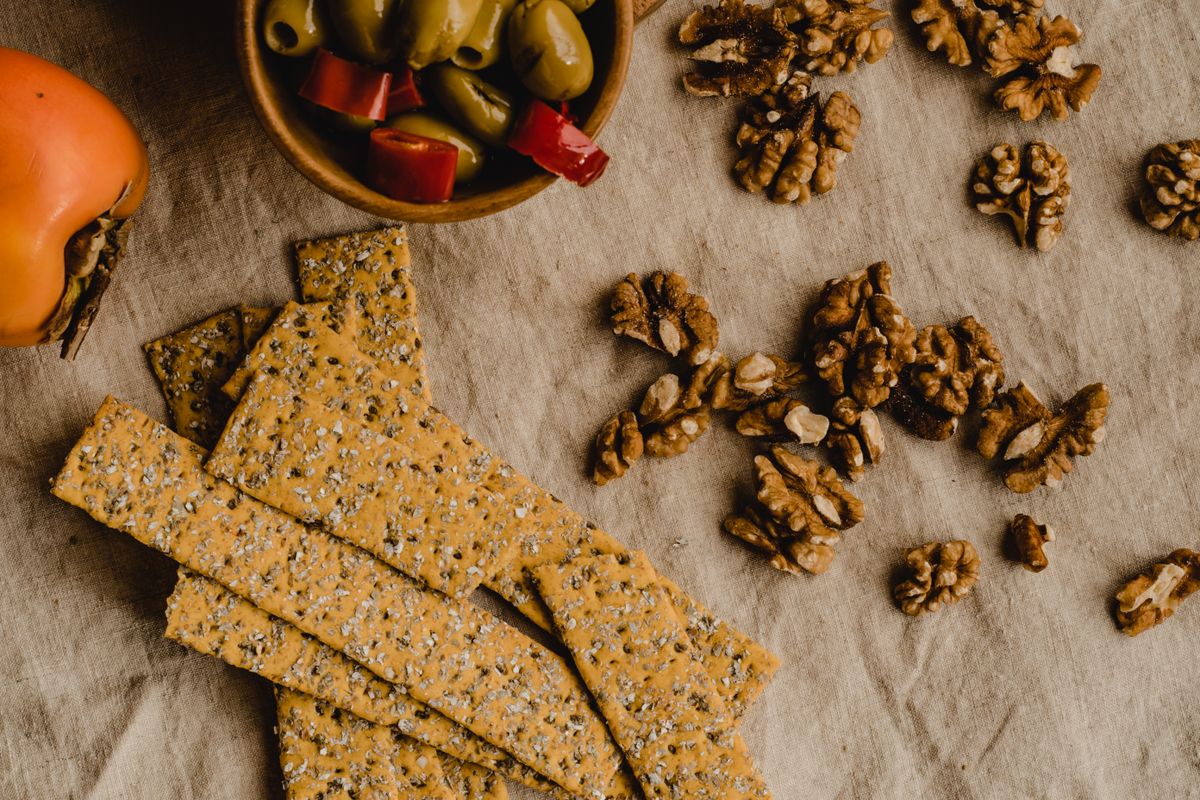
The cracker aisle is quietly one of the most gluten-heavy corners of the shop: nearly everything on it is wheat flour pressed thin. But gluten-free crackers have gone from a sad specialty item to a genuinely good category, with certified options that hold their own on any cheese board, and a homemade version is one of the easiest gluten-free bakes there is. I grew up on oatcakes, the original gluten-free-grain cracker, so I hold strong opinions here: this guide covers which boxes to trust, which classics finally have gluten-free versions, and a one-bowl seeded cracker you can roll out tonight.
Quick answer: Standard crackers, including saltines, Ritz, graham crackers, and Cheez-Its, are wheat-based and contain gluten. Reliable gluten-free choices include Mary's Gone Crackers and Simple Mills (certified, naturally grain- or seed-based), Crunchmaster, Schar table crackers, and the dedicated gluten-free lines of Ritz, Cheez-It, and Lance. Homemade is easy too: a rice-flour blend, olive oil, seeds, and water, rolled thin and baked at 350°F for about 20 minutes.
Which store-bought crackers are gluten-free?
The safe picks fall into two camps: brands that are gluten-free by design, and mainstream classics that now sell a dedicated gluten-free line. Either way, look for a gluten-free label on the box every time, since recipes change and only the label is a promise.
| Cracker | Style | Worth knowing |
|---|---|---|
| Mary’s Gone Crackers | Seeded, whole-grain | Certified GF; built on brown rice and quinoa |
| Simple Mills | Almond-flour crisps | Certified GF; grain-free, sturdy for dips |
| Crunchmaster | Multi-seed rounds | Certified GF; rice-based, widely stocked |
| Schar Table Crackers | Plain “water cracker” | Certified GF; the closest neutral cheese-board cracker |
| Ritz Gluten Free | Buttery round | Dedicated GF line; check the label, the classic is wheat |
| Cheez-It Gluten Free | Cheese cracker | Dedicated GF line only; original Cheez-Its are wheat |
| Lance Gluten Free | Sandwich crackers | Dedicated GF line of the lunchbox classic |
Per the FDA’s gluten-free labeling rule, anything carrying the label must test under 20 parts per million, so a labeled box from any of these lines is safe territory for celiac disease.
How do you make gluten-free crackers at home?
One bowl, no yeast, no machine, and they are better than most boxes. This is a crisp seeded cracker built on a rice-flour blend; the full method takes under an hour.
- 150 g (1 1/4 cups) gluten-free all-purpose flour blend (rice-flour based)
- 2 tbsp (25 g) olive oil
- 2 tbsp (18 g) mixed seeds (sesame, flax, poppy)
- 1/2 tsp fine salt
- 1/2 tsp baking powder
- 90 ml (6 tbsp) cold water
- flaky salt, for the tops
- Whisk the dry ingredients. Combine the gluten-free flour, seeds, fine salt, and baking powder in a bowl.
- Work in the oil and water. Rub the olive oil through the flour with your fingertips, then stir in the cold water until a firm, slightly tacky dough forms.
- Rest for 15 minutes. Cover the dough and let it sit so the rice flour hydrates; this is what keeps the baked cracker from tasting gritty.
- Roll thin between parchment. Roll the dough to about 2 mm, as thin as you can get it evenly. Thinness, not the oven, is what makes a cracker snap.
- Dock and cut. Prick all over with a fork, cut into squares or bars with a knife or pizza wheel, and scatter flaky salt over the top.
- Bake for 18 to 22 minutes at 350°F. Bake until evenly golden at the edges, then cool completely on the tray; crackers finish crisping as they cool.
What flour works best for gluten-free crackers?
A rice-flour-based blend is the workhorse: neutral, crisp, and forgiving, and there is no need for any gum because crackers want to snap rather than stretch. If you mix your own from white rice flour, our gluten-free flour guide has the base ratios, and the rice flour guide explains the grind. Swapping a third of the blend for oat flour gives a rounder, oatcake-leaning flavor, and a spoonful of sorghum or buckwheat flour deepens the color toward whole-grain crispbread. The gluten-bearing classics, wheat, rye crispbread like the loaves in our rye bread guide, and spelt (still wheat, as our is spelt gluten-free explainer covers), are the flavors you are replacing, and sorghum plus seeds gets you surprisingly close.
Why are my gluten-free crackers not crispy?
Almost always because they were rolled too thick or pulled too pale. Gluten-free doughs carry more water than wheat doughs, so a thick cracker bakes into a soft biscuit instead of snapping. Roll to 2 mm even if it feels absurdly thin, dock the dough well so it cannot puff, bake to real golden color rather than blond, and let the tray cool completely before you judge, since crackers crisp as they cool. Stored airtight they hold their snap for about two weeks; if they soften, five minutes back in a 300°F oven restores them.
Are oatcakes gluten-free?
Traditionally yes in spirit, but only sometimes in practice, and the distinction matters if you are baking for celiac disease. A classic Scottish oatcake is nothing but oats, fat, salt, and water, and oats contain no wheat gluten of their own. The catch is cross-contact: most oats are milled alongside wheat, which is why the Celiac Disease Foundation only clears oats that are certified, so an oatcake is only truly gluten-free when it is made from certified gluten-free oats, as our is oatmeal gluten-free explainer details. Buy certified oats or certified oatcakes and the original gluten-free-grain cracker is back on your board.
Where to go from here
Crackers are the fastest win in gluten-free baking: no rise, no crumb structure to defend, just thin dough and honest heat. If the seeded cracker works for you, the same flour knowledge runs our gluten-free cookies master dough and scales all the way up to gluten-free bread. The gluten-free grains guide maps the wider pantry, and the grain pages for oat, sorghum, and buckwheat cover the flours that make these bakes taste like more than rice. Keep a jar of homemade crackers on the counter and the biscuit tin stops being a hazard.
Frequently asked questions
Are graham crackers gluten-free?
No. Graham crackers are named for graham flour, which is coarsely ground wheat, so the classic ones all contain gluten. Certified gluten-free graham crackers exist, Pamela’s being the best known, and they work fine for s’mores and pie crusts.
Are saltine crackers gluten-free?
No, saltines are wheat flour through and through. The closest gluten-free stand-ins are Schar table crackers for soup and cheese, or a plain unseeded batch of the homemade recipe above cut into squares.
How do you store homemade gluten-free crackers?
Airtight at room temperature, where they keep about two weeks. Skip the fridge, which softens them; if they lose their snap, re-crisp them for five minutes in a 300°F oven.
Can I use almond flour for gluten-free crackers?
Yes, but treat it as its own recipe rather than a swap: almond flour has no starch, so it needs an egg to bind and bakes at a lower temperature to avoid burning. That style is essentially a homemade Simple Mills cracker, rich and tender rather than glassy-crisp.
Stock your gluten-free snack pantry
Rice flour, certified oats, sorghum, and the rest of the naturally gluten-free grains and flours behind every bake on this site.
Browse all grains →